

The release of ‘American Fiction’ presents an opportunity to talk about race, power and white supremacy: What version of Blackness is acceptable or saleable within American culture?
Articles on Don't Call Me Resilient
Displaying 21 - 40 of 122 articles
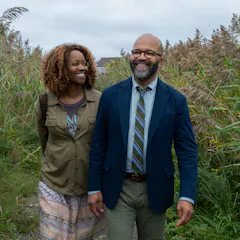
In this episode, Vinita sits down with two experts to break down the many layers — and Black stereotypes — in the much anticipated new film, ‘American Fiction.’

With food insecurity at an all-time high and food banks buckling under high demand as we head into this holiday season, experts say we need to focus on long-term solutions to tackle the issue at its root.

Host Vinita Srivastava explores why racist, homophobic and sexist attitudes are increasingly showing up in school-age boys – and what we can do about it.
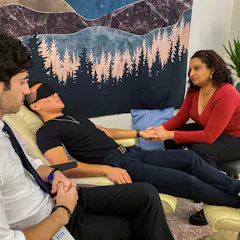
Clinical psychologist and professor Monnica Williams is on a mission to bring psychedelics to therapists’ offices to help people heal from their racial traumas. To do this, she’s jumping over some big hurdles.
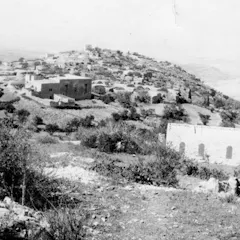
The dismissal of Palestinians as “barbaric” or somehow less human is rooted in a long history of colonizing narratives, including how the land and people were first viewed as “uncivilized.”
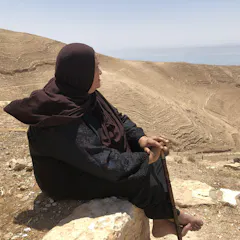
Modern settlers to Palestine viewed the desert as something they needed to “make bloom.” But it already was, thanks to the long history of Palestinian agricultural systems.
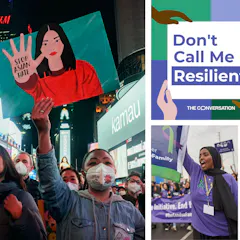
Calling all podcast listeners: Please take our survey about ‘Don’t Call Me Resilient.’
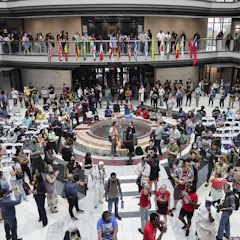
Legal experts worry the “doubling down” on demonstrators who are opposed to the planned giant police training facility could undermine the right to protest.
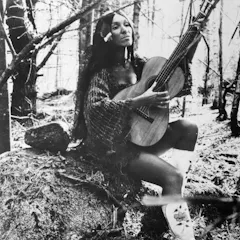
Lori Campbell, a ‘60s Scoop survivor, challenges the CBC’s motives in their exposé on the questionable Indigenous roots of legendary singer-songwriter Buffy Sainte-Marie.
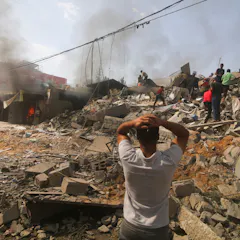
A historian whose family was taken hostage by Hamas, and a geographer with family in the West Bank, get together to discuss a way forward in the Middle East.
A major factor driving our housing crisis is a shift toward corporate-owned buildings. Today’s guest, Prof. Nemoy Lewis, explains how we got here.
In this episode, Cheryl Thompson, author of ‘Beauty in a Box,’ untangles the roots of hair relaxers for Black women and discusses their potential health dangers and resulting hundreds of lawsuits.

Prof. Daniel Martinez HoSang of Yale University discusses the rising popularity of the far-right with people of colour – what he calls multicultural white supremacy.

The author led a search for unmarked graves at the site of Blue Quills, a former residential school. She found more areas of interest (potential graves) than the official record shows.

To honour Truth and Reconciliation Day, we spoke with Terri Cardinal, who headed up one of the many community searches for the children who went missing while attending an Indian Residential School.

The final Indiana Jones movie is coming out June 30. The fifth in a series over 42 years, many of its ideas are taken from 19th-century orientalist and racist archaeology.

As the use of Ozempic, a drug for diabetes, slams into the mainstream as a weight-loss method, will the drug’s use impact our concept of fatness? And how does fatness intersect with race and class?

The revitalization of Indigenous languages is essential because language reflects philosophies that guide social, political, cultural and ecological relationships.

Indian Prime Minister Narendra Modi and opposition politicians are courting the diaspora in the run-up to next year’s elections in India. What role does the diaspora play in Indian politics?
Top contributors
-

Canada Research Chair, Professor in Performance, Toronto Metropolitan University
-
Associate professor, McGill University
-
Professor, Public and International Affairs, L’Université d’Ottawa/University of Ottawa
-
Assistant Professor, Faculty of Land and Food Systems, University of British Columbia
-
Professor, Technoscience studies + History, University of Toronto
-
Professor of Geography and Environmental Science, Memorial University of Newfoundland
-
Associate Dean (Arts and Humanities), Bucknell University
-
Adjunct assistant professor, Werklund School of Education, University of Calgary
-
Policy Lead on Technology, Cybersecurity and Democracy, Leadership Lab, Toronto Metropolitan University
-
Founder of Msit No’kmaq
-
President, Food Secure Canada
-
Professor, Jean Augustine Chair in Education, Community & Diaspora, York University, Canada
-
Associate Professor, Faculty of Education, Wilfrid Laurier University
-
Professor of Colonial History, University of Victoria
-
Assistant Professor of History, Thompson Rivers University