

A new study uses maths and behavioural science to understand how your actions during an epidemic influence the spread of the disease (and vice versa).
Articles on Disease modeling
Displaying all articles

How and why preterm birth happens is still unclear, in part because research on pregnancy tends to focus on developmental biology.
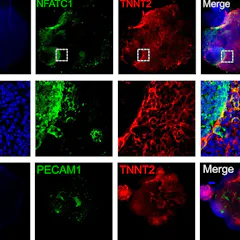
Human heart organoids allow researchers to study the developing heart while avoiding the ethical issues of using human embryos and the imperfections of animal models.

Policymakers rely on models during uncertain times to figure out how their choices could affect the future. Over the pandemic, an ensemble of many COVID-19 models outperformed any one alone.

Successes in the lab mostly don’t translate to people. Research models that better mimic the human body could close the gap.

The spread of a virtual disease in the online game World of Warcraft appeared to have relevance to understanding real world epidemics like COVID.

Recent computer modeling shows the upcoming flu season might see a surge in cases. Coupled with COVID-19’s continued threat, doctors are again urging Americans to get their shots.

As ready as you are to be done with COVID-19, it’s not going anywhere soon. A historian of disease describes how once a pathogen emerges, it’s usually here to stay.
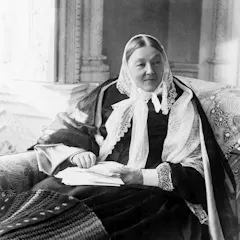
On the 200th anniversary of Florence Nightingale’s birth, we take a look at how her monumental efforts helped shape the way we model health care and disease outbreak data today.

A deadly ‘disease’ that tore through World of Warcraft in 2005 helped scientists realise games are powerful tools for understanding complex situations such as the ongoing coronavirus pandemic

Why is there such a wide difference in projections for how much COVID-19 will spread? An expert in disease modeling explains what models can and cannot do.
Top contributors
-

Associate Professor of History, Rutgers University - Newark
-
Professor of Epidemiology, University of North Carolina at Chapel Hill
-
A/Prof, James Cook University
-
Associate Professor, University of Canterbury
-
Distinguished Professor of Health Policy and Management, University of Pittsburgh
-
Professor of Mathematics, University of Richmond
-
Professor, University of Canterbury
-
Associate Professor of Biomedical Engineering, Washington University in St. Louis
-
Professor of Mechanical Engineering, Columbia University
-
Associate Professor and Lead of Statistical Support Network, Australian National University
-
Associate Professor, Epidemiology, Deakin University
-
Professor and Director of Doherty Epidemiology, The University of Melbourne
-
Professor of Biomedical Engineering, University of Wisconsin-Madison
-
Postdoctoral Scholar in Biology, Penn State
-
Senior Research Scientist, National Institutes of Health