

New research finds economists and policymakers are too focussed on the unemployment rate and not on the quality of jobs young people are doing.
Articles on Disadvantaged youth
Displaying all articles

Actions that might ordinarily be dismissed as failures can actually be hidden, unconventional forms of strength.

We interviewed 50 children between the ages of 11 and 17 years who told us why they stole, what they stole, and how they learned how to burgle.
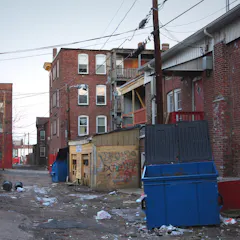
The latest findings add to the understanding of how social disadvantage such as poverty and low-quality, unsafe housing can affect early child development.

Extracurricular activities help children from low-income suburbs close the gap between them and their better-off peers. But subsidies for these activities are patchy and often limited to sport.
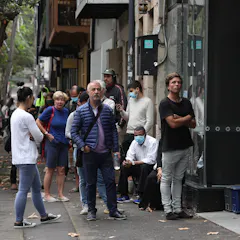
Western Sydney’s growth-driven boom had ended before COVID-19 hit. Some neighbourhood unemployment rates were 2-3 times the metropolitan average, with female workforce participation as low as 43%.

Children growing up in the most disadvantaged suburbs also lack the social opportunities to develop skills and aspirations that would improve their prospects in life.

Research shows that 80% of medical students come from just 20% of the UK’s secondary schools.

Childhood adversity doesn’t just affect our choices – according to new research, it also weakens the body’s fundamental ability to stay healthy in old age.
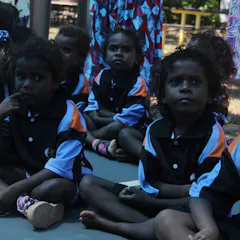
A New Zealand literacy program is helping to raise Indigenous achievement to mainstream levels.
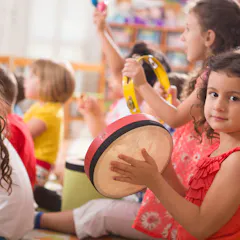
Under new legislation, children from low-income families will receive just 12 hours of early learning support a week, adding to the risk of these children falling behind their peers at school.

Scotland is threatening a positive-discrimination policy for making access to universities more equal. While its central argument is right, there’s more to this than meets the eye.

Growing up in a one parent family doesn’t matter, as long as it’s a stable one.

The upcoming first ever Global Forum on Youth Policies has put the spotlight on the position of young people who, the United Nations says, are our “greatest resource”. Australia is among a minority of…

Despite encouragement from federal, state and territory governments to complete school – and a legal obligation to “learn or earn” – one in five young Australians still leaves school before the end of…
Top contributors
-

Professor, College of Business, Government & Law, Flinders University
-
Head of the School of Education and Professor of Education Policy and Social Justice, University of Glasgow
-
Lecturer, Faculty of Health Sciences, Australian Catholic University
-
Durham University
-
Associate Professor, College of Education, Victoria University
-
Researcher in Social Epidemiology, University of York
-
Professor of Education, University of Sussex
-
Associate Professor. Deputy Director TeEACH Research Centre, Western Sydney University
-
Senior Research Fellow in Evaluation Design and Research Methods, University of Dundee
-
Postgraduate research assistant, Imperial College London
-
Emeritus Professor of Literacy Education, Te Kunenga ki Pūrehuroa – Massey University
-
Research Fellow, University of York
-
Reader in Psychometric Epidemiology, University of York
-
Professor and Head of School, School of Early Childhood and Inclusive Education, Queensland University of Technology
-
Deputy Director (Research) Peter Underwood Centre, University of Tasmania