
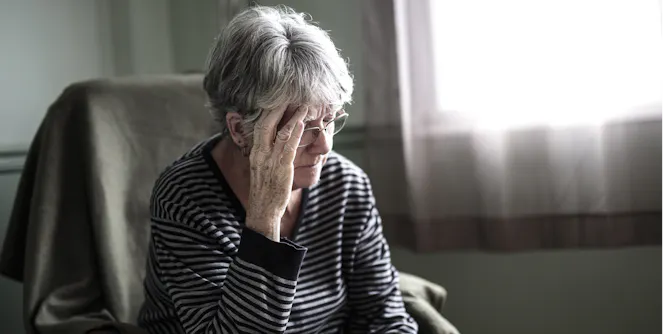
When a person with dementia is in distress, they need calm and caring treatment to protect themselves and others – but prevention should be the goal.
Articles on Disability coverage
Displaying 181 - 200 of 291 articles

Plans to use buying power to save money on assistive technology for NDIS participants should be approached with caution. Otherwise, savings may come at the cost of a person-first approach.

Disability has been called the world’s largest minority and is a group any person can join at any time in their life. It befits us all to dismantle discrimination.

Given the lack of progress to date, three new budget initiatives are unlikely to achieve the 2025 target of no Australians living in institutions meant for much older people.

In this podcast, @michellegrattan canvasses the budget with Treasurer @JEChalmers, Shadow Treasurer @AngusTaylorMP and The Conversation's politics + society editor @amandadunn10
The government has delivered measures to ease cost-of-living, the critics will say it hasn’t done enough.

How can the concept of ‘evidence-based practice’ be applied to individualised disability support?

In this podcast, former Paralympian Kurt Fearnley, chair of the National Disability Insurance Authority, which implements the scheme, discusses its issues and the road ahead
People with disability have a worrying sense of deja vu about the current NDIS cost concerns.
The May 9 budget will include a $2.2 billion suite of measures to seek to ease pressures in primary health care and hospitals, as well as containing initiatives directed towards the crisis in the rental…

It’s a too-common myth that autistic people are incapable of, or inept at, love. Autistic writer Kay Kerr explores 5 autistic people’s experiences of familial, friend and romantic love.

If people with disability can’t access the NDIS, they’re often left without any services or supports. This needs to change.

Compulsory tests, essays, regular grades and timed exams are considered a given in university life. But the Universities Accord should change this.

Some services require a formal diagnosis of autism or ADHD – but there is much parents and carers can do to support their child and their own wellbeing.
While each microaggression may not seem particularly harmful, they add up and can erode the psychological and physical health of people in minority groups.

People can be reluctant to discuss symptoms with their doctor. When they do, their symptoms can be mistaken for other illnesses. Even when people are diagnosed, they don’t always get the right treatment.

Our analysis of part-time work and its impact on wellbeing shows getting more people with disability into employment could save millions in health-care costs.

The most common form of Ehlers-Danlos Syndrome could affect more people than we think. When doctors miss it, or confuse it with something else, the impact can be devastating.

The new national autism guideline says that we should remember to honour childhood. Sometimes that can get lost amid a weekly schedule of therapy sessions.
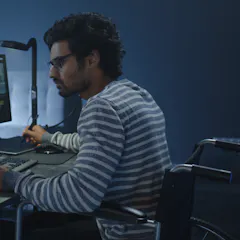
Our report is the first in-depth research into the experiences of and attitudes towards disabled people in the Australian screen industry.
Top contributors
-

Professor, Public Service Research, UNSW
-
Deputy Director, The Kids Research Institute Australia, Professor of Autism Research, The University of Western Australia
-
Adjunct Professor, Summer Disability Research Centre, La Trobe University
-
Professorial Fellow, University of Canberra
-
Disability Program Director, Grattan Institute
-
Professor, University of Sydney; RMIT University
-
Postdoctoral Research Fellow, UniSA Creative, Adelaide University
-
Professor and Clinical Psychologist, Michael Crouch Chair in Child and Youth Mental Health, University of Sydney
-
Psychologist and Research Associate in the Department of Paediatrics, Monash University
-
Professor, Director, Griffith Inclusive Futures, Griffith University, Griffith University
-
Senior Research Fellow, Crawford School of Public Policy, Australian National University
-
Head of Autism Research and Senior Principal Research Fellow, The Kids Research Institute Australia
-
Senior Lecturer of Wellbeing Science, The University of Melbourne
-
Research Fellow, Dignity Project, Griffith University
-
Financial Markets Foundation Chair of Developmental Mental Health, The University of Melbourne