

Pollen, algae, insects, radiolarians – each unique microfossil holds clues to how Earth has changed over millions of years. Combining AI with digital scanners helps researchers piece it all together.
Articles on Digitization
Displaying all articles
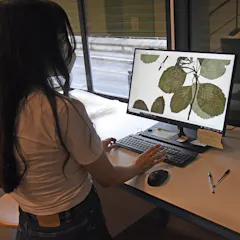
The colonial era profoundly shaped natural history museums and collections. Herbaria, which are scientists’ main source of plant specimens from around the world, are no exception.

The European Union’s 10-year Human Brain Project is coming to a close. Whether this controversial 1 billion-euro project achieved its aims is unclear, but its online forum did foster collaboration.

A digital twin is to a computer model as live video is to a still photo. These virtual replicas can be used to understand and make predictions about a wide range of complex systems, including people.
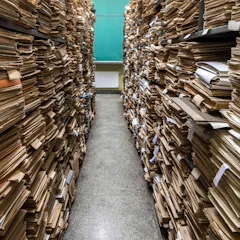
During the coronavirus pandemic, digitizing archives can help increase access. But in addition to the labour and financial costs, issues of privacy, copyright and resources need to be considered.
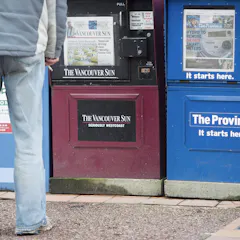
The news media crisis is constant but there are a few practical solutions available to help the news business get out of the hole.
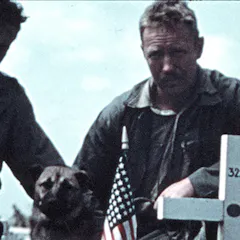
Films of the battle for Iwo Jima, being digitized 75 years after they were made, offer connections and lessons for Americans of today.

Centuries’ worth of important information is stored on paper – which can decay, burn or get eaten by pests. Peek inside the process of making all that data digital.
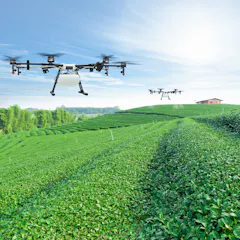
With each industrial revolution, food production and distribution has been revolutionized. With the current Fourth Industrial Revolution, can we address inequalities in food distribution?

Museums’ collections are a priceless resource for scientists, but they’re not easy to access. Digitizing specimens – like the 700 bat skulls the author studied – is a way to let everyone in.

A tiny percentage of museums’ natural history holdings are on display. Very little of these vast archives is digitized and available online. But museums are working to change that.
Top contributors
-

Professor of Paleontology and Director of the University of California Museum of Paleontology, University of California, Berkeley
-
Scientific Computing Consultant, University of Minnesota
-
Postdoctoral Fellow in History, Vanderbilt University
-
Senior Lecturer/Researcher of Human Geography and Food Systems, Natural Resources Institute, University of Greenwich
-
professeur de journalisme, Université du Québec à Montréal (UQAM)
-
Associate Professor of Computer Engineering, Rochester Institute of Technology
-
Assistant Professor of Resource Economics, UMass Amherst
-
Curator of Newsfilm and Military Collections, University of South Carolina
-
Professor of Computer Science, University of California, Irvine
-
Associate Professor of History (Archival Studies), University of Manitoba
-
Ph.D. Candidate in Innovation and Entrepreneurship, Max Planck Institute for Innovation and Competition
-
Assistant Professor of Biological Sciences, Purdue University
-
Postdoctoral Research Fellow in Natural History, Smithsonian Institution
-
Research Geologist and Curator of Paleobotany, Smithsonian Institution