

Could new tests shorten the long road to an endometriosis diagnosis? The promise is compelling, but the evidence is not there yet.
Articles on Diagnostic tools
Displaying 1 - 20 of 28 articles
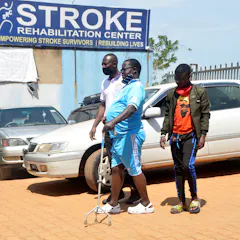
Despite the rising burden of stroke across Africa, there is no continent-wide framework or standardised protocol for stroke management.
With the help of AI, doctors might be able to detect heart disease before it becomes audible to the human ear.
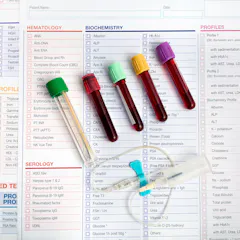
Your blood contains a wealth of information about the state of your health. Analyzing the levels of each component is an important part of diagnosis.

The pandemic spurred the diagnostics industry to consider aspects like scale, affordability, speed and portability of tests.
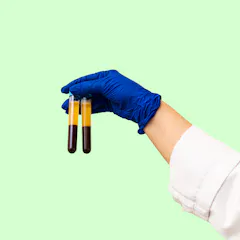
Lab testing provides doctors with essential information to help them diagnose and treat disease. Here’s what happens behind the scenes after you roll up your sleeve for a blood draw.

A technology that measures three-dimensional movement of the knee in real-time enables health professionals to make better assessments of the joint.

Scientists at Cambridge are developing a lab-in-a-briefcase for rapidly and cheaply identifying disease-causing bacteria.
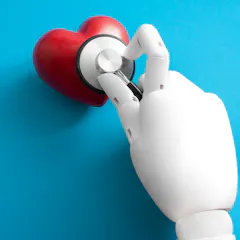
An AI trained to look at heart scans was able to successfully predict risk of death. But one expert cautions we still need to be careful about designing – and using – AI for medical diagnosis.
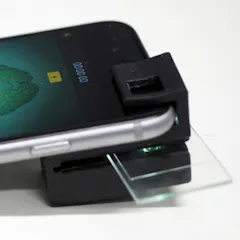
Even though you don’t think of your mobile phone as being anything like a microscope, it’s got almost all the parts you need.
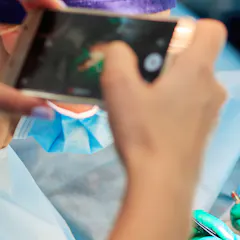
Has your doctor ever taken a photo of your medical condition? It’s really useful to aid diagnosis, but we still don’t have the right legislation to ensure legal and ethical protections.

QuRapID can find Ebola in a drop of blood in just over an hour.
Antibiotics are wrongly being prescribed for infections where they won’t work and cutting this down could help combat resistance. But change isn’t as easy as just providing the means.

The value of machine learning is not only that it is more accurate than humans. It is also cheaper and more consistent in its diagnoses.

Cognitive traps can steer doctors away from the right diagnosis.

Theranos has had medical laboratory experts scratching their heads for some time. What the company was promising just didn’t make a lot of sense.

Face blindness is believed to be a fairly common condition but, until now, diagnosis has been complicated and expensive

New tests and drugs have always impacted health care. But completely different kinds of emerging technologies will soon radically alter how health care is both accessed and delivered.
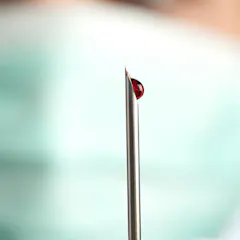
Complex algorithms and personalised medicine promise a new way of diagnosing disease.
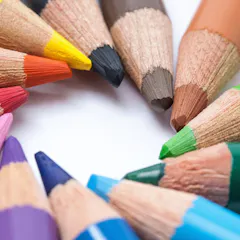
Reagent pencils, the Caran d'Ache of the chemical world.
Top contributors
-

Postdoctoral fellow, Georgia State University
-
Assistant Professor of Internal Medicine and Research Scientist, University of Michigan
-
Professor of Molecular Parasitology and Medicine, St George's, University of London
-
Researcher and analyst, Monash University
-
Professor of Medicine, Dartmouth College
-
Research Officer, RMIT University
-
Professor of Bioinformatics, Nottingham Trent University
-
Professor of Computer Science, Adelaide University
-
Lecturer, Queen Mary University of London
-
Associate professor, University of Sydney
-
Advisory Risk & Compliance
-
Emeritus Professor of General Practice, University of Sydney
-
Honorary (Professorial Fellow) at the Centre for Neuroscience, The University of Melbourne
-
Associate Professor in Cellular and Molecular Sciences, Northumbria University, Newcastle
-
Professeure titulaire, Département d'anesthésiologie et de médecine de la douleur, Université de Montréal, Université de Montréal