

Rhodesia’s white supremacists appealed to the white electorate by taking a stand against African liberation. Similarly, Donald Trump appealed to white Americans who feel overwhelmed by globalisation.
Articles on Decolonisation
Displaying 141 - 160 of 183 articles

The push for decolonisation could ironically end up trapping universities in a colonised curriculum.
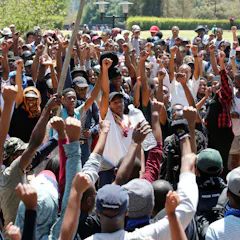
2017 promises to be another tough year as South African universities head into the uncertain terrain of further addressing and healing the divisions that have been exposed.

There are a few questions that can be posed and unpacked if universities are to move towards genuine decolonisation.

More than two decades after apartheid ended, South African universities still tend to offer a view of the country and continent that is rooted in colonial and apartheid thinking.

More than three decades after his death reggae icon Bob Marley’s music remains meaningful. It still has the potential to catalyse conversation not often had in the postcolonial world.

There is broad acknowledgement that the way science is taught and practised in Africa is not socially inclusive.
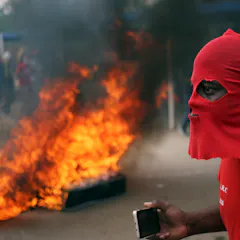
University authorities in South Africa have agreed to most fees protesters’ demands. Yet, the protesters keep moving the goalposts. Do they want more than fees to fall?

Some have suggested that deracialising the academy requires all researchers, teachers and students to link knowledge and identity. What might this mean for mathematics?
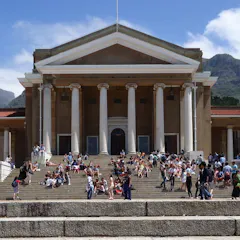
When students are genuinely listened to and understood, and their proposed solutions to problems are taken seriously, real change can happen in university faculties.

Technology had enabled humans to explore the deep sea, the Earth’s poles, and outer space. But we shouldn’t forget historical lessons about frontiers in the process of traversing them.

Psychologists drew historically from theories of social Darwinism and eugenics to espouse the hierarchical categorisation of people into race groups.

Knowledge is power. If you own it, you can control those without it. Since so much knowledge about Africa doesn’t sit on the continent, it’s apparent that Africa lacks power in this regard.

Decolonising the curriculum is far more nuanced than replacing theorists and authors. Universities first need to define how they approach the development and dissemination of curricula.

The decolonisation debate in South Africa’s universities raises critical issues about the relationship between power, knowledge and learning.

In South Africa there’s a value judgment attached to students who take part in universities’ English for Academic Purposes programmes. This shouldn’t be the case.
Decolonisation of the curriculum doesn’t have to mean the destruction of Western knowledge, but it’s decentring. Such knowledge should become one way of knowing rather than the only way.
Africa’s universities must avoid collaborative programmes with the North that become mere tick-box exercises that only benefit Northern researchers and organisations.

Sections of South Africa’s student movements regard transformation as a complete failure. Responding to this perceived failure, some have adopted an anti-democratic stance.

Its critics complain that current Afrodiasporic literature is not in tune with everyday life on the continent. They see its versions of Africa as sanitised and Westernised.
Top contributors
-

Professor, University of Cape Town
-
Extraordinary Professor, Department of Political Sciences, University of Pretoria
-
Academic Staff Development Lecturer, Centre for Higher Education Development, University of Cape Town
-
Associate Professor, School of Education, Aarhus University
-
Research Fellow at the University of the Free State, South Africa and Assistant Professor in the History of International Relations, Utrecht University
-
Associate Professor Sport History, Stellenbosch University
-
Founder of Msit No’kmaq
-
Associate Professor, Graduate School of Business, University of Cape Town
-
Distinguished Professor of Curriculum Studies, Stellenbosch University
-
Lecturer in South Asian History, University of Reading
-
Associate Professor, University of Cape Town
-
Professor and Chair of Epistemologies of the Global South, University of Bareuth, Germany, University of South Africa
-
Associate Professor, Department of Literary Studies in English, Rhodes University
-
Professor of Philosophy of Science, Durham University
-
Professor of English Language Teaching and Literacy Development, Rhodes University