

NZ First’s Kiwi Kids Grant is tied up with the party’s broader immigration policies. But a ‘baby bonus’ for citizens won’t necessarily achieve the intended outcome.
Articles on Declining birth rates
Displaying all articles

Two sociologists found that when the pace at which family sizes was shrinking slowed down, starting in the 1990s, progress toward closing the gender pay gap grew sluggish too.

While the changes in population structure that accompany low birth rates are real, the impact of these changes has been dramatically overstated.
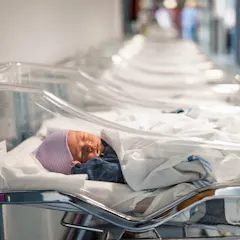
Embracing the lower fertility rates we’re seeing could help ease humanity’s impact on the planet.
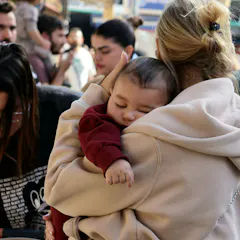
What real issue does a low birth rate pose, and for whom?

In South Korea, a growing number of young women are rejecting expectations of marriage, motherhood and heterosexual relationships, known as the ‘4B Movement’ or the ‘4 Nos’.

Many countries are enacting measures to counter population decline, but manipulating fertility is an inefficient means of solving social, economic and environmental problems.

People with secure work and a regular income are more likely to start a family than those working in casual jobs with irregular hours.

Low birth rates aren’t just a potential economic crisis. They can tell a deeply personal story about women failing to reach their goals for motherhood.

Birth rates are falling – but the population in England will continue to rise.

Canada is counting on immigrants to drive economic growth. Smaller urban communities can help take pressure off Canada’s most heavily populated regions by attracting and retaining newcomers.
Top contributors
-

Associate Professor of Social Research and Economic Thought, Catholic University of America
-
Postdoctoral research associate, University of Southampton
-
Professor, Geography and Environmental studies, Wilfrid Laurier University
-
Assistant Professor, Global Health, Department of Medicine, McMaster University
-
Reader in Social Policy, University of Bath
-
Associate Vice-President, Global Health, McMaster University
-
Professor of Geography, McMaster University
-
Professor in Labour Sociology, The University of Melbourne
-
Senior Research fellow, Centre for Health Economics, Monash University
-
Professorial Fellow, The University of Melbourne
-
Assistant Professor of Science and Technology Studies, University of California, Davis
-
Research Affiliate, Center for Studies in Demography and Ecology, University of Washington
-
Research Fellow of East Asia Studies, Lund University; Australian Catholic University
-
Professor, School of Demography, Australian National University
-
Adjunct Professor and Senior Fellow, School of Health Sciences, L’Université d’Ottawa/University of Ottawa