
Failure of corporations to protect data means that government regulation is required to ensure corporation compliance.
Articles on Data breaches
Displaying 61 - 80 of 103 articles

Most of us are probably having our data tracked in some form. And while there are regulatory safeguards in place to protect user privacy, it’s hard to say whether these are enough.
A recent leakware attack targeting Johannesburg was the second of its kind ever recorded. Hackers demanded A$52,663 worth of bitcoins, in return for not releasing senstivie civilian information.

Research shows we’re pretty gullible as it is. And our increasing reliance on machines for completing everyday tasks makes us all-the-more vulnerable to being exploited.

A major cyber attack on a data lake could have immense consequences for any of us. And the damage could be felt anywhere from banking to the healthcare sector.

You can’t change your fingerprint if it’s stolen like you’d change your password.

The response to British Airways’ data breach could help set new social norms for what is acceptable.

Patient information dumped on the side of the road in Brisbane recently has raised the issue of how hospitals and clinics manage their old paper records.

States like California have been at the forefront of privacy innovation in recent decades. A possible federal law could bring their experimentation to a halt, harming consumers.

Australians aren’t confident that the government can be trusted with their data, or that is has the right safeguards in place to protect it.
The government can access your phone metadata, drivers licence photo and much more. And new research shows Australians are OK about it. But that might change.

Think defensively about your online accounts and data security – and don’t assume you’ll avoid harm.
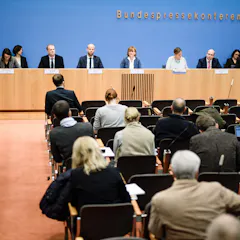
German MPs were outraged they weren’t notified they were targets in a cyber attack, which resulted in the public release of mobile phone numbers and credit card information.
We found hundreds of local council workers willing to give out login details for government systems without realising.
Tech companies have vowed to do better when it comes to using data ethically, but most ethics initiatives are neither enforced nor enforceable.

Cybersecurity professionals are often portrayed as lone hackers in hoodies. But as well as technical skills, they also need to be excellent communicators and have a high degree of personal integrity.

Statistics Canada has been tone-deaf in its push for the financial data of Canadians from banks, but that data is essential to forming good public policy.

As billions more devices connect to the cloud, congestion will cause communication to become slower and less responsive.

Human resources departments need to understand that these days security and data breaches are more likely to come from within.
There is always a tension between usability and security. People want systems to be secure so that their identities aren’t stolen, but they want those same systems to be easily accessible.
Top contributors
-

Associate Professor in Cyber Security, Adelaide University
-
Lecturer in Cyber Security Studies, Department of Security Studies and Criminology, Macquarie University
-
Associate Dean (Learning & Teaching) Faculty of Creative Industries, Education and Social Justice, Queensland University of Technology
-
Professor of Cyber Security Practice, Edith Cowan University
-
Associate Professor, School of Law, University of Canberra
-
Associate Professor in Cyber Security Studies, Macquarie University
-
Head, The Cyber Academy, Edinburgh Napier University
-
Professor of Cybersecurity Management, University of Dayton
-
Associate Professor in Health Technology Law, The University of Melbourne
-
Adjunct Senior Lecturer, Applied Ethics and CyberSecurity, Griffith University
-
Adjunct Professor, Australia-China Relations Institute, University of Technology Sydney
-
Professor of Information Systems, Mississippi State University
-
Research Professor of Computer Science, University of Dayton
-
Senior Lecturer, University of the Witwatersrand
-
Associate Professor of Political Science, Brock University