
Optus made a public announcement about its breach but was not legally required to do so. This needs to change.
Articles on Data breaches
Displaying 41 - 60 of 103 articles

This isn’t the first time Australians’ Medicare numbers have been exposed.
Up to 9.8 million Australians have been affected. Here’s what you can do to proactively defend yourself.

Artificial intelligence is emerging as a key cybersecurity tool for both attackers and defenders.

It’s time to think differently about how we address the password problem.
Data breaches have become a fact of life. Here are articles from The Conversation that detail the threat, why it happens and what you can do to protect yourself.

Cyberattacks are on the rise. Canada needs to work with cybersecurity experts to enable them to identify and address security vulnerabilities.
If an organization that has your data gets hacked, your vulnerability depends on the kind of attack and the kind of data. Here’s how you can assess your risk and what to do to protect yourself.

Ireland is under pressure to investigate, and potentially fine, Facebook for alleged data breaches under GDPR.

A thriving black market for stolen personal data makes millions of people vulnerable to spies, spammers, scammers and hackers.
More than 500 million people’s details were compromised. The records include various combinations of name, email, gender, date of birth, location, relationship status and employer.
Companies today collect vast amounts of our personal data. What measures can governments and regulators take to reduce the inherent risks and keep our data?
Australia has hesitated in the past to adopt a strong privacy framework. A new government review provides an opportunity to improve data protection rules to an internationally competitive standard.

A health law expert explains what the regulation does and doesn’t protect.

It’s not clear how individuals are being targeted. And while they’re mostly high-profile people, that doesn’t mean there’s no lesson for the average person to take away.

Universities hold valuable information but are large and porous communities, with legacy IT systems often adding to the risks. But following a few basic rules can help counter cyber attacks.
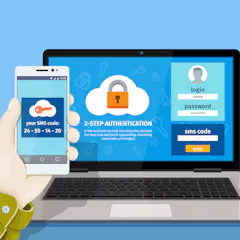
Two-factor authentication is certainly an added layer of security as we traverse the online world. But it comes in various forms, and they’re not all equally protective.

In an era of data breaches and data privacy concerns, governments should enshrine in law a requirement for companies and banks to send paper bills and statements in order to protect consumers.
Data breaches are on the rise, but blockchain can provide a secure way for consumers to manage their data and their privacy.

Government privacy commissioners are investigating a data breach at one of Canada’s largest medical services companies, after hackers gained access to the personal information of 15 million customers.
Top contributors
-

Associate Professor in Cyber Security, Adelaide University
-
Lecturer in Cyber Security Studies, Department of Security Studies and Criminology, Macquarie University
-
Associate Dean (Learning & Teaching) Faculty of Creative Industries, Education and Social Justice, Queensland University of Technology
-
Professor of Cyber Security Practice, Edith Cowan University
-
Associate Professor, School of Law, University of Canberra
-
Associate Professor in Cyber Security Studies, Macquarie University
-
Head, The Cyber Academy, Edinburgh Napier University
-
Professor of Cybersecurity Management, University of Dayton
-
Associate Professor in Health Technology Law, The University of Melbourne
-
Adjunct Senior Lecturer, Applied Ethics and CyberSecurity, Griffith University
-
Adjunct Professor, Australia-China Relations Institute, University of Technology Sydney
-
Professor of Information Systems, Mississippi State University
-
Research Professor of Computer Science, University of Dayton
-
Senior Lecturer, University of the Witwatersrand
-
Associate Professor of Political Science, Brock University