

Digital tools need better ethics, otherwise they will further entrench inequality.
Articles on Data analysis
Displaying 1 - 20 of 32 articles

Available data suggests the Democratic Party will win ten seats and gain control of the House of Representatives in the midterms.

The government, because it takes the lead in implementing official policies, is in a unique position to collect and store sensitive data collected over long periods of time.

Smart insoles and socks equipped with sensors and AI are transforming foot health.

The lack of transparency in automated property valuations is worrying for anyone involved in the real estate industry. But our new framework audits the AI-generated results.

Archaeologists preserve records of their excavations, but many are never analyzed. Digital archaeology is making these records more accessible and analyzing the data in new ways.

Fewer graduates means fewer data analysis experts to aid in knowledge creation and innovation.

Robo-advisers and AI are making investing accessible to everyone, but there are also risks to consider.

South Africa’s ocean information management system is helping to mitigate security and environmental risks.
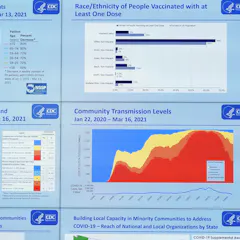
Governments can exclude certain groups of people in policies and services not only by the type of data they collect but also how they collect, store, analyze and use the data.

Fraud was up 25% in the UK in 2021/22.

In health care crises, researchers can avoid waiting for clinical trial results by using data from health care systems to analyze the effectiveness of treatments for COVID-19 and other illnesses.

Researchers who analyzed every sports bet placed online since 2018 found that young adults are the fastest-growing group of bettors, with more than 70% of them placing in-game bets.

If Twitter were to go dark, with it would go a valuable source of data as well as a means of sharing information relied on by activists, journalists, public health officials and scientists.

Big data analysis has unveiled startling links between seemingly unrelated things, such as how a person’s physical elevation above sea level might influence their personality.

To take full advantage of digital technologies South Africa needs a coherent digital industrial policy.

With mountains of digital evidence, advanced computing techniques could help judges and jurors better understand how criminal syndicates operate — potentially allowing fairer sentencing.

CC BY-NC-ND7.43 MB (download)
Studies like this are important because they help gather data from an African perspective.

Automated text messages if your phone detects you’re a long way from home, or discounted home internet, are just a few possible technology solutions to make New Zealanders “stay home to save lives”.

The collection and analysis of data used for making policy should be independent and open to ensure public trust in decision-making. The debate over alcohol licensing shows why this matters.
Top contributors
-

Lecturer in Finance, Bangor University
-
Professeur en marketing, EM Lyon Business School
-
Georgia Institute of Technology
-
Professor of Archaeology, University of Washington
-
Associate Professor of Computer and Information Science, University of Oregon
-
Tshwane University of Technology
-
Professor of Sociology, University of York
-
Professor of Urban Science, UNSW
-
Director, Centre for Educational Measurement and Assessment, University of Sydney
-
Lecturer, Faculty of Built Environment, UNSW
-
Professor of Planning and Associate Director, City Futures Research Centre, UNSW
-
Adjunct Senior Lecturer, School of Public Health and Community Medicine, UNSW
-
Professor, University of Wollongong
-
Professeur de marketing, EM Lyon Business School
-
Associate Professor, Systems Science and Policy, Harvard University