
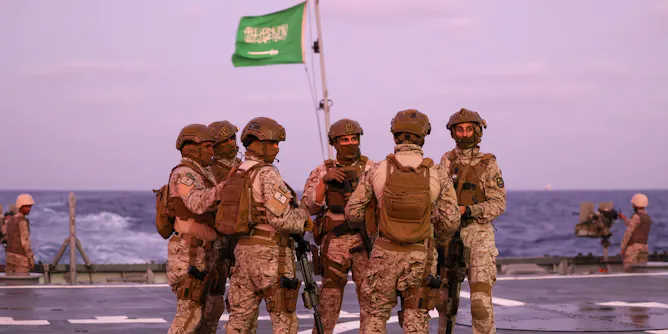
There is a risk that Sudan’s conflict could spill over into neighbouring countries.
Articles on Darfur
Displaying 21 - 40 of 51 articles
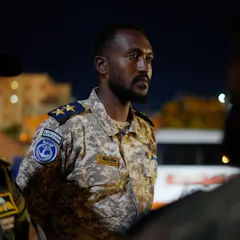
Sudan was formed by conquest, and its politics and, increasingly, its wealth have been controlled by the military ever since.

Omar al-Bashir fell in 2019, but his military successors have preserved much of the authoritarian infrastructure of his regime.
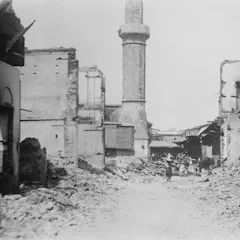
Recent studies on mass violence have turned the spotlight on the resilience of targeted individuals and communities.
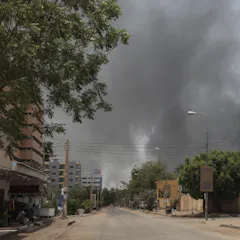
Sudan’s neighbours are urging restraint, favouring more business, less war. Both generals are aware the longer the situation goes on, the more unsustainable it will become.
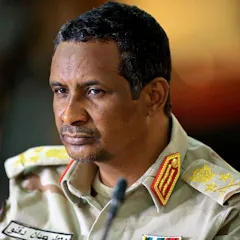
Hemedti ably used his commercial acumen and military prowess to build his militia into a force more powerful than the waning Sudanese state.
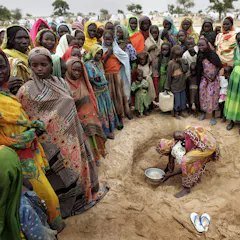
Many genocide classes review the Holocaust or Cambodia’s Killing Fields. A scholar wanted to show that genocide, war crimes, crimes against humanity and ethnic cleansing still happen today.
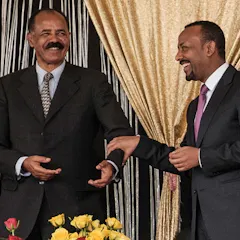
The war in Tigray appears to have boosted Eritrea’s efforts at regional pre-eminence. But it could backfire.

Sudan’s new government came to power after a people-driven process to oust former President Omar al-Bashir. It must be careful to place ordinary Sudanese at the centre of the reforms process.
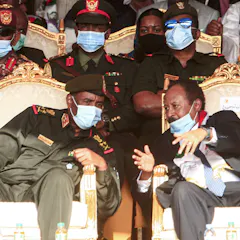
The transitional government has achieved a monumental milestone, but peace agreements in Sudan have been known to fall apart quickly.
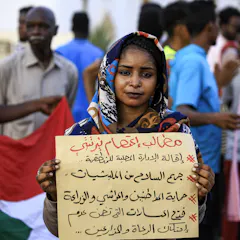
The root causes of the ongoing conflict in Darfur are rising to the surface amid an influx of arms from Libya.
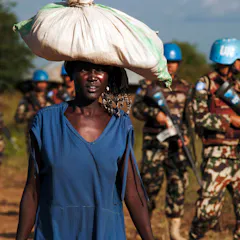
United Nations peacekeeping operations need to be refashioned to meet the needs of an ever evolving world.

Remaining nonviolent despite enormous provocation made it difficult for the regime to depict the movement in a negative light
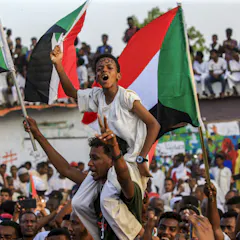
The African Union’s staunch support for al-Bashir, cloaked in criticism of the International Criminal Court, denied justice to the millions affected by the conflict in Sudan.
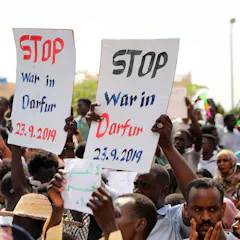
Ousted president Omar al-Bashir could face the International Criminal Court for his role in Sudan’s clampdown on the non-Arab people of Darfur.
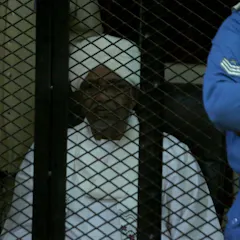
The ICC must not further destroy its credibility by cooperating with the sorts of bad actors who should be before a court themselves.
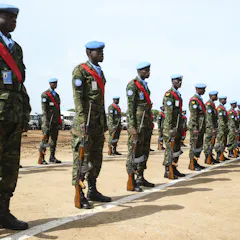
Unless member states try to solve the contradictions in expectations, UN peacekeeping will not be fit for purpose in the future.
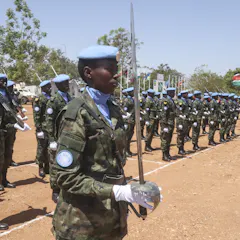
The number of personnel deployed in UN peacekeeping has slowly been decreasing.
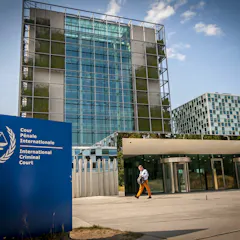
Cooperation with the Sudanese government to try al-Bashir could amount to legitimising those who themselves have been implicated in genocide
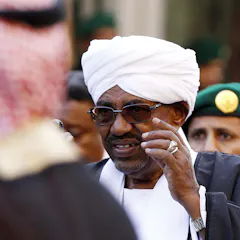
Sudanese protesters against al-Bashir’s regime have scored an important victory. But there’s a long way to go before democracy is restored.
Top contributors
-

Researcher, Helwan University
-
Associate Professor of Urban & Environmental Design, University of Khartoum
-
Professor of History, Durham University
-
Professor of History, Colgate University
-
Senior Lecturer in International Law, The University of Western Australia
-
Lecturer in History, Newcastle University
-
Chercheure-associée au Centre Thucydide, Université Paris-Panthéon-Assas
-
Associate Professor of International Studies, University of Nottingham
-
Senior Research Fellow, Norwegian Institute of International Affairs and Visiting Professor University of Buckingham, Norwegian Institute of International Affairs
-
Associate Professor International Law, Roskilde University
-
Research Professor and Executive Director of the World Peace Foundation at The Fletcher School, Tufts University
-
Professor Emeritus in Global Health & Humanitarian Affairs, University of Manchester
-
Professor of Earth System Science, UCL
-
Professor in Global Security, RMIT University
-
Lecturer, Political Science Department, University of Ghana