

Kenya’s new refugee policy seeks to shift away from a camp-based system to one centred on inclusion into the local economy.
Articles on Dadaab
Displaying all articles

Tanzania’s refugee policy in the 1990s is a good example of how geopolitics affects ordinary refugees.
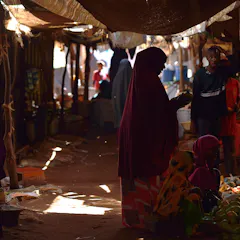
By securitising refugees, in this case accusing them of instigating terror, the Kenyan government is compromising their social, economic and political rights as set out in international law.
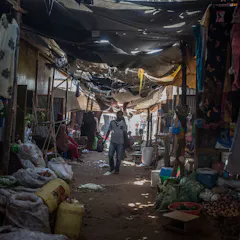
On paper, refugees on Kenyan soil have the full protection of local and international laws and regulations. But much more needs to be done on the ground to bring them in from the fringes of society.
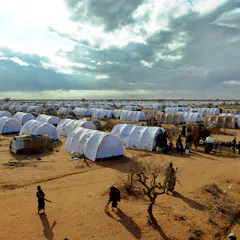
While there is great potential for online higher education to reach many people, caution needs to be paid if online education is to live up to the hype.
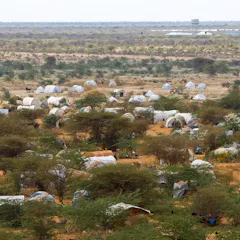
Many African countries host large numbers of asylum seekers. But should they be held in camps, or be allowed to integrate into cities?
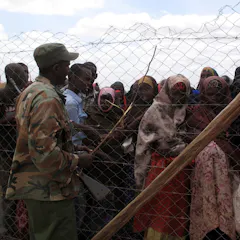
Human rights organisations worry that the UNHCR may be helping refugees return to war zones and, as an enabler of repatriation, are helping Kenya to violate refugees’ rights
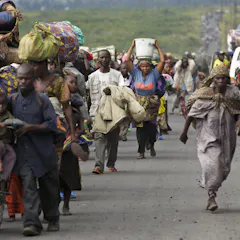
The lengthy nature of some of Africa’s wars is one of the main hindrances to ending the “refugee cycle”.
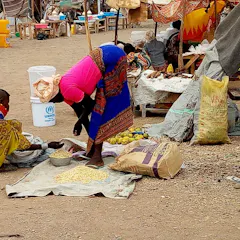
Refugee policy may well be a humanitarian issue. But it is also a development issue.
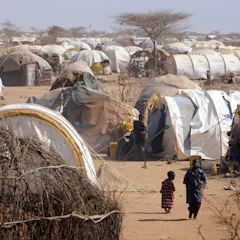
UN Refugee Agency special envoy Ambassador Mohamed Abdi Affey, explains what caused the reversal of the decision to close Dadaab, and what the future holds for Kenya’s Somali refugees.
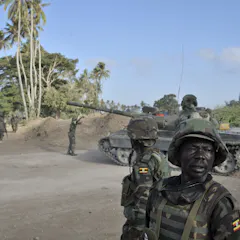
It’s unclear exactly when Kenya’s next president will begin the process of withdrawing troops from Somalia. If it’s too rushed, the move might destabilise the region.
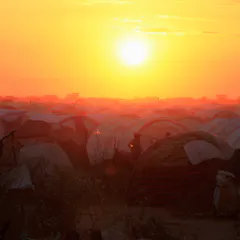
Kenya says it will appeal a high court ruling blocking the closure of the Dadaab refugee camp. The country must now weigh national security against its international obligations.

A Kenyan court has ruled that the government’s closure of Dadaab refugee camp is unconstitutional. This will affect the future of the refugees currently in the camp.
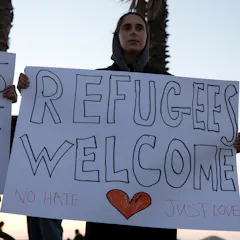
Unfortunately potential solutions to Trump’s ban are few. Refugee agencies cannot force the US to take refugees and so they will need to find sanctuary elsewhere.
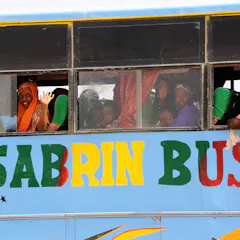
Maintaining a large refugee population when the country is struggling to deal with its own challenges is a big ask
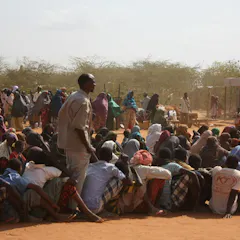
The timing of Kenya’s announcement that it will close the world’s largest refugee camp, and its reasons for doing so, hold important lessons for understanding refugee situations around the world.
Top contributors
-

Lecturer and Senior Research Fellow at the South African Research Chair in International Law (SARCIL), University of Johannesburg
-
Professor of Forced Migration and International Affairs, University of Oxford
-
Visiting Lecturer, Department of International Politics, City St George's, University of London
-
Lecturer, International Law, University of Nairobi
-
Honorary Research Associate at Institute for Democracy Citizenship and Public Policy in Africa, University of Cape Town
-
Adjunct Associate Professor, Departnent of Social Sciences, Pwani University
-
Professor, Université de Genève
-
Assistant Professor in Political Theory, University of Essex
-
Assistant Professor, Loyola University Chicago
-
Post Doctoral Researcher, Université de Genève
-
Senior researcher, Arnold Bergstraesser Institute
-
PhD candidate in International Relations, Monash University
-
Senior Researcher, Arnold Bergstraesser Institute