

Apps inviting anonymous comments play upon our desire to know our social standing, but are an open goal for bullies.
Articles on Cyberbullying
Displaying 81 - 100 of 128 articles

A recent Pew survey reported that young African-Americans are more likely to be both victims and perpetrators of cyberbullying. Why?

The online abuse of journalists is increasingly leading to self-censorship and websites abandoning the comment function altogether
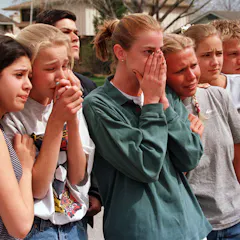
Youth who are bullied may be at even higher risk than other youth for gun violence. These bullied youngsters were three times more likely to have access to a loaded gun, a recent study states.

Automated systems that watch online chats and flag racist, sexist and bullying behavior could help curtail internet abuse.

At this time, researchers cannot prove a direct relationship. But social learning theory shows that people learn from one another, via observation, imitation and modeling.

Children and adolescents relate to each other through social media, for good and for bad.

Communications Minister Mitch Fifield told Q&A that the Children’s eSafety Commissioner has investigated 11,000 cases of cyberbullying and can fine social media firms $17,000 a day. Is that true?

The most effective weapons in the fight to stop LGBTQ bullying might just be quite simple – young people coming together to talk, laugh and share their lives.
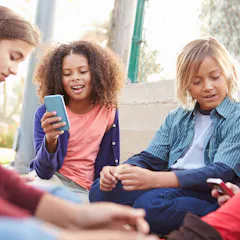
The majority of parents in the UK believe social media harms their children’s moral development.

A shocking incident has raised concerns about the tone of political debate in the UK and especially the role of the internet.

Social media companies have agreed to a European plan to take down offensive material within 24 hours. Will it work and if so, can it be extended to other regions?

More pupils in Ghana, Malawi and South Africa are taking smartphones to school. These can be useful learning tools – or terrible distractions.

Children who are bullied are more likely to suffer from depression and anxiety. They are also more likely to contemplate or attempt suicide.
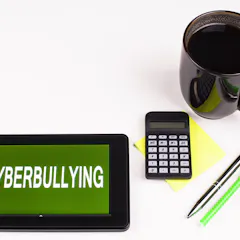
One in five government employees are experiencing or observing workplace cyberbullying, a study shows.

In a media ecology defined through “interactive” behaviour – “web 2.0,” the blogging platforms now favoured by news and cultural criticism sites – a new figure has emerged from the digital abyss: the serial commenter.

Women and men are just as likely to report experiencing any form of digital harassment and abuse. However, the nature and impacts of these online harms differ significantly by gender and age.

Kids today face a variety of digital stressors –from negotiating how much communication to have with close friends to digital abuse.

The social media giant says it takes online abuse seriously. But there are calls for it to do more amid reports it’s not doing enough to deal with threats or abuse.

Brutal sexual threats against perceived trespassers, made anonymously, with the expectation they will be seen as “humorous”. Sound familiar? Modern-day trolls belong to a long, and troubling, lineage.
Top contributors
-

Researcher, Digital Wellbeing, Western Sydney University
-
Adjunct Senior Lecturer, Applied Ethics and CyberSecurity, Griffith University
-
Lecturer in Media and Communications, The University of Melbourne
-
Doctoral researcher investigating governance of social media platforms, Queensland University of Technology
-
Professor of Law, University of Technology Sydney
-
Associate Professor, Educational Technology, Université Laval
-
Associate Professor of Criminology, Saint Mary’s University
-
Professor, Canada Research Chair in Determinants of Child Development, Owerko Centre at the Alberta Children’s Hospital Research Institute, University of Calgary
-
Associate Professor in Convergent and Online Media, University of Sydney
-
Reader in Psychology, Cyberpsychology Research Network Co-Director and ADM Forensic Editor, University of Huddersfield
-
Professor of Psychology, University of Canberra
-
Chair professor, University of Huddersfield
-
Senior research scientist, Wellesley Centers for Women, Wellesley College and Director of Youth, Media & Wellbeing Research Lab, Wellesley College
-
Senior Lecturer, Journalism and Digital Communication, University of Lancashire
-
Senior Lecturer in Forensic Linguistics, Lancaster University