
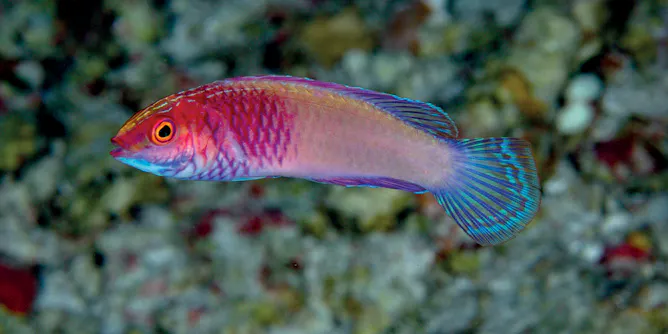
From fluffy crabs that wear sea sponge hats to worms that glow in the dark, scientists are constantly finding amazing new life forms in the ocean.
Articles on Curious Kids US
Displaying 161 - 180 of 334 articles
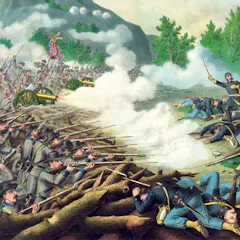
There was one central reason the Civil War happened.

A researcher who studies ways to help students become better readers and writers describes how to create a homework habit using a loop: cue, routine, reward.
Some rocks will burn, and others will melt, depending on how they were formed and what minerals they contain.

Called your ‘inner voice,’ it develops along with your reading skills.
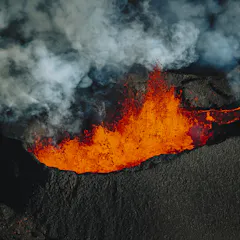
As they shape the Earth, volcanoes inspire and terrify humans.

Each rainbow is personal – the rainbow you see isn’t exactly the same rainbow the next person sees. It’s all in the eye of the beholder.

The Earth isn’t permanent, but it was here for four billion years before humans arrived and should be here for several billion more.
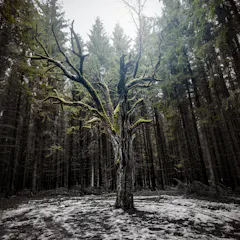
Even in death, a tree helps others live.
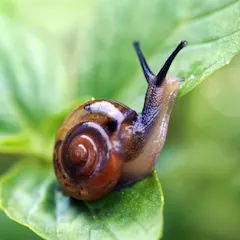
These members of the mollusk family may be slow, small and slimy, but they are an indispensable part of the ecosystem.

Even fake guns can be dangerous if they are mistaken for real ones by the police or other armed adults.

Your experience of time is relative because it depends on motion – more specifically, your speed and acceleration.

Almost everybody uses the internet just about every day. But do you really know what the internet is?

Humans generate a lot of trash, but there are cheaper and safer ways to handle it than loading it on rockets.
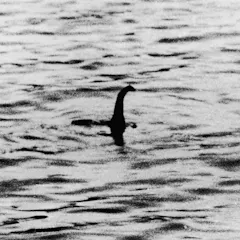
The idea of a creature like the Loch Ness monster fascinates people. But does the scientific evidence say it’s a prehistoric beast or total fake?

Fossil evidence of how the earliest life on Earth came to be is hard to come by. But scientists have come up with a few theories based on the microbes, viruses and prions existing today.

An astronomer takes us on a tour of the universe to learn about the birth of stars and planets and how they get their spin.
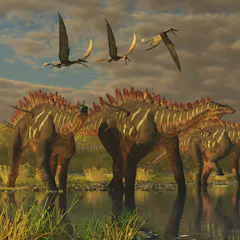
Birds and dinosaurs lived together for millions of years, but only toothless birds survived the asteroid impact that upended life on Earth.

Prisons and jails have a long history, but they weren’t always used for the same kinds of punishment.
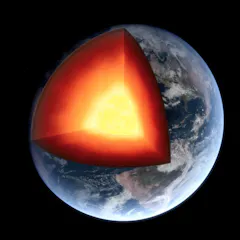
Starting at the surface, you would have to dig nearly 2,000 miles before reaching the Earth’s core. No one could survive that trip – and the 10,000-degree F heat once there would vaporize you anyway.
Top contributors
-

Distinguished Professor Emeritus of Anthropology, Binghamton University, State University of New York
-
Assistant Professor of Astronomy and Astrophysics, University of Maryland, Baltimore County
-
Professor of Astronomy, UMass Lowell
-
Professor of Biology, Clarkson University
-
Associate Professor of Veterinary Clinical Sciences, Oklahoma State University
-
University Distinguished Professor of Astronomy, University of Arizona
-
Doctoral Student in Biomedical Sciences, University of South Carolina
-
Lecturer in Geosciences, University of Montana
-
Assistant Professor of Gastroenterology and Hepatology, School of Medicine, University of Washington
-
Executive Dean of the College of Arts, Sciences & Education and Professor of Biological Sciences, Florida International University
-
Assistant Professor of Biological Anthropology, University of Tennessee
-
Professor and Chair of History Department, Colorado State University
-
Vice President of Academic Affairs and Dean of the College, Grinnell College
-
Associate Professor of Physics, University of Richmond
-
Associate Professor of Astronomy, Boise State University