

Up to 50% of US teens feel they are addicted to their devices. But help is out there.
Articles on Curious Kids US
Displaying 141 - 160 of 334 articles

An astronomer explains why space looks so dark despite containing 200 billion trillion stars.

Balancing well is a whole-body experience that develops over time and takes practice to master.

Measuring the ages of planets and stars is tricky. An observational astrophysicist describes the subtle clues that provide good estimates for how old different space objects are.

An aerospace engineer explains why it’s so hard to tell just how fast an airplane is really moving.
A pediatric urologist explains how the bladder and the brain communicate to wake you up when you need to ‘go’ – and how that communication might break down.
Animals often give birth to litters of more than one offspring at a time. But are those babies twins?
Flies often beat out competitors for food because of their specialized sensing organs called antennae.
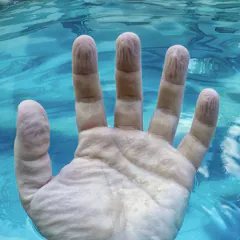
Recent research suggests blood vessels are the key to why fingers and toes turn pruny and pale after being submerged for a while.

An ophthalmologist explains how important tears are to keeping your eyes feeling good and working well – whether you’re on dry land or swimming in a body of water.

You’re not allowed to visit the part of Nevada known as Area 51. That’s because it’s a top-secret government facility. But the secrecy has to do with spy planes, not space aliens.

Traditional businesses operate with an established solution to a known problem. Startups focus on a product or service no one else provides.

If an astronaut were to die on Mars, neither cremation nor burial would be good options.

Math is more than memorizing times tables and doing homework problems. It is woven into more aspects of your life than you might think.
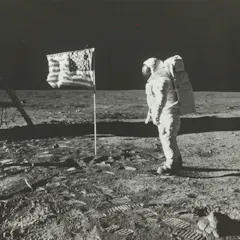
Some people incorrectly say the Moon landings didn’t happen. But the evidence – and logic – isn’t on their side.
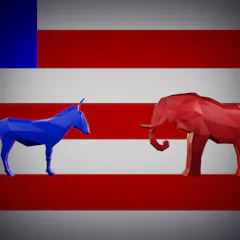
The United States has a two-party political system because of single-winner plurality voting.
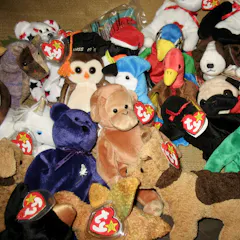
An expert in high-end collectibles explains why certain items can become valuable – and also how they can lose worth.

You can squash small bugs by stepping on them, but can you crush even tinier microorganisms like viruses and bacteria? It turns out that you’d need to apply a lot of pressure.

Humans have figured out how to season their food with virtually every part of plants.

Maybe it was a nuclear war, devastating climate change, or a killer virus. But if something caused people to disappear, imagine what would happen afterward.
Top contributors
-

Distinguished Professor Emeritus of Anthropology, Binghamton University, State University of New York
-
Assistant Professor of Astronomy and Astrophysics, University of Maryland, Baltimore County
-
Professor of Astronomy, UMass Lowell
-
Professor of Biology, Clarkson University
-
Associate Professor of Veterinary Clinical Sciences, Oklahoma State University
-
University Distinguished Professor of Astronomy, University of Arizona
-
Doctoral Student in Biomedical Sciences, University of South Carolina
-
Lecturer in Geosciences, University of Montana
-
Assistant Professor of Gastroenterology and Hepatology, School of Medicine, University of Washington
-
Executive Dean of the College of Arts, Sciences & Education and Professor of Biological Sciences, Florida International University
-
Assistant Professor of Biological Anthropology, University of Tennessee
-
Professor and Chair of History Department, Colorado State University
-
Vice President of Academic Affairs and Dean of the College, Grinnell College
-
Associate Professor of Physics, University of Richmond
-
Associate Professor of Astronomy, Boise State University