
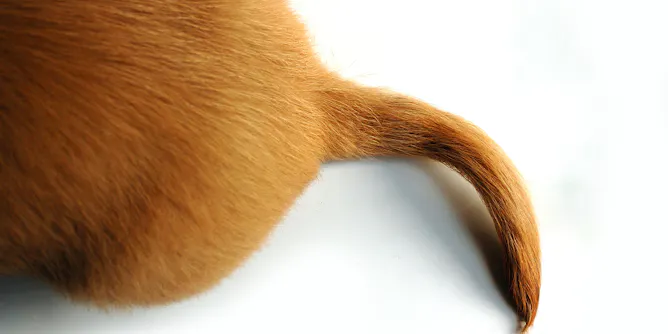
An anthropologist explains some of the many ways animals use their tails, from balancing as they walk to attracting a mate.
Articles on Curious Kids
Displaying 281 - 300 of 825 articles

A language scientist explains that talking was never invented but has evolved over hundreds of thousands of years.

Did you know enamel is the hardest substance in the body? And if you feel pain, it could mean there’s a problem deep inside your tooth.
A species that is an “apex” predator in one environment won’t necessarily remain so in another.

Albert Einstein might have the answer.

Noise pollution is a serious problem, and cars make a lot of it. But roads are also a factor.
The first hammerhead shark was likely the result of a genetic deformity. A biologist explains how shark DNA reveals hammerheads’ history.
It’s all based on their diet and how they capture their food. But did you know some whales do have teeth?
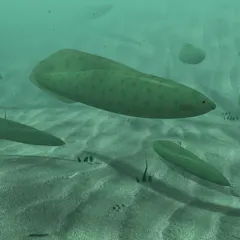
A biologist explains how researchers nail down the age of ancient fossils thanks to a physical process called radioactive decay.
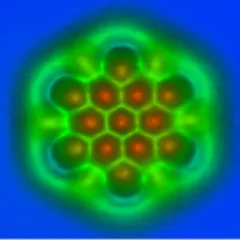
A physicist explains how atoms arrange themselves into molecules – and how scientists are able to image these tiny bits of matter that make up everything around you.

The core principle of education is to enable students to become kind, giving and contributing members of their community and the world.

The Earth has had at least five major ice ages, and humans showed up in time for the most recent one. In fact, we’re still in it.

It’s the oldest light in the universe.
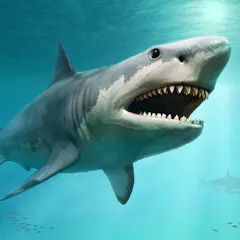
A terrifying sight in ancient waters, the megalodon shark was once the most feared creature in the sea.

Time dilation might seem like science fiction, but it’s not. There are astronauts circling the Earth right now who are experiencing it – though luckily nowhere near as much as Buzz Lightyear.
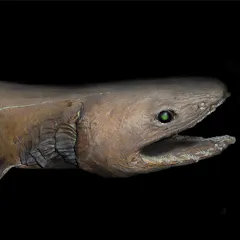
Frilled sharks haven’t changed for about 80 million years! And while they may look a bit like snakes from a distance, they are actually much more similar to other sharks close up.

This technology, popular when automobiles first caught on, had a short resurgence in the 1970s.
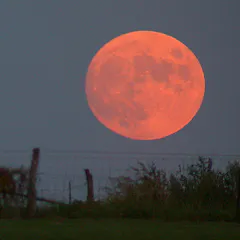
The Moon illusion is what makes the Moon look giant when you see it rising over a distant horizon. An astronomer explains what causes this awe-inspiring trick of the mind.
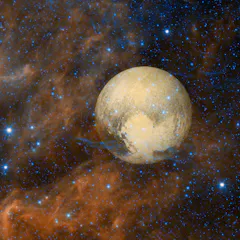
A curious kid asks: Why does it matter if Pluto is a planet or a dwarf planet?

Plastic is made from oil and natural gas, which started out as fossilized plant and animal material. But buried deep underground for millions of years, those materials changed in important ways.
Top contributors
-

Reader in Astrophysics, Keele University
-
Associate Professor of Science & Medicine, Bond University
-
Professor (Astrophysics), University of Southern Queensland
-
Associate Dean of Innovation and Engagement, Swinburne University of Technology
-
PhD Candidate, University of Southern Queensland
-
Distinguished Professor Emeritus of Anthropology, Binghamton University, State University of New York
-
Professor, Philosophy of Science, The University of Melbourne
-
Professor, Macquarie University
-
Researcher, The University of Melbourne
-
Assistant Professor of Medicine, Bond University
-
Professor of Science Communication and Chemistry, University of Hull
-
Lecturer, University of Southern Queensland
-
Associate Professor, School of Animal and Veterinary Science, Adelaide University
-
Principal Lecturer in Wildlife Conservation, Nottingham Trent University
-
Whale Scientist and Lecturer, Faculty of Science and Engineering, Macquarie University