
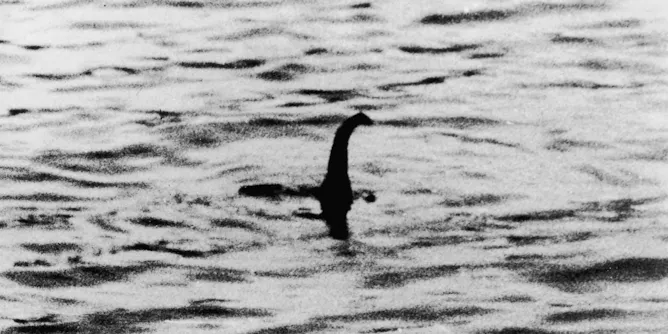
The idea of a creature like the Loch Ness monster fascinates people. But does the scientific evidence say it’s a prehistoric beast or total fake?
Articles on Curious Kids
Displaying 241 - 260 of 825 articles
It can be disruptive or refreshing, and we feel it every single day. But do you ever stop to think what creates wind on our planet?

Fossil evidence of how the earliest life on Earth came to be is hard to come by. But scientists have come up with a few theories based on the microbes, viruses and prions existing today.
The Solar System as we know it doesn’t really make sense without a ninth planet. So then why can’t we find it?
An astronomer takes us on a tour of the universe to learn about the birth of stars and planets and how they get their spin.
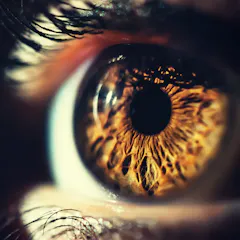
Our DNA contains the information that determines the colour of our eyes.
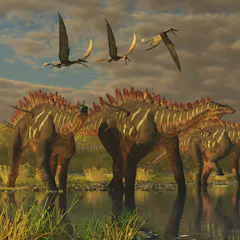
Birds and dinosaurs lived together for millions of years, but only toothless birds survived the asteroid impact that upended life on Earth.

Day to day, sunshine might not affect our mood – but light and dark seasons do.

It depends on whether you are learning as a baby or not.

Prisons and jails have a long history, but they weren’t always used for the same kinds of punishment.
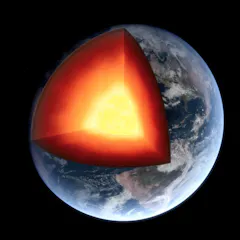
Starting at the surface, you would have to dig nearly 2,000 miles before reaching the Earth’s core. No one could survive that trip – and the 10,000-degree F heat once there would vaporize you anyway.
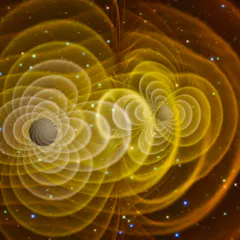
To understand this question, we need to travel back in time.

Some animals have belly buttons that are easy to see, but others have ones that are more difficult to spot.

Rainbows are made when water droplets split light up into colours.

Astrology and astronomy were once practiced side by side by scientists like Galileo and Kepler. And they’re more similar than you might think.

Lots of kids wonder about this. Here are some of the basics.

It takes a lot of steps – and help from other people – to make a physical book you can hold in your hands.

Pictures and sound, flying through the air to a box in your house? Back in the 1940s, it seemed like a miracle.
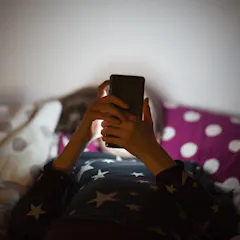
What’s true and what’s not? An expert in media literacy explains how to evaluate information.
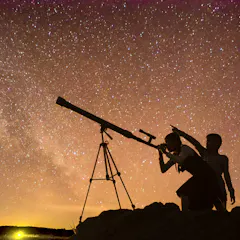
Many galaxies are too faint or small for us to observe easily – but science can help us work it out.
Top contributors
-

Reader in Astrophysics, Keele University
-
Associate Professor of Science & Medicine, Bond University
-
Professor (Astrophysics), University of Southern Queensland
-
Associate Dean of Innovation and Engagement, Swinburne University of Technology
-
PhD Candidate, University of Southern Queensland
-
Distinguished Professor Emeritus of Anthropology, Binghamton University, State University of New York
-
Professor, Philosophy of Science, The University of Melbourne
-
Professor, Macquarie University
-
Researcher, The University of Melbourne
-
Assistant Professor of Medicine, Bond University
-
Professor of Science Communication and Chemistry, University of Hull
-
Lecturer, University of Southern Queensland
-
Associate Professor, School of Animal and Veterinary Science, Adelaide University
-
Principal Lecturer in Wildlife Conservation, Nottingham Trent University
-
Whale Scientist and Lecturer, Faculty of Science and Engineering, Macquarie University