
Epilepsy affects around 70 million people globally, 80% live in developing countries. A shortage of specialists, equipment and drugs complicates effective treatment and management.
Articles on CT scan
Displaying 21 - 31 of 31 articles
In a recent study of almost 11 million young Australians, we showed those exposed to a CT scan before the age of 20 had a small increase in cancer risk in the years after exposure.
Reducing health-care waste relating to unnecessary tests has been a major priority for researchers, governments and health services for decades. But how do we change the behaviour of doctors?
CT scanning allows scientists to observe and “dissect” fossils digitally using computer software - and to uncover secrets that are hundreds of millions of years old.
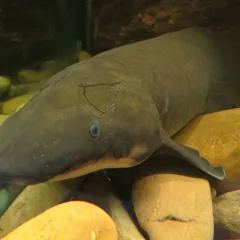
To understand how some creatures evolved, you need to see how their brain developed over millions of years. That’s now possible thanks to some clever use of scanning technology.
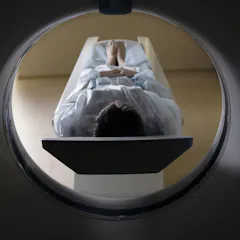
CT scans deliver a hefty dose of ionising radiation. But the benefits outweigh the risks – most of the time.
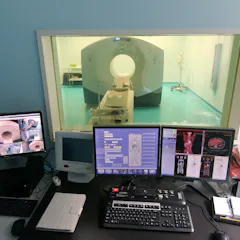
Pairing more powerful computers with increasingly sensitive scanners can yield many benefits in medicine and other fields.
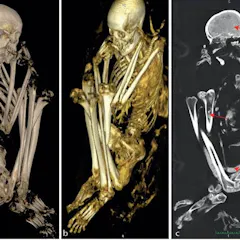
Modern techniques such as CT scanning and ancient DNA analysis have allowed scientists to discover a great deal about a mummy found in a shallow grave in Botswana.
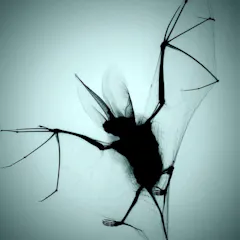
Widening our view of the world can mean taking a much closer look at the familiar. And technology from MRI to Scanning Electron Microscopes, which use focused beams to interact with a sample’s surface…
A University of Melbourne study has found there is a small increase in the risk of cancer after patients had computed tomography…
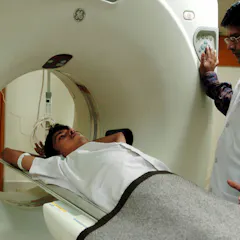
Just two CT (computed tomography) scans of the head in childhood can triple the risk of brain cancer in later life, and as few as five to 10 scans can triple the risk of leukaemia, a study has found. But…
Top contributors
-

Research Associate in the College of Science and Engineering, Flinders University
-
Assistant Professor, University of the Witwatersrand
-
Chancellor's Professor of Medicine, Liberal Arts, and Philanthropy, Indiana University
-
Microscopy and Histology Core Facility Manager, University of Aberdeen
-
Professor and Chair of Electrical and Computer Engineering, Adjunct Professor of Computer Science, Adjunct Professor of Biomedical Engineering, Tufts University
-
Lillian Gilbreth Postdoctoral Fellow, Purdue University
-
Postdoctoral research student, KEMRI-Wellcome Trust Research Programme, Kenya Medical Research Institute
-
Director of the Institute of Evolutionary Medicine, University of Zurich
-
Associate professor in Vertebrate Palaeontology, University of the Witwatersrand
-
Chair professor, University of Huddersfield
-
Professor; Head of the School of Anatomical Sciences, University of the Witwatersrand
-
Postdoctoral Researcher, Massachusetts Institute of Technology (MIT)
-
Vice-President (Students & Learning) and Professor of Anthropology
-
PhD Candidate, College of Science and Engineering, Flinders University
-
Emeritus Strategic Professor in Palaeontology, Flinders University