
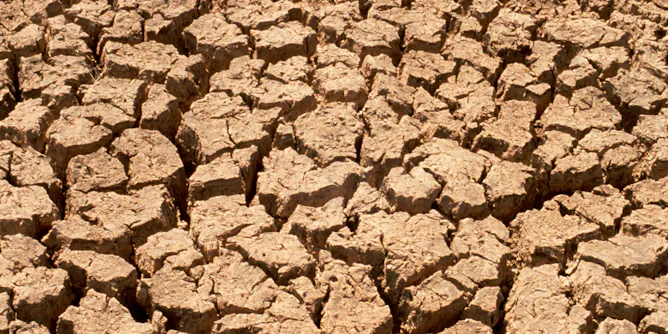
Any shift in the focus of climate change research at CSIRO should look at how to stop the problem and reduce its impact on Australia.
Articles on CSIRO
Displaying 101 - 120 of 169 articles
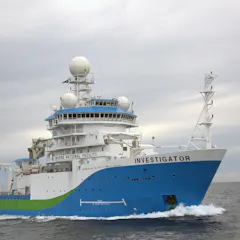
CSIRO’s climate science has contributed a number of important, and unexpected, findings.
CSIRO is set to cut dozens of jobs from its climate research units, as part of a wider series of job losses to be formally announced today.
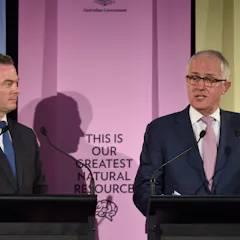
Prime Minister Malcolm Turnbull today announced the National Innovation and Science Agenda (NISA). Here’s what it means for science, commercialisation and industry in Australia.

An emphasis on innovation is great, but we need genuine reforms to universities and tax incentives if we’re to promote collaboration between research and industry.
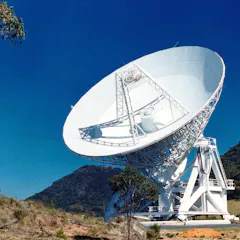
When government funding is cut from science and research in Australia, there are other ways to try to draw money from the public’s purse?

The seesaw between El Niño and La Niña is set to get stronger with global warming. Signs are that this year and next will deliver a big swing from one to the other, prompting fires and floods across the world.

Before World War I, science was considered a novelty in Australia. But the War triggered the realisation that the government needed to invest in scientific research.
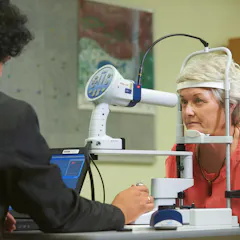
The health sector is good at using technology to help treat patients, but it’s not so good with technology in the business of health care.
The federal government’s 2015 budget has done little to restore confidence in the government’s support for science in Australia.
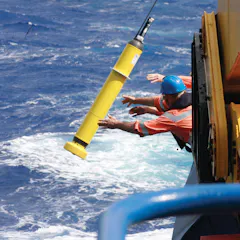
In 1985, when CSIRO’s marine labs were launched, a seven-day weather forecast was little better than chance. Now, thanks to advances in our understanding of the oceans, our predictions are far better.
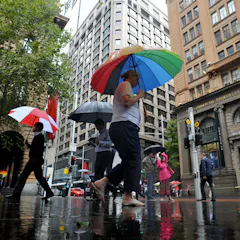
Depending on what model you use, climate change could make Sydney a little bit warmer, much hotter, wetter, or drier. Which one should we use? When it comes to planning for climate change, it’s important to look at all the possible futures.
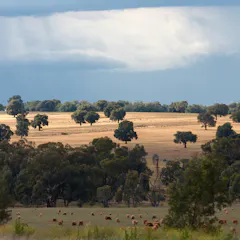
Melbourne to Adelaide, Sydney to Brisbane: climate change could move the climate of Australia’s towns and cities, as revealed by a new website.
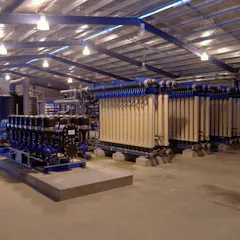
The Queensland government wants companies to use waste water from coal seam gas extraction for useful purposes such as recharging aquifers. New CSIRO research shows that, with careful monitoring, it can be done.

Are you one of those people who can smell when the rain is coming? Ever wondered then what you’re actually smelling?
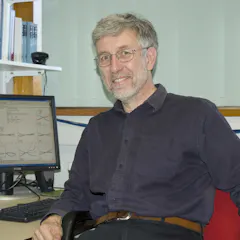
Dr Mike Raupach died earlier this week after a brief illness. He passed away peacefully at home with his family in Canberra, Australia. He was 64. Mike was a brilliant and outstanding scientist. He was…
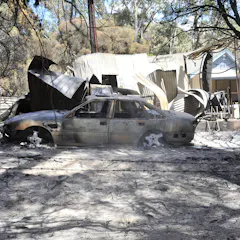
The latest round of bushfires, which claimed 27 homes in the Adelaide Hills, has once again highlighted the importance of planning for the worst. Mercifully, no human lives were lost, and it will be important…

It’s been a year of incredible feats in science and technology but also a year of uncertainty too as the Australian government’s budget proposed changes to the funding for universities and cut funding…
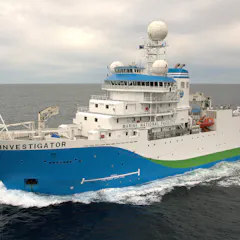
We know more about the surface of the moon than we do about our deepest oceans, and only 12% of the ocean floor within Australia’s Exclusive Economic Zone has so far been mapped. The reason for this is…

How many times have you been looking for information online, only to find yourself going round and round in circles? Or you’ve spent too long poking around a website trying to find what you need, only…
Top contributors
-

Chief Research Scientist, CSIRO Environment; Executive Director, Global Carbon Project, CSIRO
-
Senior Principal Scientist, Strategy and Foresight, CSIRO
-
Communication Manager - CSIRO Oceans and Atmosphere, CSIRO
-
Deputy Director, Engagement and Impact, The ARC Centre of Excellence for the Weather of the 21st Century, Australian National University
-
Lead Economist, CSIRO Futures, CSIRO
-
Director of the ARC Centre of Excellence for Our Future Oceans and Scientia Professor in Oceanography, UNSW
-
Professor emeritus, School of Earth, Atmosphere and Environment, Monash University
-
Professor of Innovation Studies, Swinburne University of Technology
-
Communication Advisor, CSIRO
-
Chair, National Marine Science Committee and Director, CSIRO National Collections and Marine Infrastructure, CSIRO
-
Senior Curator of Marine Invertebrates, Museums Victoria Research Institute
-
Honorary Professor, Australian National University
-
Professor of Atmospheric Sciences, Climate Change Research Centre, UNSW
-
Director, CSIRO Digital Productivity and Services Flagship, CSIRO
-
Director of Astronomy and Space Science, CSIRO