

Mexico’s crime epidemic continues to worsen, as poverty and inequality also grow in the country.
Articles on Criminal justice
Displaying 61 - 80 of 225 articles
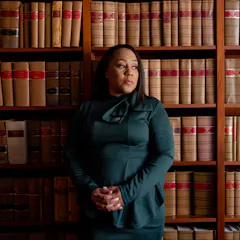
Most prosecutors are elected in uncontested races across the country. But there are signs that the posts are becoming political hotbeds, placing more pressure on the criminal justice system.

Victims of violence are often retraumatized by a legal process that puts prosecuting the accused ahead of supporting the victim.
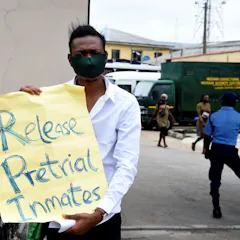
A central repository system offers practical solutions to reducing the large number of awaiting-trial inmates in Nigeria.

You be the judge: just how wacky can jury decisions be?

Sam Uffindell experienced a form of forgiveness after assaulting a younger schoolboy 22 years ago. But this should be the norm under NZ’s child justice system, which is overdue for reform.

Scholars discuss the meaning of Ketanji Brown Jackson’s elevation to the highest court in the land.

A cornerstone of the First Step Act, passed with bipartisan support, is the PATTERN risk-assessment tool.

The murder of Ahmaud Arbery exemplifies the racial, often violent barriers still remaining in the US. The 25-year-old Black man was out for a jog. But three white men thought he was a criminal.

Three men who pursued a black jogger who died of a shotgun wound in the confrontation claim they were trying to conduct a citizen’s arrest.

Punishment for crimes allows a society to express its values, but a theorist of criminal law and punishment argues it could also reinforce prejudicial stereotypes about racial and ethnic groups.

The Attica uprising marked a milestone in the prisoners’ rights movement. Many of the grievances aired in 1971 are still relevant to today’s incarcerated population.

A youth group gives juvenile offenders a chance to advocate for change in the justice system.

While guilty people are more receptive to plea offers, innocent defendants can also see pleading guilty as an attractive option.
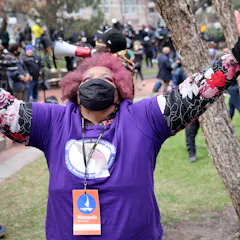
Scholars of policing, law, race and Minnesota history explain the landmark guilty verdicts handed down in the trial for the murder of George Floyd.

The science behind today’s petition to pardon Kathleen Folbigg has been peer reviewed. Here’s what it says.

The UN has twice called on Australia to dismantle its indefinite detention system for people with cognitive impairments and mental illness, which disproportionately affects Indigenous people.

The most commonly used justification for capital punishment is not actually supported by evidence.

A recent Labor Department memo urges agencies to avoid releasing press releases accusing companies of violating laws, to protect the companies’ reputations. People are denied the same protections.

Possessing heroin, cocaine, meth and other drugs for personal use is no longer a criminal offense in Oregon. The idea is to get people with problem drug use help, not punishment.
Top contributors
-

Professor Emerita of Criminology, UNSW
-
Associate Professor, UNSW
-
PhD Candidate in Social Work and Criminology, UNSW
-
Professor of Criminology, University of Bath
-
Director, Centre for Innovative Justice, RMIT University
-
Professor of Sociology of Law and Deviance, Università di Bologna; University of Essex; The University of Melbourne
-
Professor of Law, Boston University
-
Professor of Law, University of Maryland, Baltimore
-
Academic Fellow, University of Sydney Law School, University of Sydney
-
Woodruff Deem Professor of Law and Distinguished Fellow of Religion, Brigham Young University
-
Professor of Philosophy, Macquarie University
-
Senior Lecturer Faculty of Business and Law, De Montfort University
-
Senior Lecturer, School of Law and Politics, Cardiff University
-
Professor in Community and Criminal Justice, De Montfort University
-
Professor of Economics, University of Birmingham