

We still have a huge knowledge gap on how to actually reduce violence.
Articles on Crime
Displaying 41 - 60 of 797 articles

There are never enough lawyers to provide indigent defense, but the situation has gotten worse since the pandemic.

The new police unit will attempt to prevent crime from happening before it starts. But research is mixed with this type of policing.
Where there’s demand, there will be supply, legal or not. From the ‘sly grog’ of the 1920s to the illicit vapes of today, getting regulation right is difficult.

Deploying the military can reduce violent crime (temporarily) but does not address its root causes.

Brenton Tarrant’s case before the Court of Appeal this week raises simple questions that help explain how New Zealand’s legal system works.

While wealth and power can go a long way in fighting a criminal conviction, sometimes these factors fall short.

Convicted criminals won’t be able to use references from family and friends to get more lenient sentences in NSW, but more widespread change could be hard.

Proposed reforms are a missed opportunity to give the public what they want from policing.

New research suggests overdose prevention and supervised consumption sites are not consistently associated with increases in local crime.

Police departments have changed their policies regarding use of force over the years to protect life, but ICE and other federal agencies have lagged in this regard.

These rules have a long history in the United States. They played a role in the notorious murders by the Menendez brothers and Scott Peterson.

This technology was developed in response to the stark disparity in how urban safety is experienced by women and men.
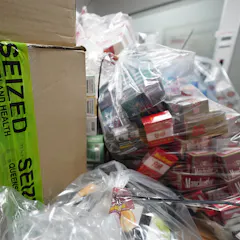
The illicit market has reached the point where it is significantly distorting the national accounts.

Florida’s new unified human trafficking database allows criminologists to determine the scope of the problem and find patterns of exploitation.

Men’s home matches at Tottenham Hotspur Stadium saw an increase in ‘expressive’ crimes driven by emotional release and identity conflict.

In 1955, Ealing Studios released The Ladykillers, a darkly comic tale about a gang of criminals whose bank robbery gets derailed by their elderly landlady.

We all want to know if a guilty party actually regrets what they’ve done, but how can we tell? Well, we sort of can’t.

The art market attracts money-laundering activities. How can it better protect itself?

The government’s laws cancelling social security payments for some accused of crimes turn a safety net into a weapon for punishing people.
Top contributors
-

Associate Professor in Criminal Justice and Criminology, Bond University
-
Professor (Practice), Faculty of Business and Economics, Monash University
-
Dean, School of Law, Deakin University
-
Associate Professor of Domestic and Family Violence, Queensland Centre for Domestic and Family Violence Research, CQUniversity Australia
-
Principal Research Fellow, Griffith University
-
Professor of Sociology of Law and Deviance, Università di Bologna; University of Essex; The University of Melbourne
-
Professor of Comparative Organised Crime and Corruption, University of Bath
-
Associate Professor in Criminology, Deakin University
-
Professor of Law, Auckland University of Technology
-
Associate professor in Criminology, University of New England
-
William Nelson Cromwell Professor of Jurisprudence and Political Science, Amherst College
-
Professor of Criminal Justice, Metropolitan State University
-
CEO, Sentencing Advisory Council
-
Professor of Crime Science, University of Leeds
-
Emeritus Professor in Law and Criminal Justice, Adelaide University