
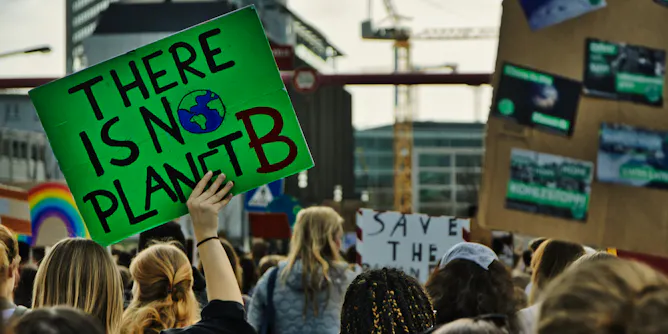
Humans consume excessive resources with little or no benefits to well-being – and the politics of our economy are to blame. To counter the influence of industries in democracy, we must strike.
Articles on Covering Climate Now
Displaying 41 - 60 of 86 articles
From media coverage to story books, children are consistently represented as prophets or puppets in the midst of climate emergency. It’s time for that to change.
We asked a media studies researcher why climate change doesn’t make more of a splash in the press.

A seasonal diet could reconnect people with nature’s rhythms.

Our responsibility to consider how the future might look for generations to come requires imagination.
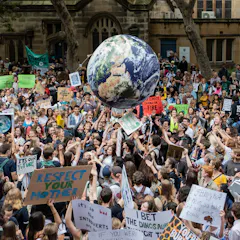
In order to achieve progressive change and combat the climate crisis, workers need to help build a movement powerful enough to challenge the status quo.

Average temperatures in Australia are already high by international standards, but what happens when they continue to rise? How much heat can our bodies withstand?
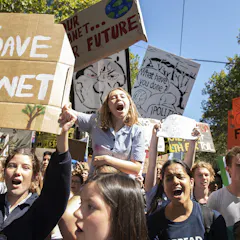
Conscripting young volunteers to combat climate change is not necessary. Australians aged 15-17 already have the highest rates of volunteering in the country.

Publishing the comments of climate change deniers would be journalistically irresponsible. That’s why we’re redoubling our efforts to weed out misinformation.

Vehicle emissions and industrial facilities are contributing to climate change, but many conservatives don’t believe it.
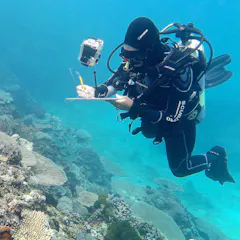
Few feel the pain of the Great Barrier Reef’s decline more acutely than the scientists trying to save it. Ahead of a UN climate summit, two researchers write of their grief, and hope.
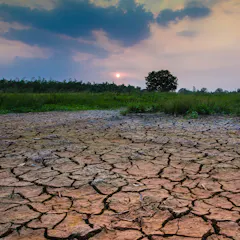
Despite calls for climate change to be part of our education, Australia has not designed, implemented nor funded a coherent, educational approach to our climate emergency.
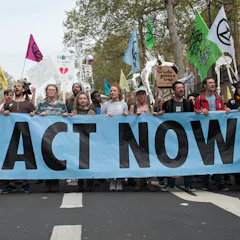
As the UN’s Climate Action Summit approaches, governments need to start doing more than setting targets. Here’s how they can make a start.

Transforming our societies to stop climate change offers us the chance to make our lives better.

Climate science is now firmly part of the zeitgeist.

Far from having a lack of procedures, scientific method is based on observation, prediction, test and appraisal.
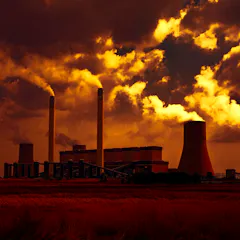
More and more evidence has accumulated which shows that changes in global and regional climate over the last 50 years are almost entirely due to human influence.
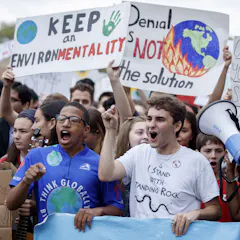
Mass strikes help target the psychological factors most important for acting on climate change, by emphasizing social norms and reinforcing the effectiveness of collective action.
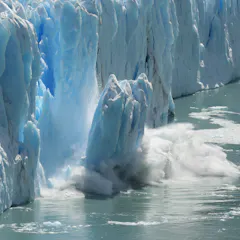
For the past two and a half million years, Earth has experienced regular ice ages, but with carbon dioxide levels now over 400 parts per million, the next ice age is postponed for a very long time.
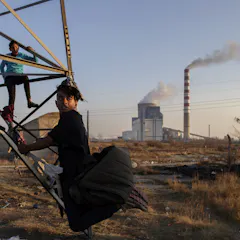
Ahead of the UN climate summit, we take stock of the world’s best and worst performers on climate action - including some surprise success stories.
Top contributors
-

Professor of Environmental Science, Auckland University of Technology
-
Professor in Applied Mathematics, Te Kunenga ki Pūrehuroa – Massey University
-
Professor of Physical Geography (Climate Science), Te Herenga Waka — Victoria University of Wellington
-
Professor of Geology, Auckland University of Technology
-
Emeritus Professor, Energy and Climate Mitigation, Te Kunenga ki Pūrehuroa – Massey University
-
Professor of Cognitive Psychology and Director of the Institute for Climate Risk and Response, UNSW
-
Senior Lecturer in Social Sciences and Public Policy, Auckland University of Technology
-
Associate Professor in Environmental Studies, Te Herenga Waka — Victoria University of Wellington
-
Professor Environment and Health, University of Otago
-
Professor, University of British Columbia
-
Senior Lecturer in English, Manchester Metropolitan University
-
Honorary Fellow, Australian Museum
-
Professor of Landscape Architecture and Urban Forestry, Leeds Beckett University
-
Associate Professor of Employment Relations, GEM
-
Research Chair, African Climate and Development Initiative, University of Cape Town