

Kids need frequent opportunities to encounter numbers, quantities, shapes, patterns, measurement and spatial relationships.
Articles on Counting
Displaying all articles
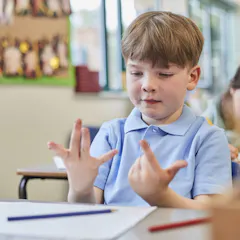
There is no need to discourage finger counting at any time. Children naturally stop using their fingers when they no longer need them.

A new collection of research papers examines how humans conceptualize numbers and the numeral systems we’ve build around them.

Here’s a game: Tell a friend to give you any number and you’ll return one that’s bigger. Just add ‘1’ to whatever number they come up with and you’re sure to win.
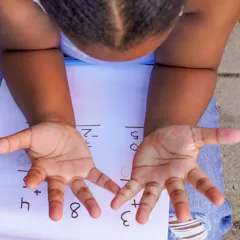
Findings of a study suggest using a ‘hundreds chart’ showing numbers one through 100, beginning with one in the top-left corner, fosters children’s counting by 10s.
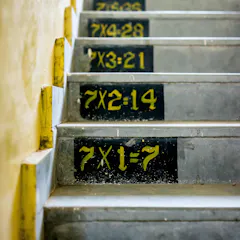
Horizontal number lines are often the default option – but our brains may process numbers more quickly in a vertical arrangement.

Math educators share four ways parents can use counters, like candies or lego pieces, to lead ‘number talks’ that help kids develop an understanding of how numbers are related.

A wide range of animals seem to have a grasp of numbers – but humans hold the trump card.
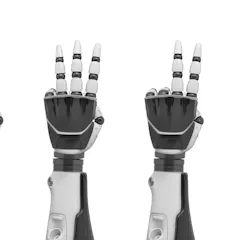
A human knows that four cats, four apples and the symbol 4 all have one thing in common – the abstract concept of ‘four’. Now robots are catching up.
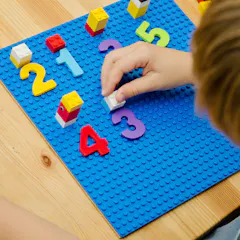
Through games and household tasks, parents can help their children learn basic math skills like counting, geometry and algebraic thinking.

Why are there 60 minutes in an hour, and not 10? Why do we count up to 10, anyway? Quentin, age five, wants to know.
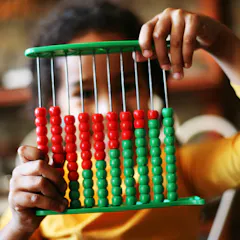
A study with pre-school children found that their motivation and interest improved when they believed they were part of a group.
Top contributors
-

Assistant Professor of Education, University of Houston
-
Professor of Applied Developmental Psychology, University of Maryland, Baltimore County
-
Senior lecturer, UNSW
-
Research Analyst, Prince George's Community College
-
Doctoral Student in Applied Developmental Psychology, University of Maryland, Baltimore County
-
Senior lecturer in marketing, Monash University
-
Assistant Professor, School of Education, St. Francis Xavier University
-
PhD Candidate, Mathematics Education, York University, Canada
-
Research Assistant, Mathematics Teaching and Learning Lab, Concordia University
-
Research Fellow, School of Biological Sciences, Monash University
-
Lecturer in Computer Science, Keele University
-
Researcher and analyst, Monash University
-
Adjunct assistant professor, Institute of Education Sciences, Universidad de O’Higgins (Chile)
-
Reader (Associate Professor) in Psychology, University of York
-
Associate Professor, Department of Physiology, Monash University