

New initiatives have allowed firms to enshrine their purpose in corporate bylaws, but gaps exist between local and international issues that can complicate the definition of a multinational’s purpose.
Articles on Corporations
Displaying 61 - 80 of 103 articles

Corporations are often stepping in to fill the void when governments are failing to adequately address social, economic and environmental crises.
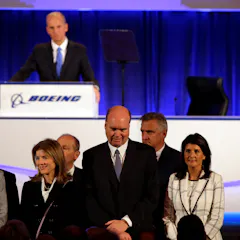
The consequences for board members of corporations found to violate the law and ethical norms are rare and usually minor.

Companies often go out of their way to avoid clearly explaining actions like firing people or informing investors and others of bad news.

Gillette isn’t the only male-centric brand to have recently challenged masculine stereotypes. But advertising research can help us understand why it’s been getting the most flack.
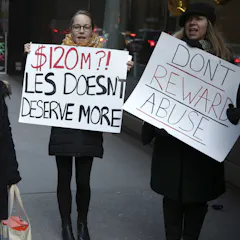
An employment law expert explains why it’s time CEOs had to follow the same rules and harassment policies as every other employee.

The study of innovation in large companies and start-ups would benefit from being inspired by physics, which mobilizes different sets of laws for large masses and particles.

While US companies have made significant strides in creating workplaces that are more inclusive of transexual individuals, discrimination and employment penalties remain.

The allegations raised in a book on the Trump administration by Bob Woodward and an anonymous op-ed would be enough to get most CEOs fired.

A handful of high-profile executives have humanities degrees. But those standouts make up a small proportion of the total pool of American executives.

Apple became the world’s ‘biggest’ company because of its sky-high valuation. But in the past, the largest companies were known for more meaningful metrics such as revenue and number of employes.

A scholar of the media business tries to make sense of the flurry of merger news lately, and why the contested tie-up between AT&T and Time Warner will profoundly reshape the American media landscape.

A corporate apology is always connected to the benefits it brings to the company. It is not a personal apology, it is a form of institutional positioning.

The Mark Lamberti case shows that South African business suffers from deeply rooted racial prejudices.

Why do organisations find it difficult to change when facing a disruption? In part, because over time, what they know how to do migrates from resources to processes and finally values.

Corporates are willing to embrace corporate social responsibility initiatives. But many fail due to cultural insensitivity and misplaced communication strategies.

The share of board seats held by women varies dramatically across the country, from none in Alaska to close to half in New Mexico. A few key policies may make all the difference.

Why some corporations are quick to respond to criticism, and others hide away.

The Steinhoff corporate scandal will do South Africa a huge service if it makes the point that corruption and mismanagement have nothing to do with race.

Despite the pressure for co-operatives to fold into the dominant corporation model, these business models are still worthy.
Top contributors
-

Assistant Professor of Law, Penn State
-
Senior Lecturer in Managerial Communication, MIT Sloan School of Management
-
Professor of Government, The University of Texas at Austin
-
Associate Dean, Research and External Relations; Executive Director, Madden Center for Value Creation; Phil Smith Professor of Entrepreneurship, Florida Atlantic University; Institute for Humane Studies
-
Law Student, Penn State
-
Assistant Professor of Landscape Architecture & Urban Planning, Texas A&M University
-
Professor of Corporate Governance, City St George's, University of London
-
Freelance Reporter and Editor, The Conversation
-
Professor of Education Policy & Law; Director of the National Education Policy Center, University of Colorado Boulder
-
Professor of Political Studies, University of Johannesburg
-
Professor of Law, University of Denver
-
Postdoctoral Research Associate, The Rockefeller University
-
Professor of Petroleum Engineering, The University of Texas at Austin
-
Professor of Climate Justice, Queen Mary University of London
-
Yale University