

Studies from multiple countries have found that long COVID is linked to an increased likelihood of not working. Here’s what’s happened in the UK.
Articles on Coronavirus insights
Displaying 21 - 40 of 1079 articles

Could CBT, a widely used form of ‘talking therapy’, help people who have persistent fatigue after having COVID? A recent study suggests it could.

We found the protection offered by COVID vaccines wanes more quickly in people with severe obesity compared to those of normal weight.

Home working was implemented during the pandemic to contain the spread of COVID. But how did it affect our mental health?

COVID no longer constitutes a public health emergency of international concern, but we need to be better prepared for future pandemics.
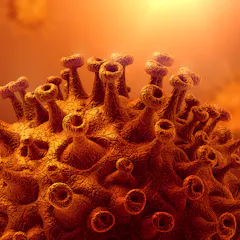
This variant seems to be causing a new symptom not commonly seen with earlier COVID strains.
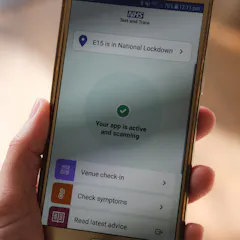
The app will be discontinued on April 27, 2023.

A vaccine produced by Sanofi is being given as part of the 2023 spring booster campaign. An immunology expert explains how it works.
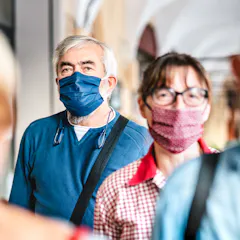
A new study has attempted to quantify the pandemic’s effects on global health by surveying people across 13 countries.

The COVID pandemic has left lingering consequences both for people receiving adult social care and support in England, and for the workforce delivering it.

The ONS’ Coronavirus Infection Survey has ceased after three years. Two experts explain why it was a uniquely useful source of data.

New research finds the COVID pandemic has disproportionately affected the mental health and financial circumstances of adults with long-term mental health problems.

Certain immune cells acquired from a coronavirus that causes the common cold appear to react to COVID – but more so in children that adults.

New reports suggest the pandemic’s origins may be linked to raccoon dogs sold at Wuhan’s Huanan Wholesale Seafood Market. A virologist explains.

Air pollution can increase COVID risk by weakening our immune defences and exacerbating underlying health conditions.

There are a range of reasons people with long COVID may have poorer mental health.
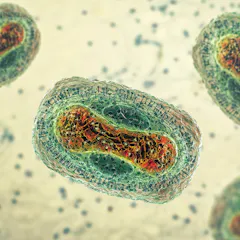
It’s likely a combination of the incidence of viral outbreaks increasing, and the fact we’re getting better at detecting them.

The WHO first described COVID as a pandemic on March 11, 2020. Where are we at, three years later?
A recent study found 59% of people with long COVID had damage to at least one organ a year after their initial symptoms.
Previous infection was highly protective against reinfection with alpha, beta and delta variants, but less so against omicron BA.1.
Top contributors
-

Senior Research Fellow in Global Health, University of Southampton
-
Professor of Research Ethics, University of Portsmouth
-
Professor of Medicine, University of East Anglia
-
Professor of Public Health, University of Sheffield
-
Lecturer in Psychology, Swansea University
-
Professor in Immunology, University of Manchester
-
Professor of Mathematics and Statistics, University of Strathclyde
-
Professor of Mathematical Biology and Public Engagement, University of Bath
-
Associate Professor in Viral Immunology, University of Birmingham
-
Scientific Officer in Biomedical Sciences, University of Leeds
-
Principal Lecturer, Microbiology and Biomedical Science Practice, Fellow of the Institute of Biomedical Science, University of Brighton
-
Clinical Research Fellow in Viral Immunology and Veterinary Surgeon, University of Cambridge
-
Consultant Neonatologist and Professor of Ethics, University of Oxford
-
Assistant Professor of Health Promotion and Policy, UMass Amherst
-
Professor of Primary Care Health Sciences, University of Oxford