

Unequal access to contraception poses risks to reproductive-age women, families and Nigeria’s development.
Articles on Contraceptive pill
Displaying 1 - 20 of 31 articles

Yaz and Yasmin protect against pregnancy and can help manage some hormone-related conditions.
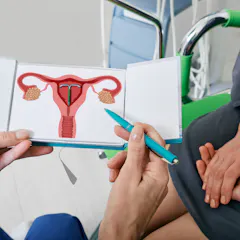
The contraceptive pill is responsible for preventing more cancers than it contributes to. Long-acting contraceptives seem to be as safe when it comes to cancer risk.

For most, the benefits of being on the pill far outweigh the side effects.

The Whitlam government’s removal of the sales tax may seem small, but it increased access to the pill for many women and in doing so, changed their lives.

If you’re preparing to come off the pill, it’s hard to know what to expect, particularly if you’ve been on it for a long time.

Some evidence shows that hormonal fluctuations throughout the menstrual cycle can both increase and decrease athletic performance.
Hormone-based contraceptives are in short supply.
New modelling shows skipping the need for a doctors’ prescription and going straight to a pharmacist for the pill could save the health system A$96 million a year and improve women’s health outcomes.

Having a ‘period’ on the pill is far from necessary.

Adenomyosis is a different condition to endometriosis, though many women who have one will have the other.

On the 50th anniversary of Humanae Vitae, an encyclical released by Pope Paul VI calling for prohibition on contraceptive use, a scholar describes the struggles of Catholic women, as well as their activism.

Male contraceptives have been under development for at least the past 50 years, because of the success of the female pill and pessimism about men taking a pill.

There is no biological evidence for “giving your body a break” and in fact, it could do your health more harm than good.

Before the pill, contraceptive options were extremely limited and generally required the cooperation of the male partner. Almost 60 years later, the pill remains the mainstay of contraception.

New research with elite sportswomen found half use hormonal contraceptives.

Why research into male contraception keeps hitting the buffers.
Side effects have led to the plug being pulled on the male contraceptive injection. But what about those experienced by women on the pill?
Studies have suggested that women using a particular kind of injectable contraceptive are more susceptible to HIV infection. Research in mice offers new insights.

Providing women with a range of reproductive health options – from abortions to IUDs – is not only essential for their financial security but good for the economy as well.
Top contributors
-

Associate Professor in Contraception, Reproductive and Sexual Health, Anglia Ruskin University
-
Lecturer in the School of Women's and Children's Health, UNSW
-
Senior lecturer in reproductive Biology, University of Sheffield
-
Adjunct Professor, La Trobe University
-
Finkel Professor of Global Health, Monash University
-
Associate Professor, Health Sociologist, Centre for Health Equity, Melbourne School of Population and Global Health, The University of Melbourne
-
Senior Research Fellow, Global and Women's Health, School of Public Health and Preventive Medicine, Monash University
-
Associate Professor at NICM Health Research Institute, Western Sydney University
-
Associate Professor, University of Michigan
-
Endocrinologist, Jean Hailes & Senior Postdoctoral Research Fellow, Monash University
-
Professor at Prince Henry's Institute, Hudson Institute
-
Associate Professor, The University of Queensland
-
Venable Professor of Law, University of Baltimore
-
Professor, Roanoke College
-
Senior Research Fellow, Monash University