

It is generally assumed that this disease-control technique goes back to the 1840s, but it’s actually much older.
Articles on Contact tracing
Displaying 81 - 100 of 108 articles
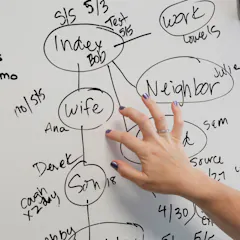
Since the state’s first coronavirus case surfaced, trained case investigators have traced the contacts of every person who tested positive. Here’s what else South Carolina got right.
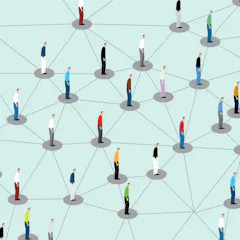
Humans can identify asymptomatic cases, build trust and assauge fears. Apps cannot.
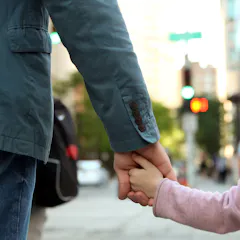
COVIDSafe uses Bluetooth radio waves. These can only measure how physically close two people are, but not if those people are in the same room, or even in different cars passing each other.
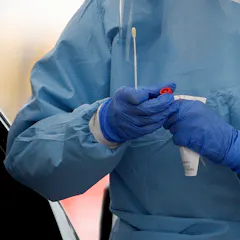
Test, trace, maintain social distance, and keep travel bans and quarantines in place. These measures will help Australia keep the coronavirus in check as we gradually emerge from lockdown hibernation.
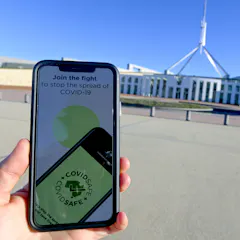
A proposed fix to help the COVIDSafe app work on Apple phones may come with costs to public health and accountability.
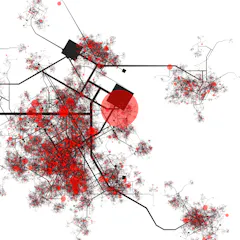
Contact tracing is being touted as essential to controlling the spread of COVID-19, but it comes with alarming concerns related to our rights to privacy.
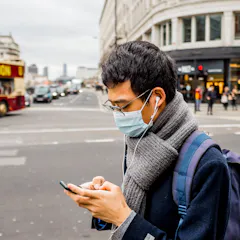
Despite criticism, the NHS COVID-19 contact tracing app seems well designed.

From conflicts with specialised medical devices, through to unresolved problems with iPhone functionality, COVIDSafe is in need of updates. A major one may come within the next few weeks.
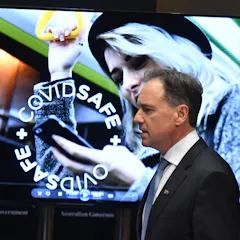
A critical problem with the bill is it allows the federal government to collect much more personal data from COVIDSafe users than is necessary for contact tracing.
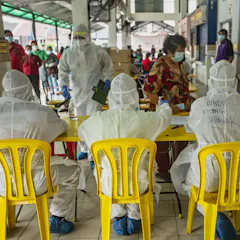
Are criticisms that governments should have done more fair?

Bluetooth wireless communication makes it possible to track when people have been exposed to people infected with the coronavirus. The right cryptography scheme keeps alerts about exposures private.
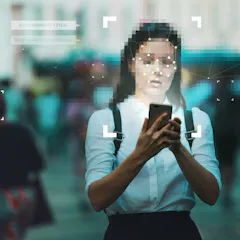
One bespoke contact tracing device is a bluetooth ‘pen’ device, which can be handed in if diagnosed without relying on smartphones.
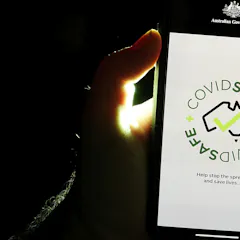
Behavioural economics has three key insights to encourage take-up of the contact-tracing app.
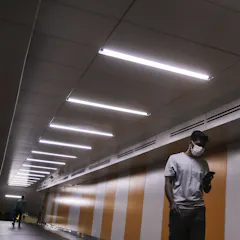
Technology exists that can verify if you’ve come into contact with an infected person without revealing your location or identity – governments just need to be willing to use it.
South Africa is taking seriously concerns about the risks that monitoring can pose for human rights. But there are still loopholes.
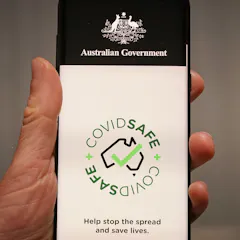
While preliminary tests indicate user data isn’t being sent to the government, a publicly-available source code is needed to ensure the app’s transparency.

For the app to work well, we might need an 80% take-up. Unless it is made mandatory, we’ll need both private and social incentives.
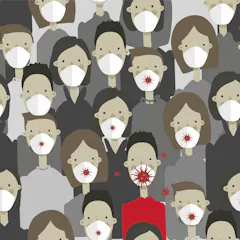
As New Zealand prepares to ease its lockdown from April 28, new COVID-19 clusters are likely to emerge – but a combination of testing and contact tracing should be able to stamp out major outbreaks.
Behavioural economics research suggests very few people will cooperate unless ‘free riders’ are punished.
Top contributors
-

Professor of Public Health, University of Otago
-
Professor of Global Biosecurity, NHMRC L3 Research Fellow, Head, Biosecurity Program, Kirby Institute, UNSW
-
Professor in Applied Mathematics, University of Canterbury
-
Professor of Public Health, University of Otago
-
Chair in Epidemiology, Deakin University
-
Associate Professor, Epidemiology, Deakin University
-
Adjunct professor, Te Herenga Waka — Victoria University of Wellington
-
Scientia Professor of Economics, UNSW
-
Research assistant, University of Auckland, Waipapa Taumata Rau
-
Associate professor, University of Canterbury
-
Research Associate Professor of Public Health, University of Otago
-
Associate Professor, Epidemiology and Environmental Health, University of Canterbury
-
Associate Professor, Computing & Information Systems; Director, Melbourne Data Analytics Platform, The University of Melbourne
-
Research scientist in mathematical modelling, Manaaki Whenua - Landcare Research
-
Research scientist, Manaaki Whenua - Landcare Research