
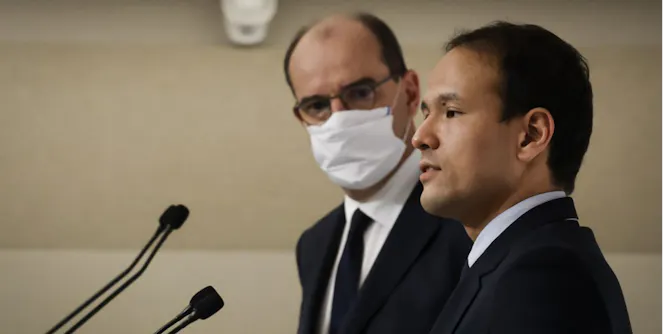
In the current pandemic, finding the right balance between the protection of public health and respecting civil liberties has proven to be supremely difficult.
Articles on Contact-tracing apps
Displaying 1 - 20 of 27 articles
Yo-yoing lockdowns are costly and to be avoided if at all possible. Here is what we can do to dramatically improve testing and tracing.
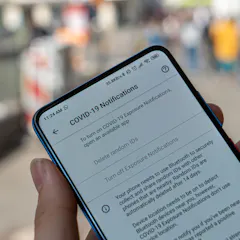
In response to the Covid-19 epidemic, more than 50 countries have developed tracing applications to help alert citizens and authorities when outbreaks occur. But the process is anything but simple.
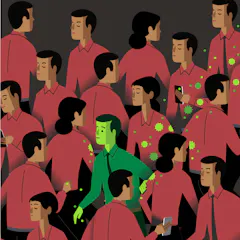
On a family camping trip over the Australia Day long weekend, I sat in a tent with my laptop, designing New South Wales’ first genomic sequencing test for COVID-19.

Effective national leadership and trust in government appear to be prerequisites for countries to achieve widespread digital contact tracing.

While the delay to releasing the app is disappointing, it’s a chance to use behavioural science to optimise its design.
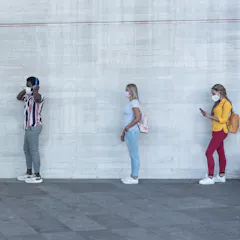
The reason the UK contact-tracing apps failed? It fell foul of privacy rules decided in California.
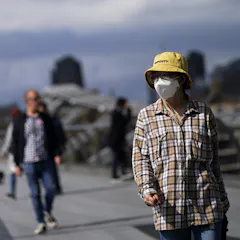
Contact tracing for sexual health has been taking place in England for many years. Why was this workforce ignored in the coronavirus response?
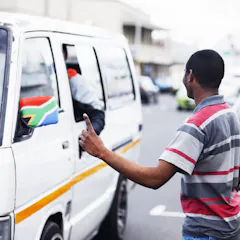
South Africa’s testing and tracing has not been at a level needed to suppress the spread of COVID-19. It must now focus on containing opportunities for super-spreading and transmissions.
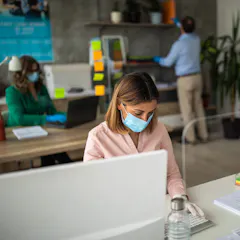
Smartphone apps and wearable devices can tell when workers have been within six feet of each other, promising to help curb the coronavirus. But they’re not all the same when it comes to privacy.
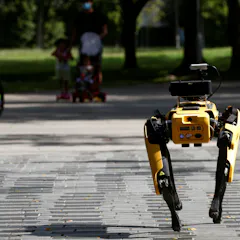
Smart city solutions have proved handy for curbing the contagion, but recent experience has also shown how much they rely on public trust. And that in turn depends on transparency and robust safeguards
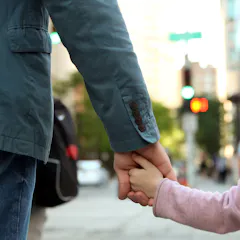
COVIDSafe uses Bluetooth radio waves. These can only measure how physically close two people are, but not if those people are in the same room, or even in different cars passing each other.
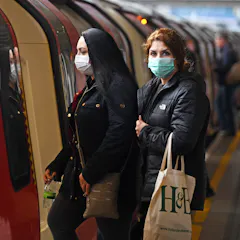
Data privacy is a major concern but people seem willing to download the app.
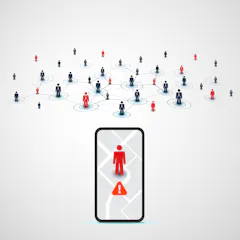
Only 51% of survey participants said they supported linking the number of COVIDSafe app downloads with an easing of lockdown restrictions.
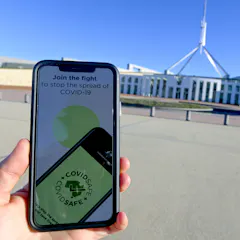
A proposed fix to help the COVIDSafe app work on Apple phones may come with costs to public health and accountability.
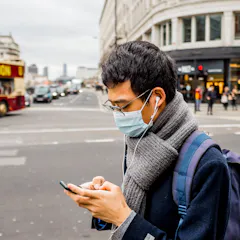
Despite criticism, the NHS COVID-19 contact tracing app seems well designed.

From conflicts with specialised medical devices, through to unresolved problems with iPhone functionality, COVIDSafe is in need of updates. A major one may come within the next few weeks.
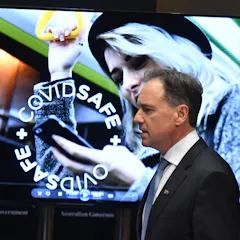
A critical problem with the bill is it allows the federal government to collect much more personal data from COVIDSafe users than is necessary for contact tracing.

Bluetooth wireless communication makes it possible to track when people have been exposed to people infected with the coronavirus. The right cryptography scheme keeps alerts about exposures private.
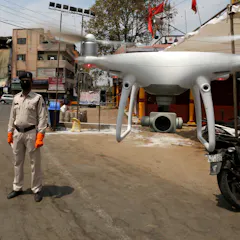
Start-ups in India, many in Kerala, have taken up the challenge of finding innovative solutions to the problems raised by COVID-19.
Top contributors
-

Lead Mobile Networks and Security Engineer, University of Strathclyde
-
Scientia Professor of Economics, UNSW
-
Senior Lecturer in Computer Science, RMIT University Vietnam
-
Dean Faculty of Health Sciences and Professor of Vaccinology at University of the Witwatersrand; and Director of the SAMRC Vaccines and Infectious Diseases Analytics Research Unit, University of the Witwatersrand
-
Researcher, RMIT Blockchain Innovation Hub / Centre for Automated Decision Making & Society / Digital Ethnography Research Centre, RMIT University
-
Professeur de Droit. co-Director of the MSc in Health Management & Data Intelligence. Droit international des affaires, Business and Compliance. Health management, EM Lyon Business School
-
Research Fellow in the Institute for Global City Policing, UCL
-
Professor, International Institute for Management Development (IMD)
-
Professor of History, UNSW
-
Associate Professor, University of Canberra
-
Pro Vice-Chancellor, Climate, Sustainability and Inequality and Director, Southern Centre for Inequality Studies, University of the Witwatersrand
-
Professor of Health Psychology and Director of the Centre for Behavioural Science and Applied Psychology, Sheffield Hallam University
-
Associate Professor, Faculty of Law & Justice; Lead, UNSW Public Interest Law & Tech Initiative, UNSW
-
Professor of Electrical and Computer Engineering, Boston University
-
Professor of Data Science; Director, Adelaide Data Science Centre, Adelaide University