
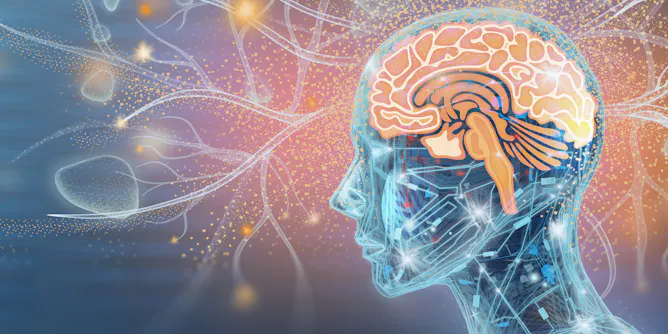
Science has done many things that seem miraculous. Why not transfer your consciousness to a machine?
Articles on Consciousness
Displaying 21 - 40 of 104 articles
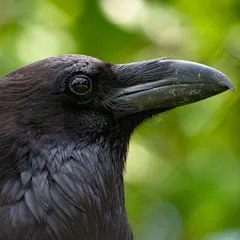
Have you ever wondered what it’s like to be a bird?

When it comes to consciousness, theories are like toothbrushes. Everybody has their own and nobody wants to use anybody else’s.
AI may appear human, but it is an illusion we must tackle.

The point of mindfulness is not to be more productive at work or just to relax − it is inner transformation.

Dogs and infants may not be able to tell us what they’re thinking, but we are developing the tools that will help us find out.

The psychotropic allure of the ayahuasca plant for hundreds of thousands of non-Indigenous consciousness seekers is raising many concerns.
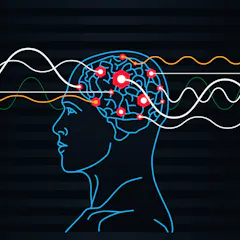
Brain scanners and AI can turn brainwaves into streams of text – but language only captures a tiny fraction of our mental experience.

What if there’s no experiment to work out which theory of consciousness is correct?

Mind wandering is often confused with daydreaming, but they are not the same thing.
The feasibility of mind uploading rests on three core assumptions. How plausible is each one, really?
There’s a battle over consciousness research – and whether it can be understood purely through science.
Big names in consciousness research have signed an open letter attacking ‘integrated information theory’ as pseudoscience, sparking uproar.

The science of human consciousness offers new ways of gauging machine minds – and suggests there’s no obvious reason computers can’t develop awareness.

We still don’t know a lot about how the networks of cells in the brain enable conscious experience.
if a machine can ascribe intent to the events and experiences befalling it, this raises the question of identity and what it means to be aware of oneself and others

Our motives for classifying animals may be more about guilt than curiosity.

The key to understanding why life is not explainable in current physics may be to reconsider our notions of time and information.
New research shows that post-coma patients who appear to be in a minimally conscious state can still mentally react to language. This finding could help improve their diagnosis and treatment.

Recent studies suggest that the mind of a bee is far more sophisticated than once believed.
Top contributors
-

Senior Lecturer in Psychology, Leeds Beckett University
-
Professor of Philosophy, Durham University
-
Associate Professor, Department of Philosophy, University of Birmingham
-
Professor, School of Natural Sciences, Macquarie University
-
Professor, School of Philosophy, Australian National University
-
Hon Professor of Neuropsychology, Cardiff University
-
Emeritus Professor of Psychology, UCL
-
Lead, Cognition and Consciousness Imaging Group, Division of Anaesthesia, University of Cambridge
-
Professor of Philosophy, Monash University
-
Visiting Researcher, Cambridge Neuroscience, University of Cambridge
-
Lecturer in Bioethics, Monash University; The University of Melbourne
-
Professor of Electrical and Computer Engineering, Oklahoma State University
-
Affiliate Guest in Psychology, University of California, Santa Barbara
-
Professor of Clinical Neuropsychology, University of Cambridge
-
Senior Research Fellow, Uehiro Centre for Practical Ethics, University of Oxford