

Most people are overconfident. There’s an evolutionary reason for this.
Articles on Confidence
Displaying 1 - 20 of 34 articles

Second-guessing yourself? Here’s how it can hurt (and at times help) your confidence.

Retirement is not just an event, it’s a process of transition that can have a huge impact psychologically, not just professionally.

New research reveals that being bullied in high school can have effects that last well into adulthood.

Effective decision-makers balance competing priorities and options while staying deeply aware of the needs of their stakeholders, from employees and colleagues to customers and investors.
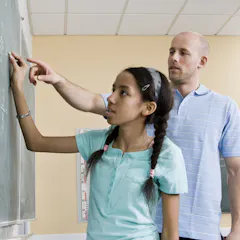
Developing students’ mathematical power and confidence is key to creating true equity.

Cognitive disorders can often impact self-confidence, for the better or for the worse. But we won’t be able to offer adequate treatment unless we understand the mechanisms, one scientist warns.
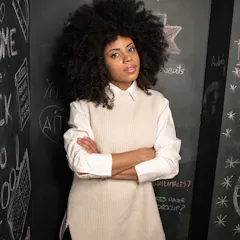
The same boldness that enabled hip-hop to endure can benefit teachers in the classroom, a hip-hop scholar writes.

Many Americans think they know much more about politics than they really do. That overconfidence can thwart democratic politics.

People often try to seem confident and certain in their message so it will be trusted and acted upon. But when information is in flux, research suggests you should be open about what you don’t know.

There is a pervasive message from fashion, tech and the media that women can change their lives if they could be more confident.

Teaching circus arts — from juggling to trapeze — in physical education classes increased children’s physical literacy, resilience and participation, with greater gender equity.

Our report examines Australia’s educational performance against equity and excellence benchmarks. It finds the inequality gap is large and growing.

Confidence matters for men’s job promotion prospects.
But for women, it’s a different story.

The gender gap in computing performance has dramatically narrowed, but a confidence gap remains.

It will be possible to compare the outcomes of games with and without fans, giving new insights into the relationship between fans, home-field advantage and clutch performances.
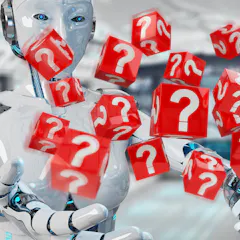
When algorithms are at work, there should be a human safety net to prevent harming people. Artificial intelligence systems can be taught to ask for help.

High school girls who are more confident in their math abilities are more likely to pursue math in college and beyond.

The reason isn’t your astrological sign, but rather the role your birth date plays in deciding when you enter school. Children who are older than their peers in school tend to do better.

As long as there are no hidden agendas, it is surprisingly simple to reach the right decision when faced with contradictory information.
Top contributors
-

Lecturer in Psychology, University of Leicester
-
Senior Lecturer in Psychology and Sex and Relationship Therapist, University of Westminster
-
Postdoctoral Research Associate, Wellcome Trust Centre for Human Neuroimaging, UCL
-
Senior Lecturer in Management, City St George's, University of London
-
Professor of Psychology, The Ohio State University
-
Associate Professor of Psychology, University of Leicester
-
Lecturer of Psychology, Bangor University
-
Professor in Economics, The University of Queensland
-
Chair of Cognitive Psychology, University of Bristol
-
Ph.D. Student in Computer Science, Boston University
-
Professor of Child Public Health, Swansea University
-
Associate Professor at Colorado School of Public Health, University of Colorado Boulder
-
Professor Emeritus, University of Sydney; Professor, Institute for Positive Psychology and Education, Australian Catholic University
-
Lecturer in Psychology, University of Essex
-
Professor of Agricultural and Regional Economics, Penn State