
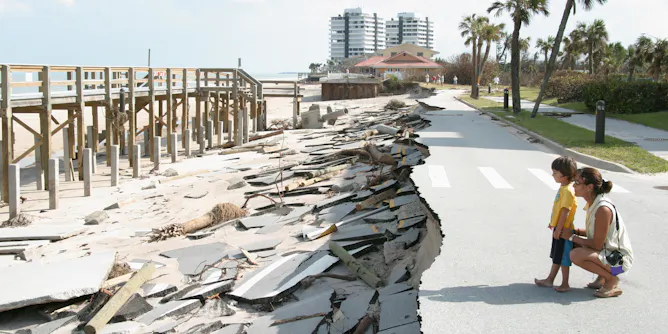
A bipartisan group of senators said it reached a deal on $550 billion in new spending on infrastructure.
Articles on Concrete
Displaying 21 - 40 of 44 articles
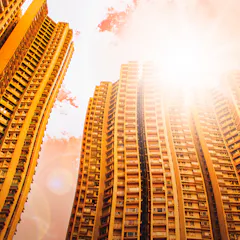
Structures are built to withstand a normal range of conditions. But what’s ‘normal’ is changing rapidly.
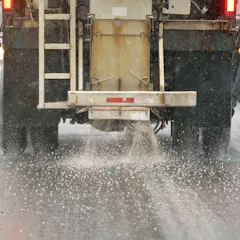
De-icing salts help us get around in winter, but they corrode cars, crack roads and contaminate rivers and lakes. Scientists are working to develop better options by imitating natural antifreezes.

What if roads and bridges could signal structural problems that need repair?

Using sustainable cement would shift Earth Overshoot Day back by 10 days.

As sand markets boom, entrepreneurs, organized crime and others are cashing in — leaving widespread environmental damage in their wake.
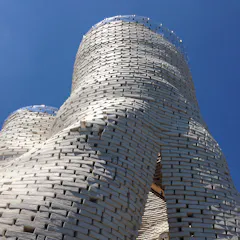
Our climate is changing – and so must architecture.

‘Use the reinforced concrete, Luke.’
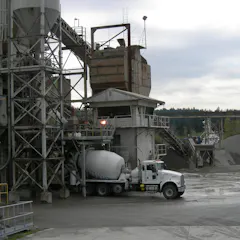
The cement needed to make concrete – the most widely used man-made material – is a major source of global emissions. Researchers are working on a green replacement that could transform the sector.
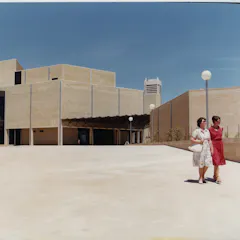
Often described by critics as dehumanising, depressing and oppressive, Brutalism is having a moment – especially on social media.

The research has been done. The evidence is in. We know how to create cities that are sustainable, liveable and affordable. But we have yet to apply that knowledge widely across Australian cities.
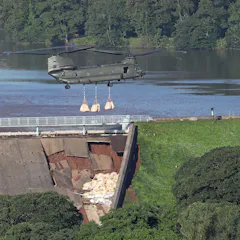
The damage to the dam holding back a reservoir just a mile from the nearest town downriver should focus minds on ensuring civil infrastructure is maintained.
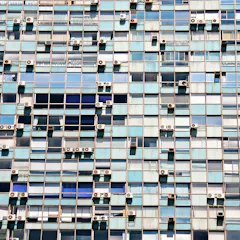
Air conditioning requires energy, and contributes to global warming – here are five ways of cooling which won’t cost the planet.
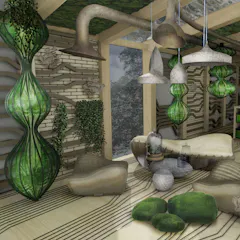
From building blocks made of fungus to self-healing concrete, architecture is using biotechnology to make buildings come alive.

Patching concrete sidewalks, roads and bridges after every season of snow and ice is expensive. A team of engineers is now testing a new approach harnessing bacteria to patch the potholes and cracks.
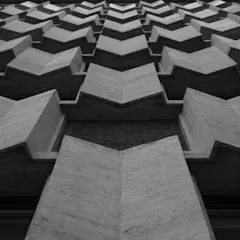
Pouring concrete into formwork limits the creativity of architects to build unique shapes. 3D printing could change that.

A first glimpse of the low-income housing scheme, designed in collaboration with West, raises red flags.
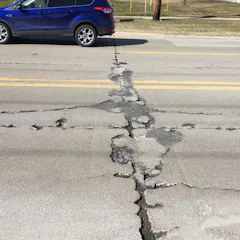
‘Bendable concrete’ is not an oxymoron. Mimicking designs found in nature, engineers are making concrete that gives under stress without shattering – an advance that could improve US infrastructure.
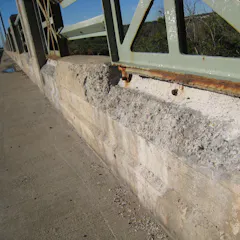
Adding a bit of fungus to the initial ingredient list might be one way to endow concrete with the ability to fill in any bits of damage that occur, without the need for human intervention.

Cement has a huge greenhouse footprint, largely because the chemical process by which it is made releases carbon dioxide. But there are several different ways for cement to green up its act.
Top contributors
-

Professor of Emerging Technology, Co-director of the Hub for Biotechnology in the Built Environment, Newcastle University
-
Research and Innovation Associate at the School of Engineering, Cardiff University
-
Professor of Advanced Energy Research, Director of the Global CO2 Initiative, University of Michigan
-
James R. Rice Distinguished University Professor of Engineering, University of Michigan
-
Assistant Professor of Civil Engineering, Drexel University
-
Academic specialist, Infrastructure Engineering, The University of Melbourne
-
Senior Research Fellow in Economic Geology at the Natural Resources Research Institute, University of Minnesota Duluth
-
Senior research fellow, Adelaide University
-
Professor, Swinburne University of Technology
-
Associate Professor of Structural Engineering and Applied Mechanics, University of Texas at Arlington
-
Associate Professor in Civil Engineering, Cardiff University
-
Professor, Civil Engineering, McMaster University
-
Post doctorate fellow, Department of Civil Engineering, McMaster University
-
Prof of Archaeological Science, University of Oxford
-
Assistant Professor of Mechanical Engineering, Binghamton University, State University of New York