
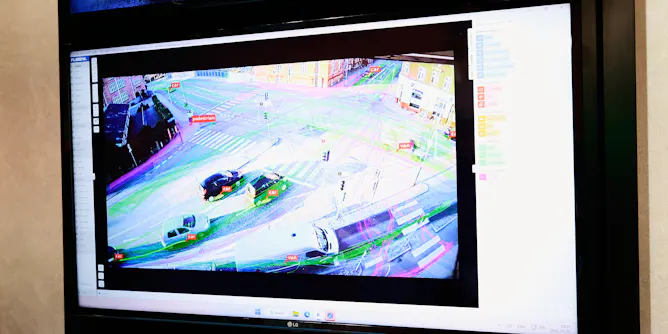
All the training data in the world can’t account for every possibility when AI systems interact with people and the environment.
Articles on Computer vision
Displaying all articles

People and computers perceive the world differently, which can lead AI to make mistakes no human would. Researchers are working on how to bring human and AI vision into alignment.
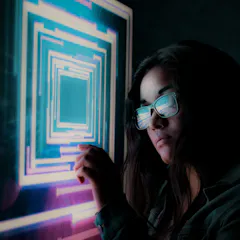
Research asking AI models to describe and generate pictures reveals they see a bright, sensational world of generic images.
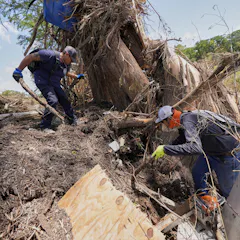
It might seem like an obvious move to deploy drones to help look for flood victims, but floods pose unique challenges that stymie the technology.

AI often has trouble interpreting optical illusions. A new kind of neural network starts to bridge the gap
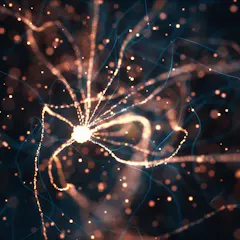
Understanding when and how neurons die is an important part of research on neurodegenerative diseases like Lou Gehrig’s, Alzheimer’s and Parkinson’s diseases.
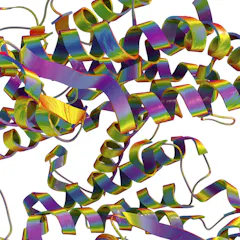
Using a form of artificial intelligence called deep neural networks, researchers can generate new proteins from scratch without having to consult nature.

Computerized systems that automatically determine whether a pitch is a ball or strike promise to make umpiring more accurate, but at what price?
Brain functions integrate and compress multiple components of an experience, including sight and smell – which simply can’t be handled in the way computers sense, process and store data.
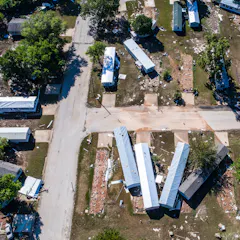
Drones already help with search and rescue, but teaching machines to identify victims on their own could free up human rescuers to do other crucial work.
Top contributors
-

Professor, Northwestern University
-
Scientific Program Leader at Gladstone Institutes, University of California, San Francisco
-
Acting instructor in Computational Biology, University of Washington
-
Professor of Electrical and Computer Engineering, University of Dayton
-
Professor of Electrical and Computer Engineering, Oklahoma State University
-
Principal Research Fellow at AI and Cyber Futures Institute, Charles Sturt University
-
Assistant Professor of Psychology, University of Richmond
-
Ph.D. Student in Robotics, Texas A&M University
-
Professor of Computer Science and Engineering, Texas A&M University
-
Affiliated Faculty of Psychology, New Mexico State University
-
Associate Dean of Research and Professor of Psychology, New Mexico State University
-
Associate Professor of Visual Communication & Digital Media, RMIT University
-
Assistant Professor of Computer and Information Science, University of Mississippi