

Running (or walking) with others is good for health and social connections. But you don’t have to aim for marathons.
Articles on Community
Displaying 181 - 200 of 212 articles
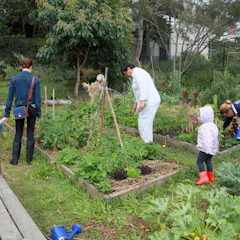
Third places are shared spaces where people can informally socialise. As a potential antidote to the modern scourge of loneliness, it’s worth asking what makes the best of these places tick.

Both young and old can feel like they don’t belong. But loneliness is a social problem, with a social solution.

Done right, a plaza can bring life and a sense of identity to an area. So why has urban design in Australia neglected the town square in favour of green space, and what makes for a successful one?

Trust has returned to areas with a higher concentration of ethnically diverse migrants significantly since 2005, but more must to be done if we want to avoid another Cronulla riot.

The benefits of walking are widely promoted, but most Australian communities still aren’t walker-friendly. Young people, who rely heavily on walking to get around, are clear about what has to change.

The secret of creating attractive, liveable places sounds deceptively simple: connect people to places, people to transport and people to people.

Urban festivals built on community involvement can reinvigorate places and create a shared sense of place and purpose that lasts long after the event is over.
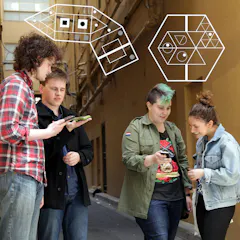
As adults we often trivialise the value of play. But playing games lets us play with possibilities, see how they play out – and exploring alternative realities helps us see the familiar in new ways.

Recently announced changes to private health insurance reinforce the primacy of hospitals for mental health issues. This is despite many inquiries recommending better community mental-health care.

Social connectedness is at least as good for your health as quitting smoking or exercise. So what is it and how can you get some of it?

For the first time in Australia, more higher-density housing than detached housing was being built last year. Compact cities have pros and cons, but the downsides fall more heavily on the poor.

What is an economy for? And how do we build a community where everyone belongs? We need to answer questions like these to create good, sustainable cities.
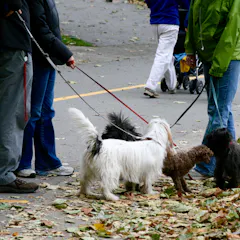
A study of Australian and US cities has demonstrated that pet ownership strengthens people’s connections with their neighbours.

At society’s margins, people without access to the mainstream job economy are able to carve out lives rich in other resources and community.

Oxfam’s efforts to find solutions to the world’s inequalities are welcome but its wrongful use of “human economy” and repackaging it as a concept from high up might do more harm than good.

In a highly individualistic world where work prevents us from spending time with friends and family, a universal basic income could change society.

New study: it’s a case of use them, or lose them.

Australia is a place that prides itself on the fair go. And yet, all is clearly not well.

We’re still in the early days of understanding how cities work. But we do know that creative, healthy and productive cities have certain things in common – and it’s all to do with their ‘urban DMA’.
Top contributors
-

Lecturer in Management, Te Herenga Waka — Victoria University of Wellington
-
Senior Lecturer, Cardiff Metropolitan University
-
Senior Lecturer in Urban and Environmental Planning, Griffith University
-
Professor of Marketing and Consumer Behaviour, Queensland University of Technology
-
PhD Candidate and Sessional Tutor, The University of Melbourne
-
Assistant Professor in Health Sciences, Simon Fraser University
-
Associate Professor, Human Geography and Urban Studies School of Social Sciences/ Institute for Culture and Society, Western Sydney University
-
Professor and Clinical Psychologist, Australian National University
-
Senior Lecturer in Management, Te Herenga Waka — Victoria University of Wellington
-
Senior Lecturer (Organisational Behaviour), Te Herenga Waka — Victoria University of Wellington
-
Professor of Physiology and Neurobiology, Dean of Faculty Affairs, Geisel School of Medicine, Dartmouth College
-
Professor of Strategy and Innovation, Te Herenga Waka — Victoria University of Wellington
-
Professor in Modern History and UKRI Future Leaders Fellow, King's College London
-
Professor of Sustainability and Strategy, University of Victoria
-
Lecturer in History, University of Michigan-Dearborn