

Transport development paved the way for colonization and is directly linked to the chronic and extreme social inequities Indigenous communities continue to face to this day.
Articles on Colonization
Displaying 21 - 40 of 53 articles

Whistleblower allegations that the government possesses UFOs may not be backed up by public physical evidence, but some argue that listening for extraterrestrial life is the first phase of contact.
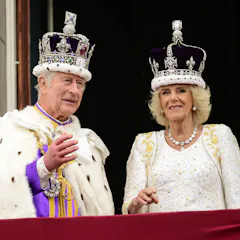
Canadians should learn the lessons of the U.S. and the U.K. to avoid idealizing a republic with a powerful president and at the same time acknowledge that a constitutional monarchy is no alternative.

Gems do not a monarch make, and repatriating the Crown Jewels would strengthen the contemporary British monarchy at a time when it most urgently needs to modernize.

The first ancient DNA sequences from peoples of the medieval Swahili civilization push aside colonialist stories and reveal genetic connections from the past.
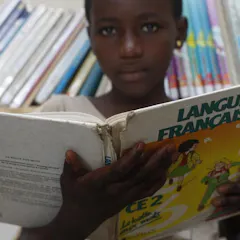
As a language of instruction, French has long held a prominent place in Senegal’s institutions and media. But Wolof, the most spoken national language, has regained its lost places.
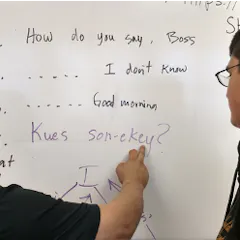
Indigenous language instructors struggle to keep their languages from becoming lost.

A historian of the residential schools explains how religion played a key role in assimilationist systems for Indigenous children in Canada and the United States.

People must learn more about the history and legacies of residential schools and day schools and understand their relationship to Canada’s colonial project.
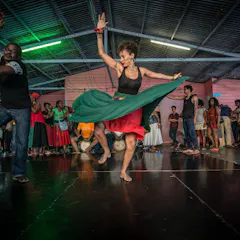
After years of marginalization, the bèlè dance has been embraced by a growing community who see it as a form of social and spiritual healing.

A scholar of social work shares what he has learned about colorism by conducting research in more than 20 countries over the past few decades.

Senegal’s colonial heritage has been interpreted to conceive an African future, turning colonial heritage into an archive of a possible Afrotopia.
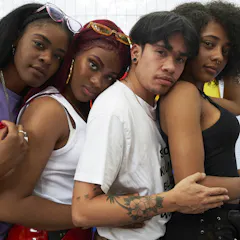
Being both trans and a person of color comes with a unique set of challenges. Collectively working toward overcoming these barriers is one way this community fights for survival.

The similarities between ongoing settler-colonialism in China and the history of settler-colonialism in Canada are frighteningly similar.
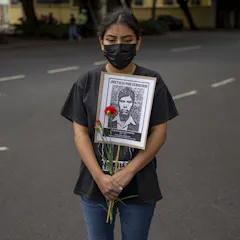
Canadians of Central American descent choose to heal and respond to ongoing trauma with care and community.
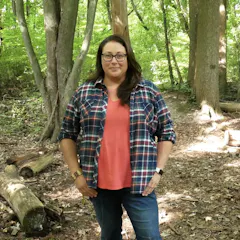
As people recognize the value in weaving together knowledge systems and move towards reconciliation, Indigenous Peoples are being increasingly approached.
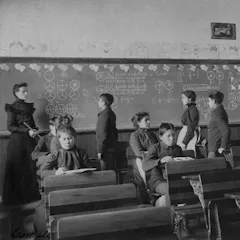
Ernest Knocks Off was 18 when he arrived at the Carlisle boarding school in 1879. He was one of many young Native people who fought – in his case, to the death – to retain their language and culture.

The suburban-built environment whitewashes the violence and theft on which Canada is built.
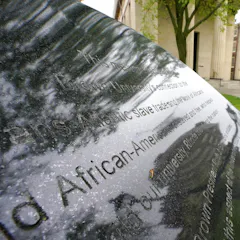
From Germany to Georgetown, the Global North has a lot to learn about reckoning successfully with past human rights wrongs.
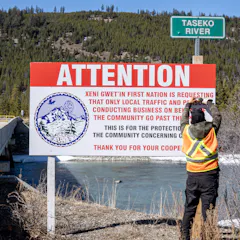
The minutiae of bureaucratic policy and procedure perpetuates colonialism and undermined a fully Tŝilhqot’in-led pandemic response.
Top contributors
-

Rohrbaugh Family Assistant Professor of History, Johns Hopkins University
-
Distinguished Professor and Professor of the Humanities, USC Dornsife College of Letters, Arts and Sciences
-
Tier II Canada Research Chair in Indigenous Peoples and Global Social Justice, University of Regina
-
Associate Professor of Criminology and Criminal Justice, University of Nebraska Omaha
-
Associate professor, McGill University
-
Assistant Professor, Chair in Indigenous Environmental Science, School of Environmental Studies, University of Guelph
-
Associate Professor of English, University of Tennessee
-
Assistant Professor, Political Science, Brock University
-
Associate Professor of Genocide and Mass Atrocity Prevention, Binghamton University, State University of New York
-
Assistant Professor of Nutritional Epidemiology, University of Manitoba
-
PhD Candidate in Business Strategy and Entrepreneurship , Simon Fraser University
-
Associate Professor in Anthropology, University of East Anglia
-
Assistant Professor of English, College of the Holy Cross
-
PhD Candidate in Counseling Psychology, University of Florida
-
PhD Candidate in Counseling Psychology, University of Florida