
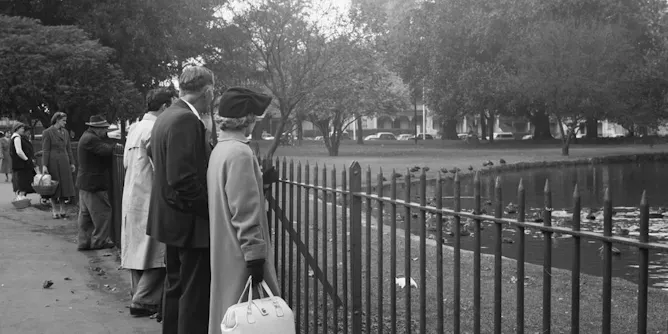
Melbourne is a product of British colonial planning policies to control public access and movement in Australian cities. This legacy still influences the use of public spaces today.
Articles on Colonial legacy
Displaying 21 - 31 of 31 articles
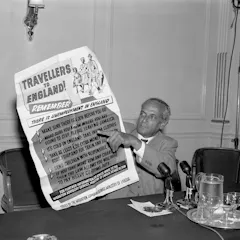
In the 1960s, Britain shut the door on Commonwealth migration, before turing to Europe when it needed more workers.
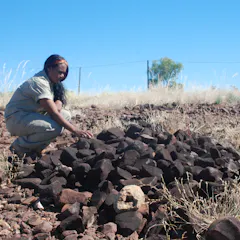
The Gurindji people of the Northern Territory made history 50 years ago by standing up for their rights to land and better pay. But a new book reveals the deeper story behind the Wave Hill Walk-Off.

The lessons Paulo Freire learnt nearly 90 years ago and the theories he developed from painful personal experience still resonate across Africa’s schooling systems today.
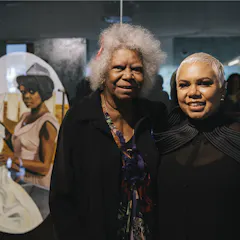
Boneta-Marie Mabo’s art responds to a colonial past in which Aboriginal women were fetishised as “black velvet”. But it also celebrates strong women, including her activist grandmother Bonita Mabo.
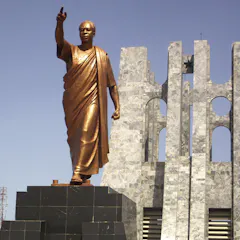
Nobel laureate and Kwame Nkrumah’s economic adviser Arthur Lewis saw Ghana as a testing ground for his ideas on economic development. But he was met with fierce resistance.
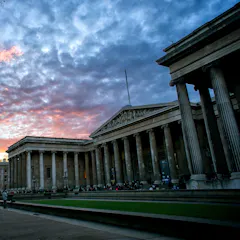
The Dja Dja Warrung bark etchings are hugely significant Aboriginal artefacts. They’re back in Australia for only the second time in 160 years. We look at the complex issue of repatriation.
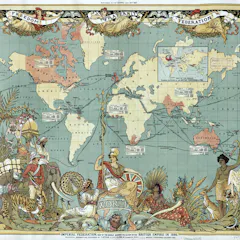
We teach children about the birth and end of Empire, but miss out the violence of what happened in between.

France’s colonial legacy remains an uncomfortable subject.

The emergence of the restorative justice philosophy responds to the need to change South Africa’s retributive criminal justice system to accommodate African legal practices.

A brutal anti-communist purge 50 years ago plunged its literature into obscurity. But now, Indonesia is the Guest of Honour of the world’s largest book festival. What do you know about its literature?
Top contributors
-

Professor of Indian and Colonial History, University of Liverpool; Independent Social Research Foundation
-
Vice Chancellor's Research Fellow, Northumbria University, Newcastle
-
Associate Dean Indigenous and Professor of Publishing and Communications, The University of Melbourne
-
Professor, University of South Africa
-
PhD Candidate, Faculty of Architecture, Building and Planning, The University of Melbourne
-
Professor of Linguistics, The University of Queensland
-
Lecturer in Politics and International Studies, The Open University
-
Lecturer in French Studies, University of Westminster
-
Junior Research Fellow, History of the modern Middle East and North Africa, University of Oxford
-
Professor of History, Université de Yaounde 1
-
Senior Lecturer, Westminster Law School, University of Westminster
-
Director, Centre for Cultural Materials Conservation, The University of Melbourne
-
Early-career researcher (Francophone studies) & English tutor, Université de Montpellier
-
Professor of Modern and Contemporary History, Emeritus, Princeton University
-
Associate Professor of Modern History, University of Oxford