
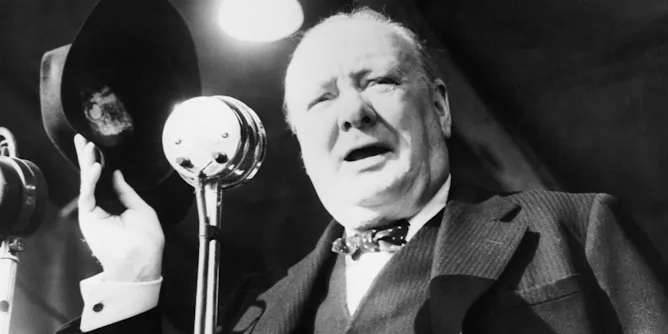
Even a highly popular and respected leader can lose an election, writes a historian – especially if they don’t have a plan for the future. Churchill was one of them.
Articles on Cold War
Displaying 221 - 240 of 360 articles

Many people who participate in disinformation campaigns are unwitting accomplices and much of the information they spread is accurate, which makes it all the harder to identify the campaigns.

The way foreign correspondents cover Russia tells the story of its relations with the rest of the world.

African policymakers should strenuously safeguard their right to choose from the widest possible range of technology options that suit their countries’ development needs.
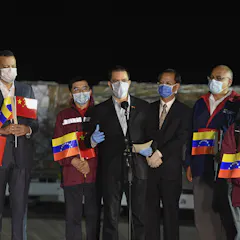
The US may want to rethink its anti-China policy as Beijing’s focus on providing international coronavirus aid and digital and health care investments seems to be working.
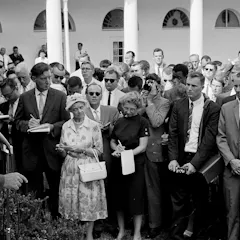
The agency’s earliest ad campaigns emphasized youthful idealism, patriotism and travel opportunities. That was an easier sell than urging Americans to enlist in an anti-communist operation.
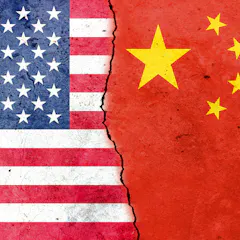
It’s not just the coronavirus that is upping the ante, but tensions over Huawei and other technologies that are threatening to create a new cold war. And Australia will be caught in the middle.
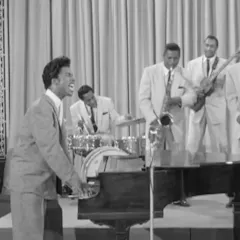
During a tour to Australia, Little Richard feared the nuclear apocalypse and – on stage – annonced he was giving up music.
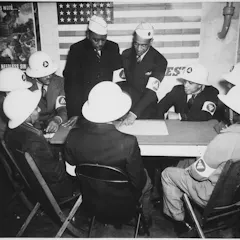
Since the Cold War, Americans have shifted from engaging in active self-rescue to passively waiting for help from a centralized, bureaucratic federal emergency response.
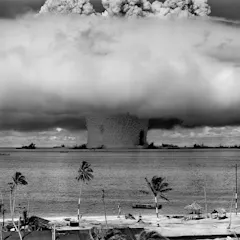
The findings will help determine the age of whale sharks, protecting the endangered animals into the future.
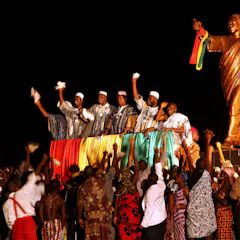
Studies of Kwame Nkrumah have been influenced by the political climate both within and outside Ghana.
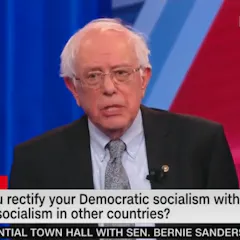
Bernie Sanders is a Democratic Socialist, a potential problem for the presidential candidate. A Cold War campaign to link American-ness and capitalism helped create popular distrust of socialism.
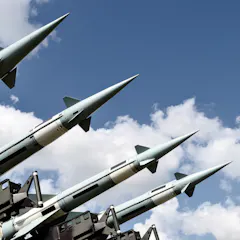
The US could only safely use a fraction of its nuclear stockpile without harming Americans through an environmental event called ‘nuclear autumn.’

Land reform has always been closely tied to shifts in the wider political economy of countries.

Berlin’s rapid transformation is proof that cities can overcome conflict – but the fight against injustice doesn’t end there.
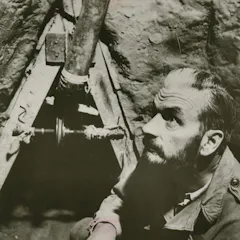
A media historian uses declassified government documents to show how both sides of the Iron Curtain worked to have the projects canned.

Marking the end of the Cold War offers the chance to reflect on the changes and continuities in African politics and international relations since 1989.
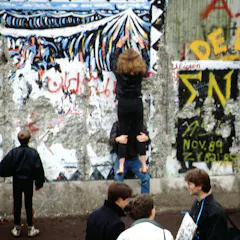
Young people from both East and West Germany congregated in nightclubs which were hastily thrown up in the spaces where the Wall had dominated.
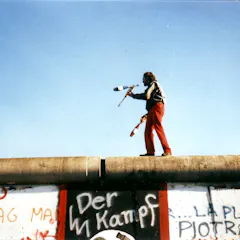
In 1989, Francis Fukuyama pronounced that history had ended. How wrong he was.
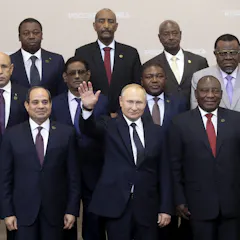
At the Sochi summit, African states embraced Russia’s newly established relations.
Top contributors
-

Honorary Professor of International Relations, University of the Witwatersrand
-
Professor of Political Science, University at Buffalo
-
Lecturer in Peace Studies and International Development, University of Bradford
-
Pro Vice-Chancellor Research and Professor of International Studies, La Trobe University
-
Professor of Political Science, Kansas State University
-
Professor of Political Science, Boise State University
-
Professor of International Security, University of Birmingham
-
Professor of History and Political Science, University of Michigan
-
Senior Research Fellow, Centre for the Advancement of Scholarship, University of Pretoria., University of Pretoria
-
Associate Professor of Global Studies, Appalachian State University
-
Political Scientist, University of the Western Cape
-
Lecturer in Strategic Studies and International Relations, University of Reading
-
Professor of Political Science, Macalester College
-
Associate Professor in Archaeology and Space Studies, Flinders University
-
Professor of Military History, University of Calgary