

When does a shooting become terrorism? A Texas case could help define the answer.
Articles on Coercion
Displaying all articles

Violence toward animals and people often occur together. Understanding these connections can improve safety and outcomes for both.

Understanding what drives recruitment into these academies is not a defence of fraud. It is a precondition for dismantling it.

Changes in how healthcare is managed have had a meaningful effect on what contraceptive options are available to women.

Florida’s new unified human trafficking database allows criminologists to determine the scope of the problem and find patterns of exploitation.

Projecting strength on the global stage doesn’t always require tanks and guns.
Behaviour to ‘promote’ or prevent pregnancy can intersect with domestic, family and sexual violence. It weaponises someone’s reproductive capacity to control them.

Data from the Australian Institute of Criminology shows alarmingly high rates of sexual violence perpetration. Here’s what is shows.

Child criminal exploitation affects children caught up in both county lines drugs trafficking and paramilitary groups. Modern slavery policy – when applied – can better ensure their safety.

The story of Anne Hamilton-Byrne’s cult The Family has been told in a non-fiction book and documentary, a novel, In the Clearing, and now a Disney+ series. What can stories like this teach us?

The term ‘grooming’ is often misused or misunderstood, but its scope reaches far beyond child abuse.

The use of “gamification” in stock trading and other apps raises new legal challenges. Existing legal tools should be adapted to meet these challenges.
Australia has a long history of making unemployment support contingent on the idea of “deservedness”. JobSeeker rules are an extension of that.

Voting at home is safe from fraud and disease, but gives up a key advantage of in-person voting at official polling places: a secure, safe environment where everyone can cast their ballot secretly.

As the Harvey Weinstein trials start, a psychology scholar explains why jurors may be biased on the question of consent. While the situations examined in these studies are not equivalent to sexual assault, they illustrate a pervasive psychological bias.

Lawyers and jurors need to know what causes people to behave the way they do.
It’s time to stop surveying women about their experiences as rape victims, time to research the men who perpetrate these crimes and work to inebriate and isolate women.
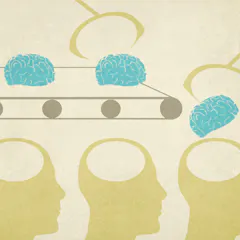
Forty years ago, Rebecca Moore’s two sisters helped plan the Jonestown massacre. But she refuses to say they were brainwashed, arguing that it prevents us from truly understanding their behavior.

Teen sexting is on the rise. Boys and girls are equally likely to share sexually explicit imagery but girls report feeling more pressure to sext and more judgement about how they do it.
Top contributors
-

Professor of Psychology, University of New Brunswick
-
Professor, Department of Obstetrics & Gynecology; Director, Behavioral Health and Research, The University of Texas Medical Branch
-
Professor, Canada Research Chair in Determinants of Child Development, Owerko Centre at the Alberta Children’s Hospital Research Institute, University of Calgary
-
Emerita Professor of Religious Studies, San Diego State University
-
Associate Professor of Criminology, University of South Florida
-
Professor of Criminology, University of South Florida
-
PhD Candidate, Queen's University Belfast
-
Professor of Political Science, University of Rochester
-
Professor of Safeguarding and Violence Prevention, Director of the Institute for Children's Futures, Manchester Metropolitan University
-
Assistant Professor, L’Université d’Ottawa/University of Ottawa
-
Professor (Practice), Faculty of Business and Economics, Monash University
-
Professor of Organizational Behavior, Cornell University
-
Sessional Academic, Literature and Culture; Professional & Creative Writing Teacher, The University of Queensland
-
Associate Professor in Criminal Law, University of Reading
-
Associate Professor of Political Science, The College at Brockport, State University of New York