
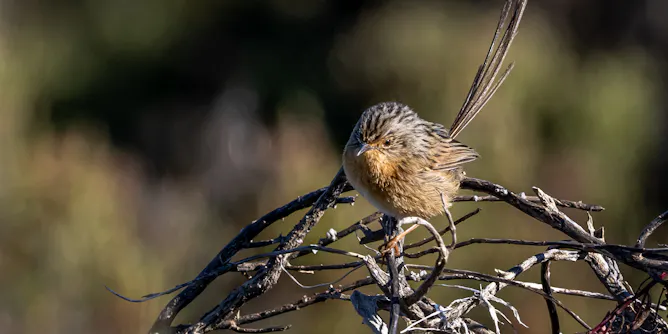
The future of a proposed rocket-launch facility in South Australia is uncertain. But tensions between space exploration and conservation remain.
Articles on Coastal areas
Displaying all articles
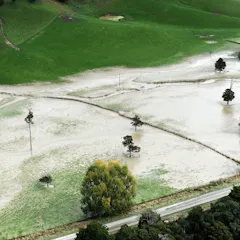
Adaptation plans don’t account for groundwater in shallow coastal aquifers, which can rise with sea levels, increasing the risk of flooding and damage.

As sea levels rise, increasing amounts of salt water are leaking into freshwater supplies worldwide.

For the first time, countries now have a shared way to understand whether the world is actually improving at adapting to climate impacts.
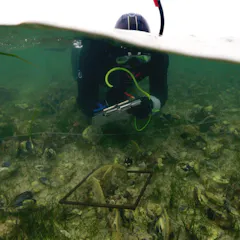
The persistent harmful algal bloom in South Australia is an opportunity to experiment with solutions, but the best approach is helping nature to help itself.
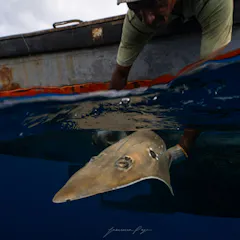
How one project in Indonesia introduced a pay-to-release scheme that encourages fishers to save shark and ray bycatch.
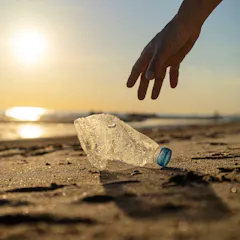
A CSIRO study has found 39% less plastic pollution in and around Australian coastal cities over ten years. It also found more places with no rubbish at all.
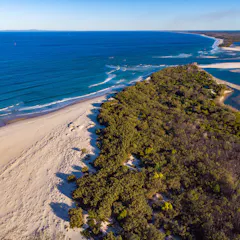
Stories of how the data was collected were fascinating. Some people camped on islands for weeks. Some scaled cliffs or jumped from helicopters onto remote islands.

Contrary to popular belief, new research shows the abrupt, often gale force wind changes known as “southerly busters” are becoming more frequent, but less severe, as the climate changes.
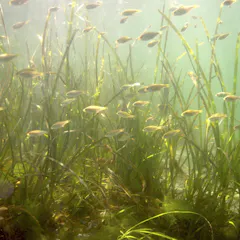
Overall, coastal habitat restoration greatly increases animal numbers and diversity. But not all projects deliver the goods and we need to find out why.
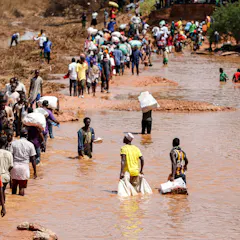
In African coastal communities, traditional knowledge helps residents to anticipate and prepare for potential flooding events.

With smartphones as commonplace as towels and sunscreen in the beach bag, why not add coastal data collection to your list of holiday activities this summer? Look for the CoastSnap camera cradles.

Storms are the greatest threat to beach erosion, not sea level rise, research reveals. This is the longest continuous beach monitoring survey in the Southern Hemisphere.
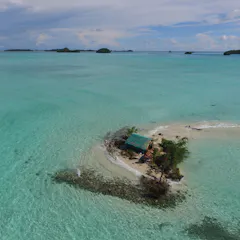
Rising seas are pushing coastal ecosystems to the limit of endurance. Now international research reveals a “tipping point” will be reached if we allow more than 2 degrees of global warming.
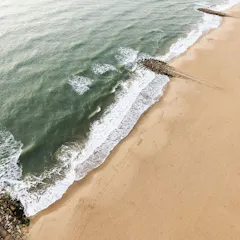
Coastlines need to be recognised as dynamic, shifting environments rather than as environments that need to be controlled and managed.
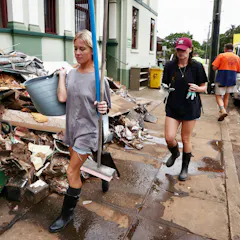
Simply providing passive information is not enough. Governments must find better ways to deliver important messages about natural hazards.
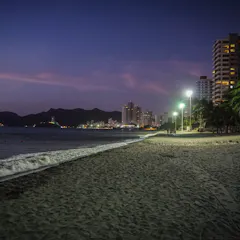
Towns and cities create an orange glow on the horizon at night. It’s so widespread that it even disturbs sea creatures.
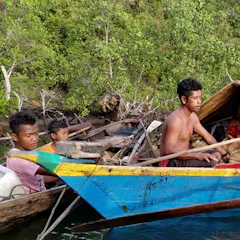
Traditional ecological knowledge of Indigenous peoples offers ways to adapt to climate impacts.
New research has found that the continents ended up where they are today because of previous plate tectonic processes that controlled how Pangaea broke apart.
Top contributors
-

Senior Research Associate, Institute for Environment and Human Security (UNU-EHS), United Nations University
-
Senior lecturer, UNSW Canberra, Australian Defence Force Academy
-
Emeritus Professor, University of Sydney
-
Professor, School of Mathematical And Physical Sciences, University of Technology Sydney
-
Associate Professor, Structural Geology, McMaster University
-
Emeritus Professor, UNSW Canberra, Australian Defence Force Academy
-
PhD Candidate in Biology, Aberystwyth University
-
Professor, School of Natural Sciences, Macquarie University
-
ARC Future Fellow in Fisheries Science, University of Tasmania
-
Postdoctoral research fellow, Royal Netherlands Institute of Southeast Asian and Caribbean Studies
-
Visiting Fellow, School of Mathematical and Physical Sciences, University of Technology Sydney
-
Project Engineer, UNSW Water Research Laboratory
-
Dean, Faculty of Environment, Sociaty and Design, Lincoln University, New Zealand
-
Research Fellow, The University of Western Australia
-
Professor in Marine Science, Griffith University