

Young people in Bo City, Sierra Leone became youth climate leaders after turning a low-cost Climate Science Hub into a space for science-informed action.
Articles on Climate change and agriculture
Displaying all articles
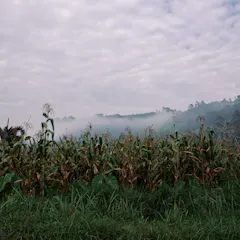
The optimal and safe use of agricultural inputs to increase food production is key to achieving global food security.

Climate adaptation projects in high conflict areas like South Sudan work best if they’re designed to help communities manage many problems at once.
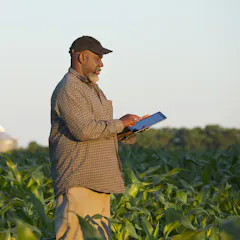
Holding the G20 presidency this year, South Africa is well positioned to push for new ways to boost agricultural productivity and enhance food security in Africa.

This is not an imaginary future dystopia. It’s a scientific projection of Australia under 3°C of global warming – a future we must both strenuously try to avoid, but also prepare for.
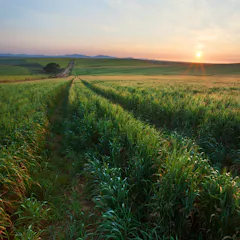
CC BY-NC-ND4.69 MB (download)
To increase food production, climate challenges will need to be overcome.
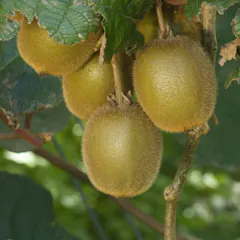
New Zealand is a net exporter of many fruit and vegetables. While climate-change induced food shortages are not an imminent risk, some crops may be affected by rising temperatures and extreme weather.

Amazon, Facebook and Google have lofty goals for their effects on global society. But people around the world are still waiting for the positive results. Here’s what the tech giants could do.
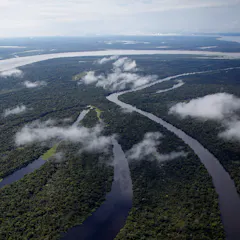
Brazil’s president-elect wants to roll back environmental laws, saying they hurt rural growth. But preventing Amazonian deforestation has actually made farmland more productive.

Colombia’s coffee industry is at risk due to unpredictable seasons, floods, landslides, droughts and pests. Farmers say they want to learn to adapt to these environmental changes but don’t know how.
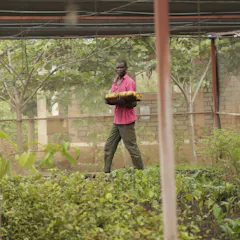
At present on the African continent, the politics of persuasion are especially consequential in the area of agri-food research and development.
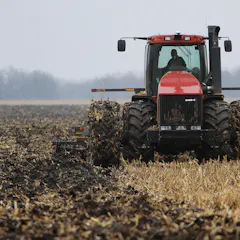
The Paris climate agreement aims to limit global warming to 2C above pre-industrial levels. We need to curb greenhouse gas emissions, but we can also make gains with carbon farming.
The problem of climate change and crop development represents a challenge for agricultural systems across the globe.
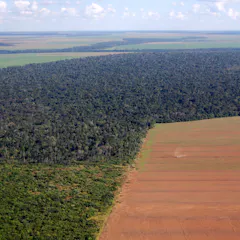
As Brazil struggles through a political and economic crisis, its soybean farmers are thriving. Their growing clout could trigger new deforestation and undercut the nation’s climate change pledges.

Building on local experience and having access to current and expected climate trends is crucial to adapting to climate change for farmers in semi-arid regions.
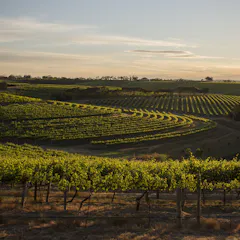
The wine industry is sensitive to climate change, but grape growers also have the funding and knowledge to put themselves at the forefront of climate adaptation. Other farmers should watch with interest.
Top contributors
-

Senior Fellow, Department of Agricultural Economics, Stellenbosch University
-
Research Fellow, University of Leeds
-
Assistant Professor of Public Health, Indiana University
-
Assistant Professor of Communication, Purdue University
-
Adaptation at Scale in Semi-Arid Regions – Project Manager, African Climate and Development Initiative, University of Cape Town
-
Associate Professor, Political Science, University of Guelph
-
Professor Emerita, Department of Biological Sciences, Macquarie University
-
Postdoctoral Fellow, Brown University
-
Associate professor, Adelaide University
-
Assistant Professor of Anthropology, University of California, Santa Barbara
-
Climate Scientist and Researcher, University of Cape Town
-
Professor, Dalhousie University
-
Senior Science Engagement Officer, University of Cape Town
-
Dean of Global Business, The Fletcher School, Tufts University
-
Professor, School of the Environment, The University of Queensland