
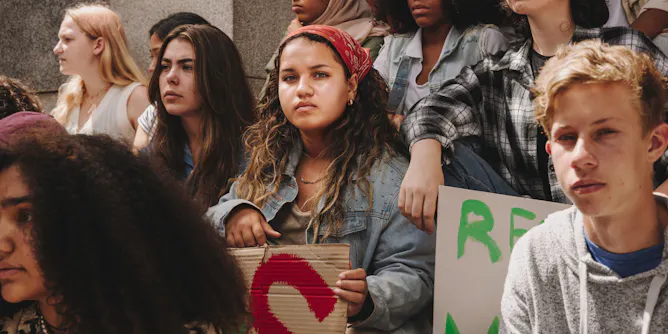
Young people are not disengaged from politics but increasingly interested in understanding it.
Articles on Citizenship education
Displaying all articles

Children are already thinking about power and whose voices get heard.
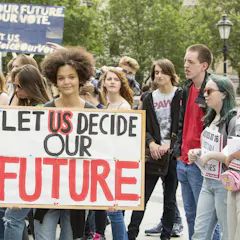
The Representation of the People Bill 2026 makes provision for 16-and 17-year olds to be able to vote.
Investing in professional support systems for politicians and public servants is long overdue.

Students explored ideas of identity through model building.

Research shows that 16-year-olds are able to make reasoned political decisions.

School systems need to wake up from ‘business as usual’ learning. Teachers can draw on terror management theory in their work on the front lines with students navigating the climate crisis.
Ironically perhaps, it may be the move toward reconciliation between Indigenous Peoples and settler Canadians that revives the focus of the Crown in Canadian schooling.

Both at home and in schools, food can become a powerful tool to empower young people to take climate action, which can lead to reduced climate anxiety and increased feelings of hope for the future.
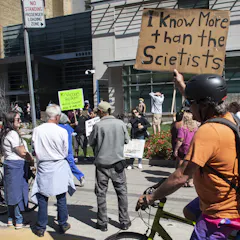
The failure to observe public health protocols during the pandemic requires attention and action. Revitalizing global citizenship education in schools should be part of addressing the problem.

Children need to know how to get help when they feel at risk.

Over the years, Puerto Ricans have in fact been granted three different types of U.S. citizenship, but questions about their rights and equal treatment as citizens still remain.
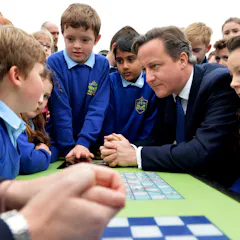
UK schools introduced citizenship education in 2002, but early gains have been reversed. The state of democracy and the Brexit vote suggest the need for informed citizens has never been greater.

An extra £1.2 billion of public money is going to a volunteering scheme for teenagers.
Top contributors
-

Associate Professor of Political Science and El Instituto, University of Connecticut
-
Assistant researcher, University of Sydney
-
Senior Lecturer in Political Science, University of Sheffield
-
Lecturer and Teacher, Department of Politics and International Relations, Cardiff University
-
Postdoctoral Research Fellow, Department of Food and Nutrition and Sport Science, University of Gothenburg
-
Associate Professor in Education, London South Bank University
-
Subject Lead, Religious Education PGCE, UCL
-
Master's student, Department of Secondary Education, University of Alberta
-
Professor of Children's Rights, Edge Hill University
-
Professor of Human Geography, Loughborough University
-
Postdoctoral Fellow, Citizenship Education and History Teaching Research Lab, Université de Montréal
-
Professor Emeritus, Faculty of Education, University of New Brunswick
-
Senior Lecturer in Public Administration, University of Glasgow
-
Senior Lecturer in Politics, University of Lincoln
-
Professor Enterprise, Engagement, and Impact, University of Birmingham