

The shift towards universal policies may seem fair, but it’s creating a system that gives to the wealthy at the expense of the poor.
Articles on Childcare policies
Displaying 1 - 20 of 21 articles
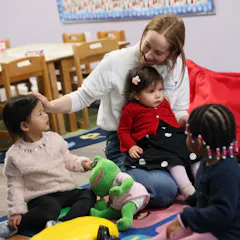
A lack of access to child care costs the state an estimated $2.7 billion in lost productivity and revenue.

Supervision gaps can lead to child sexual abuse. Much more needs to be done to fix this long-neglected issue.

Investment in UK childcare should go towards better pay and conditions for workers. This could also help increase availability and affordability for parents.
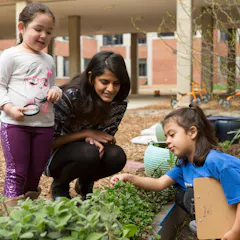
Early childhood education isn’t about warehousing children so adults can go to work. There is an ethical imperative to support a paradigm shift in how our society values educating young children.
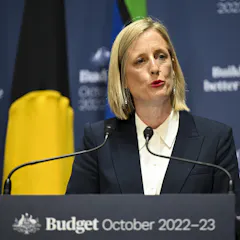
The inclusion of an evidence-based women’s budget statement shows a greater awareness of the systemic challenges to women’s economic security.

Politics with Michelle Grattan: Grattan Institute’s Danielle Wood on election’s thin policy debate
Michelle Grattan speaks with Danielle Wood, the CEO of the Grattan Institute, an independent think tank, where policy experts research and advocate for policies to improve Australians' lives.

They’re among the lowest-paid in the country but are working many hours unpaid to meet the demands of accreditation. With 73% wanting to leave the profession in the next three years, change is needed.

Experts in child health and physical activity offer recommendations for training of early childhood educators, and strategies to get kids moving.

EU migrant households are actually a net benefit on the public purse in much of Europe.

Tackling the gender pay gap must take into account the way that part-time workers are treated.

Labor is promising to help hundreds of thousands of families have access to more affordable childcare. This is an important investment but the details of how it will work must be given priority.

We know summer school holidays can be challenging, stressful and expensive for working parents but we still know very little about how families juggle conflicting demands.

Universal low-cost childcare and workplace flexibility will help mothers return to the workplace and are important investments in the Australian workforce.

Men under 35 want to take a more active role in caring for their children than older generations.

Family day care workers have much in common with home-based workers in the garment industry. But the latter are classed as employees, resulting in better representation and protected work conditions.
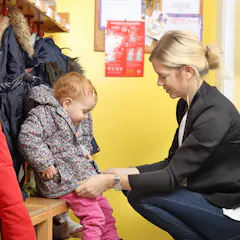
An 85-95% effective marginal tax rate means the second earner in a low-income family can increase from two days’ work a week to three, four or five days and be better off by only about $4,000 a year.

Free childcare schemes aren’t working and babies are too important to be left on the shelf.

Why does childcare work have such a status problem in Britain?
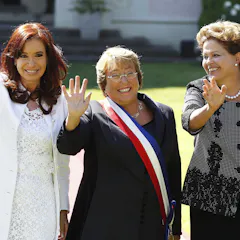
New research on Latin America’s four recent female presidents disproves the idea that merely putting a woman in power will improve gender equality.
Top contributors
-

Associate Professor in the Early Childhood Education, University of New England
-
Professor of Marketing, School of Busines, Manchester Metropolitan University
-
WISERD Researcher, Bangor University
-
Research Associate at the Global Institute for Women's Leadership, King's College London
-
Professor, The University of Queensland
-
Associate Professor, University of Miami
-
Visiting Professor of Tax Law, New York University, and Professor of Law, The University of Melbourne
-
Professor of Consumption & Society, University of Manchester
-
Senior lecturer, RMIT University
-
Associate Professor of Politics, Occidental College
-
Associate Professor, Faculty of Law, Monash University
-
Professor, Queensland Brain Institute, The University of Queensland
-
Professor of Public Affairs and Faculty Director of the Center on Women, Gender and Public Policy, Humphrey School of Public Affairs, University of Minnesota
-
Senior Research Fellow, The University of Queensland
-
Professor and Head of School, School of Early Childhood and Inclusive Education, Queensland University of Technology