

Sextortion is arguably the most predictable serious crime on the internet. It follows a script – and it can be stopped.
Articles on Child sexual exploitation
Displaying 1 - 20 of 24 articles
A study of almost 700 perpetrators from across the world sheds light on why some men sexually abuse children.

State law aimed at protecting sexually trafficked children can cause more harm than good by identifying them as criminals and not victims.

The conversation around #iwasfifteen sheds light on the dynamics of abusive relationships and the experiences of trafficking victims.

AI-generated child sexual abuse material is rising, and familial abuse is leading to the creation of new child sexual abuse material.

Victims of child sexual abuse have been let down by the justice system.

While still a small minority of sexual offenders, abuse perpetrated by women in Australia has increased by more than 200% since 2008. The system isn’t set up to deal with it.

Police efforts to sort through online child sexual exploitation material are being hampered by the rise in AI-generated imagery. Here’s how they’re working to combat the problem.
Our new report has produced the world’s first estimate of the scale of online child sexual exploitation.
A staggered age of consent has been suggested, which would make it illegal for adults to have sex with under-18s.

There is a dire need to prevent child sexual abuse in Canada. It is critical to intervene early, and provide those at risk for offending with support through an anonymous helpline, as well as therapy.
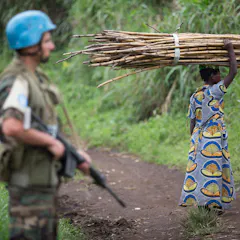
DRC has the highest number of allegations of sexual abuse by UN peacekeepers – yet no systematic research on the claims of their abandoned children has existed until now.

One study found 80% of darknet traffic on Tor went to sites hosting unmoderated porn and child sex abuse material.

A study of child sexual abuse material survivors found 42% were abused by their father or stepfather, meaning abuse prevention and education services can’t assume all parents protect children in their care.
The fear of ‘racial tension’ has been at the heart of many botched police inquiries into child sexual abuse.

Airbnb now has 7m listings in more than 100,000 cities, making it larger than the eight biggest hotel groups combined.

For decades, those working in social care focused on the risks children face in their family home. But what about when they leave the front door?
Despite high profile child abuse cases in Rochdale, Rotherham and Telford, lessons are not being learned and the failings of those investigations are being repeated.
Human trafficking victims can be hidden in plain sight, as one hospital found. That can lead health professionals and the public to miss clues to their plight. But education can change that.

How online child abusers are categorised is stopping the proper protection of victims.
Top contributors
-

Professor of International Child Protection Research and Director of Data at the Childlight Global Child Safety Institute, University of Edinburgh
-
Associate Professor of Psychology, Swansea University
-
Lecturer Forensic Psychology, Swansea University
-
Director, StoryLab Research Institute, Anglia Ruskin University
-
Clinical Assistant Professor, Registered Nurse, Sexual Assault Nurse Examiner, Texas A&M University
-
Assistant Professor Criminology and Criminal Justice
-
Emeritus Professor, Australian National University
-
Professor of Criminology, UNSW
-
Professor of Psychology, University of Denver
-
Researcher, University of East London
-
Visiting Research Fellow, School of Law, University of Leeds
-
Professor of English Language & Applied Linguistics, Swansea University
-
Adjunct Associate Professor, School of Law; Academic Co-Lead, CSAM Deterrence Centre, University of Tasmania
-
Senior Lecturer in Applied Health and Social Care, Edge Hill University
-
Laboratory Coordinator at the Australian National University's Cybercrime Observatory, Australian National University