
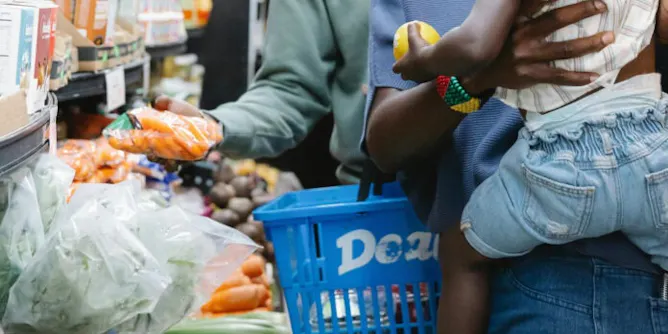
Early exposure to malnutrition from conception to a child’s second birthday can have an irreversible effect on their long-term health and development.
Articles on Child Hunger
Displaying all articles

Teachers’ main justification for running a food bank was the moral imperative to support families who needed it.

Children are becoming poorer in the UK – more so than in other countries.

As much as 31% of grant beneficiaries engage in informal work to ‘grow’ their income.
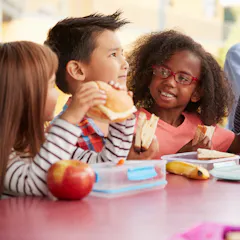
Child malnutrition is no stranger to high-income countries. In Canada and the U.S., food insecurity affects one in six children under 18, but policies to address the issue are still lacking.
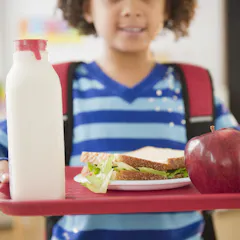
A food policy expert explains how school lunches changed during the COVID-19 pandemic and what’s wrong with going back to the normal system now.
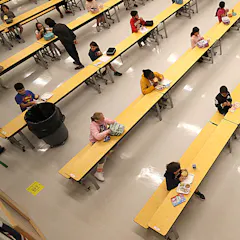
Students are spreading out when they eat and using more single-serve packaging. Future changes to school meals could be less visible.
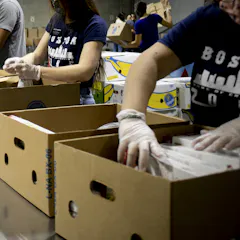
Food production in the US is heavily concentrated in the hands of a small number of large agribusiness companies. That’s been good for shareholders, but not for consumers.
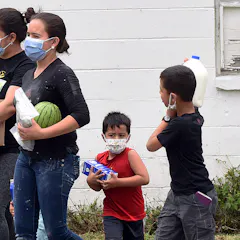
An estimated 1 in 4 US children have trouble getting enough to eat at least sometimes. We asked four scholars for their insights..

Many households struggle when schools are closed.
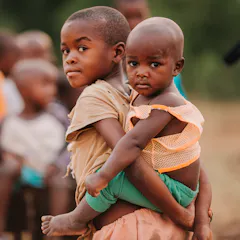
We found that current indicators underestimate nearly 6 million children suffering from malnutrition.
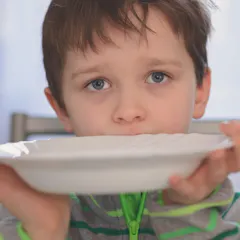
British children left angry and bewildered by food poverty.

As Canadian kids head back to school this week, many will be hungry. Lacking fruits, vegetables and other nutritious foods, they will suffer mood problems, disease and low academic performance.

Students with unpaid meal debts have been experiencing some shaming policies at school. New rules are aimed at protecting these children, but the real solution may lie in free meals for all.

Tackling the challenge of stunting in South Africa needs a convergence of science and policy along with better coordination at all levels of government.
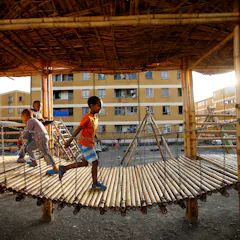
Poor childhood conditions, such as exposure to poverty and stunting, are associated with long-term disadvantages to health, education, social adjustment and earnings.
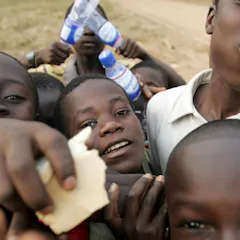
Ghana’s school feeding programme has reached millions of children in the past 11 years. It does important work, but needs more support to grow and become sustainable.
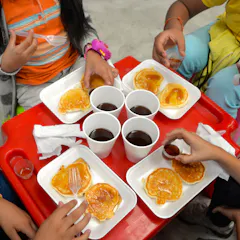
More than 15 million children live in homes that do not have enough food. However, the number of children taking advantage of free breakfast in schools is low. What can schools do?
Top contributors
-

Professor of Public Policy, Education, and Economics and Director of the NYU Institute for Education and Social Policy, New York University
-
Professor of Health Promotion, Dalhousie University
-
Associate Professor of Educational Economics, New York University
-
Director DST-NRF Centre of Excellence in Food Security, University of the Western Cape
-
Research Fellow, Institute of Development Studies
-
Lecturer in Environmental Sustainability, University of Energy and Natural Resources
-
Distinguished Professor, DST-NRF Centre of Excellence in Human Development, University of the Witwatersrand
-
Assistant Director of Education and Social Policy, New York University
-
Assistant Professor, Education Studies, College of Education, University of Oregon
-
Reader in the School of Social Sciences, Cardiff University
-
Professor of Social Development Studies, University of Johannesburg
-
Assistant Professor of Civil Society & Community Studies, University of Wisconsin-Madison
-
Assistant Professor of Sociology, Mississippi State University
-
Professor of Anthropology, University of South Florida
-
Lecturer, Cardiff University