

For one thing, there’d be a much higher rate of brain cancers in the decades since mobile phones were widely adopted.
Articles on Cellphones
Displaying 1 - 20 of 25 articles

To escape endless scrolling, email and news alerts, more people are turning to older tech to regain control of their lives.
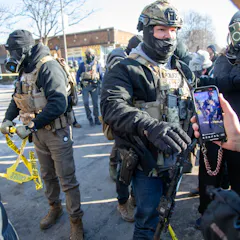
Smartphone video, ICE-tracking apps and 3D-printed whistles have been emblematic of the protests in Minneapolis. Social movements have long latched onto and been catalyzed by new technologies.
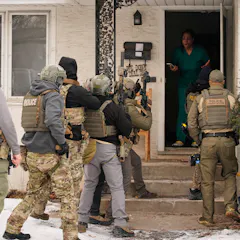
Since the republic’s beginning, it has been uncontested law that to invade someone’s home, the government needs a warrant reviewed and signed by a judicial officer. ICE is turning that law on its head.
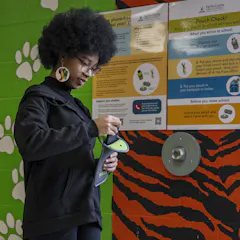
More school systems are providing digital devices for students to use in the classroom, making it harder to justify students having personal cellphones in class.
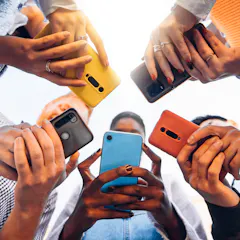
The phone ban was meant to improve learning by reducing distractions. But students report feeling left out of decisions, and some have found ways around the rules.

As Canada’s Online Harms Act is being debated, MPs may look to other countries, like Australia, for guidance on protecting youth from online harms.
Smartphones may be indispensable to modern life, but they’re also perfect tools for spying on their owners. Anyone looking to avoid being tracked – like, say, militant groups – tends to ditch them.

Is a cellphone ban, along with increased surveillance, the right way to deal with the impact of addictive and harmful technology in classrooms?
The National Party wants a blanket ban on cellphones in school. But international research suggests improving student engagement is complex, and such a policy might even be counterproductive.
A new report from UNESCO analyzes the many challenges of the growing presence of technology in education and notes 14 per cent of countries have policies that ban mobile phones.
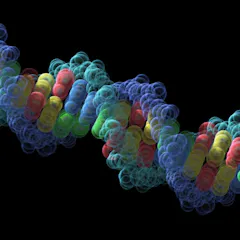
Studying the brief and tiny quantum effects that drive living systems could one day lead to new approaches to treatments and technologies.

Pictures and sound, flying through the air to a box in your house? Back in the 1940s, it seemed like a miracle.

Hiding in plain sight, they’re subtle reminders that we’re being watched, tracked, studied.
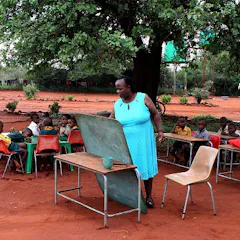
South Africa has no comprehensive national media literacy programme. Often it comes down to individual teachers and schools to make learners more media literate.

Experts help explain the context around the murder of Ahmaud Arbery, and subsequent trial and convictions of Gregory McMichael, Travis McMichael and William Bryan.

The deaths of six Amazon employees at a factory hit by a tornado raises concerns over prohibitions on cellphones for workers.

Some researchers argue that nomophobia, or no mobile phobia, should be treated through psychological and pharmaceutical treatments. But these claims ignore real-life interactions.
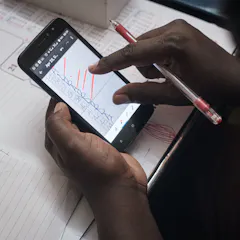
Parties who design the technologies and platforms on which mobile apps are built and marketed must be brought within the legal accountability framework to close the privacy loop.
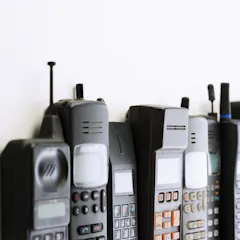
A professor of wireless communications explains the origins of cellular networks and how they evolved into today’s 5G networks.
Top contributors
-

Professor of Engineering Design, Electrical Engineering and Aerospace Engineering, Penn State
-
Associate Professor & Chair of Eco-Entrepreneurship, McMaster University
-
C. Wendell and Edith M. Carlsmith Professor of Law, Stanford University
-
Professor of English and Digital Humanities (Ret.), University of South Florida
-
Professor of Sociology, University of Maryland
-
Assistant Professor of Clinical Pediatrics, University of Southern California
-
Professor of Electrical and Computer Engineering, UMass Lowell
-
Professor of Digital Society, University of Glasgow
-
Lecturer in Journalism and Global Communication, University of Sheffield; Independent Social Research Foundation
-
Professor of Law, South Texas College of Law Houston
-
Assistant Professor in the School of Professional Communication, Toronto Metropolitan University
-
Associate Professor, Faculty of Education, University of Windsor
-
Associate Professor of Journalism, USC Annenberg School for Communication and Journalism
-
Senior Research Officer, Blood Cells and Blood Cancer Division, WEHI (Walter and Eliza Hall Institute of Medical Research)
-
Associate Professor, University of California, Berkeley