
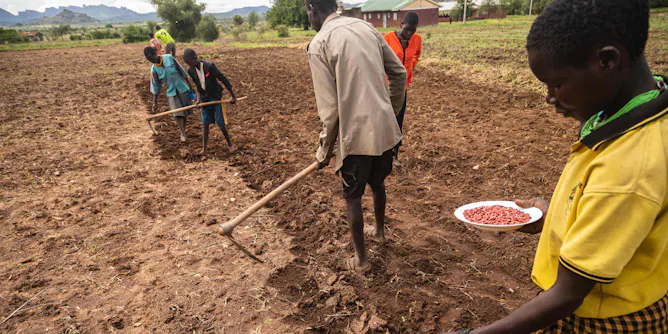
Figuring out how climate change will cause plant disease and pests to spread across Africa’s Great Lakes farms is critical for future food supplies.
Articles on Cassava
Displaying all articles
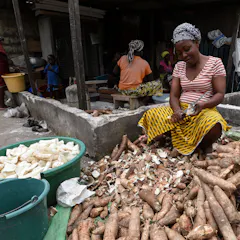
Cassava could thrive across more of Africa as the climate warms, but a deadly disease carried by whiteflies may spread faster, threatening the nutritious crop.
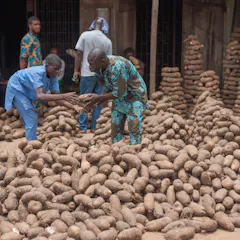
Climate change caused drought and flooding is damaging Nigeria’s staple foods, maize, cassava, millet and yam, smallholder farmers say.

Cassava’s many assets would seem to make it the ideal crop, except for one drawback: It’s highly poisonous. Human ingenuity has made cassava edible for millennia.

The preparation of ancient meals in prehistoric West Africa combined vegetables, pulses, tubers and, possibly, herbs and spices.
The ex-combatants’ food memories show how they continue trying to make sense of both their past and present experiences of violence.

As the climate changes and the population grows, meeting the demand for food will become more difficult as arable land declines. But an international team of scientists has figured out an innovative solution to dramatically bumping up crop yields.
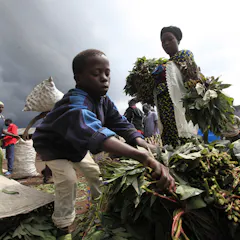
Technology is changing how plant diseases are recognised and dealt with by small scale farmers in Africa.
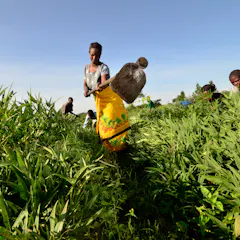
Cassava is a key food source in tropical countries, but yields have been flat for decades. New genetic research is identifying many options for boosting production of this valuable staple crop.

Rapid genetic disease screening will be the key to saving East Africa’s crops - just as it was during West Africa’s ebola crisis.
The cassava crop, a staple food of Southeast Africa, is now considered unsafe for human consumption. The research led by…
Top contributors
-

Assistant professor, Louisiana State University
-
Professor of Crop Sciences and Plant Biology, University of Illinois Urbana-Champaign
-
Postdoctoral Research Associate, University of Illinois Urbana-Champaign
-
Molecular Plant Virologist, Mikocheni Agricultural Research Institute
-
Postdoctoral Researcher, Penn State
-
Graduate Student, Department of Plant Biology, University of Illinois Urbana-Champaign
-
Researcher, Mikocheni Agricultural Research Institute
-
Associate Professor of Entomology and Biology, Penn State
-
TED Fellow | Research Fellow | School of Chemistry and Biochemistry | ARC CoE Plant Energy Biology, The University of Western Australia
-
Research officer, Department of Agriculture and Food - Western Australia
-
Associate professor, University of California, Merced
-
Postdoctoral Researcher in Archaeology, University of Bristol
-
Senior Lecturer at Oyo State College of Agriculture and Technology, Igboora, Nigeria and Extraordinary Senior Lecturer at Indigenous Knowledge Systems Centre, North-West University, Mafikeng, South Africa, North-West University
-
Postdoctoral research fellow, Olabisi Onabanjo University
-
Postdoctoral researcher, Ghent University