

Cash holdings jumped 17% during the crisis, most of them in the form of $50 and $100 notes.
Articles on Cash economy
Displaying all articles

Ordinary activities would become criminalised without a compelling reason.
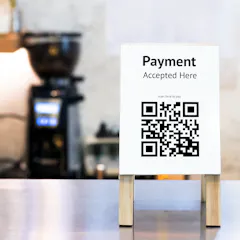
As cashless societies become a reality, we’re starting to see this technological revolution has a dark side.

A cashless society depends on three things, all of which have failed in recent weeks as a result of natural disasters and security breaches.

It may cost more to make a penny than a penny’s worth, but a penny saved may be more than a penny earned.
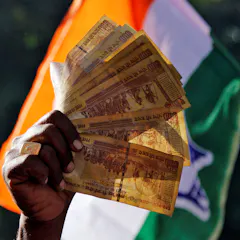
India is engulfed in chaos after Prime Minister Narendra Modi introduced the wrong policy at the wrong time.
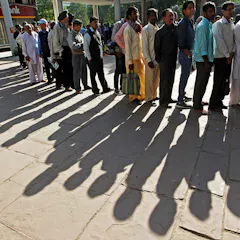
The currency switch is one of a number of steps taken by the Modi government to crack down on corruption and tax avoidance.

The notes in your pocket say they’re legal tender for all debts public and private. Are they lying?

Australia’s cash economy is hard to document, but can be followed through the fortunes of young workers.

Scrapping €500 notes would inconvenience money launderers; it would also help the European Central Bank to make interest rates more negative.
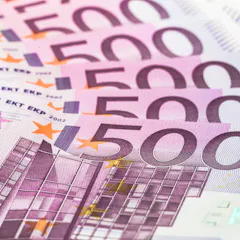
The evidence that €500 notes are used by criminals are strong. But there is no guarantee that scrapping them will crack down on illegal activity.
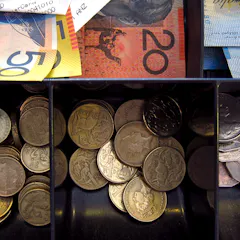
Despite the growth of card and mobile payments, cash is still king in many markets.
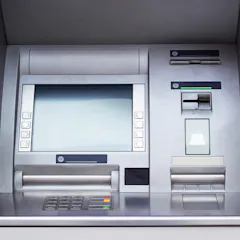
Devices we keep in our pockets can now do most of the functions once the dominion of the automated teller machine – or banker – but it may be premature to pronounce the end of the ATM.

Amid the ongoing debate over the future of penalty rates, a subtle but important issue also deserves to be examined: their impact on Australia’s “cash economy”. The Fair Work Commission is currently reviewing…
Top contributors
-

Associate Professor of Business, Boston University
-
Adjunct Professor, Swinburne University of Technology
-
Professor of FinTech History and Global Trade, Northumbria University, Newcastle
-
Associate Professor, Institute of Economic Growth, and Visiting Fellow, Bruegel, University of Delhi
-
PhD Candidate, Bangor University
-
Senior Teaching Fellow in Economics, Lancaster University
-
Visiting Fellow, Crawford School of Public Policy, Australian National University
-
Associate Professor of International Business, RMIT University
-
Visiting Fellow, QUT Business School, Economics and Finance, Queensland University of Technology
-
Research Fellow, The University of Melbourne
-
Pro-VC, Sharda University