
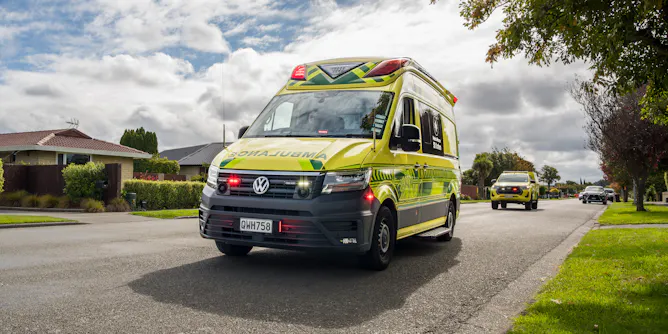
Community responders often reach cardiac arrest patients quicker than emergency services. Carrying mobile defibrillators would improve people’s survival chances.
Articles on Cardiac arrest
Displaying all articles

What five decades of research has taught us about surviving death.

TV shows can be misleading when it comes to educating viewers on hands-only CPR, along with who experiences cardiac arrest and where.

‘Cough CPR’ is blowing up on social media. But it’s not to be recommended.
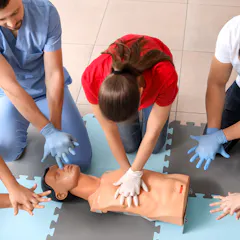
Heart-related diseases are the leading cause of death for women worldwide. But bystanders are less likely to intervene to perform CPR on a woman than a man.
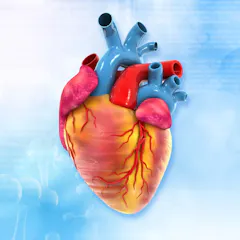
A cardiac arrest and a heart attack are distinct, yet overlapping, concepts. Here’s how to tell them apart.
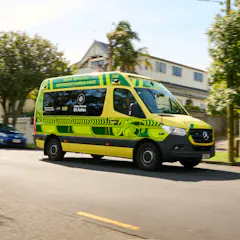
New Zealand is just the second country to approve a novel defibrillation procedure for some patients. With current survival rates very low, it is hoped the new method will save many more lives.

Survival rates for cardiac arrest outside of hospitals is very low. The fast response to Damar Hamlin’s cardiac arrest during an NFL game shows the value of access to CPR and emergency defibrillators.
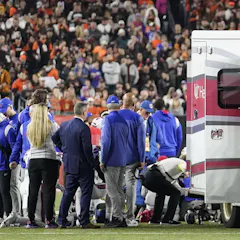
ESPN commentators avoided speculation and struck a compassionate tone.

Commotio cordis is the result of blunt trauma to the heart, and is one of the leading causes of sudden cardiac death in youth sports. Improvements in protective equipment may help prevent it.

Disruptions to the electrical signals that control a person’s heartbeat are dangerous, no matter the cause. A heart doctor explains the biology of cardiac arrest and what might have happened on the field.

Up to 40% of sudden cardiac deaths in young people remain unexplained. But defibrillators and data are key to preventing them.

Immediate CPR and defibrillation can be key to surviving a cardiac arrest. A smartphone app is mobilising community responders who can help before emergency services arrive.

Medicals will be happening left, right and centre ahead of transfer deadline day, here’s what a screening actually entails.

Cardiac arrest is a major complication and killer of hospitalized patients, with only about 1 in 5 surviving. A recent study compared responses within hospitals to learn how to improve outcomes.

People generally assume all heart-related death is due to heart attack. But there are differences between cardiac arrest, heart attack and heart failure – and none are synonymous with death.
Top contributors
-

Associate Professor of Paramedicine, Auckland University of Technology
-
Research Fellow, Department of Paramedicine, Auckland University of Technology
-
Lecturer in Physiotherapy, University of Liverpool
-
Associate Professor/Faculty of Engineering/School of Biomedical Engineering/Mechanical and Materials Engineering, Western University
-
Emergency Medicine Physician and Lecturer, University of Toronto
-
Associate Professor of Medicine, University of Colorado Anschutz
-
Associate Professor of Clinical Communication, The Ohio State University
-
Assistant Professor of Behavioral and Community Health Sciences, University of Pittsburgh
-
PhD Candidate, Department of Mechanical and Materials Engineering, Western University
-
PhD candidate, College of Health, Te Kunenga ki Pūrehuroa – Massey University
-
PhD Student in Biomedical Engineering, Western University
-
Associate Professor, Sydney School of Public Health, University of Sydney
-
Adjunct Associate Professor, Monash University
-
Postdoctoral Associate, Department of Mechanical and Materials Engineering, Western University
-
Associate Professor of Medicine, Bond University