
Capital punishment is unfairly imposed, innocent people are regularly condemned and it is patently ineffective in deterring crime. So why to states retain the death penalty?
Articles on Capital punishment
Displaying 41 - 60 of 60 articles
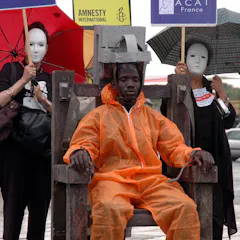
Not only does capital punishment not deter crime but it’s more expensive than keeping a convicted murderer in prison for life.
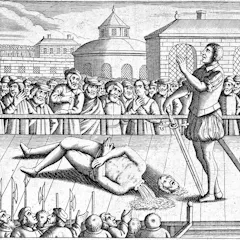
People found out about crime and punishment in that most spectacular era of public executions, the Renaissance, through melody.

The US Supreme Court is bitterly divided over the death penalty. One reason for that is all the convictions based on coerced confessions

Abolition has become a political football – and many politicians see the advantage of supporting it.
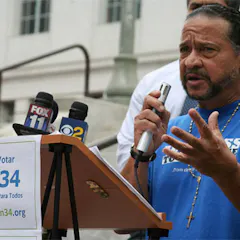
More than 150 people have been released from death rows around the US after having their wrongful convictions overturned. Most continue to face social stigma and unemployment.
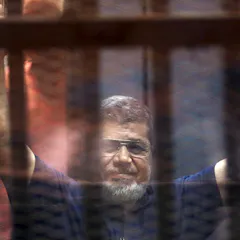
As with most aspects of criminal justice in sub-Saharan Africa, the death penalty as it currently exists in law is a colonial import. Criminal justice before the modern era was a private matter.
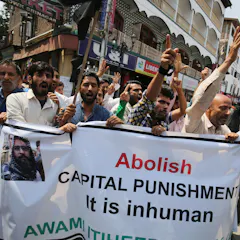
Why do so many people support capital punishment?
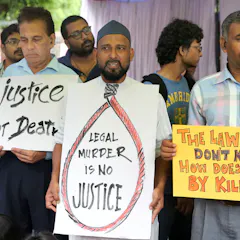
India has only hanged four criminals since 2003. But given the state is founded on principles of non-violence, it’s surprising they executed any of them.

What are the arguments for and against the death penalty and do they stand up to examination?

SCOTUS effectively continued the practice of lethal injection with its ruling. But is lethal injection really as humane as we think?
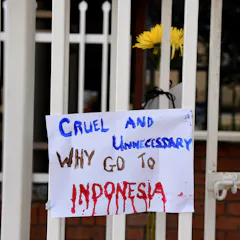
Whatever you think of capital punishment, if your police force helps convict people of capital crimes, you are complicit to some degree.

Indonesians have long felt that Australia lacks respect for their nation’s sovereignty, but Indonesia’s status as a rising power adds to the urgency of recalibrating our approach to the relationship.
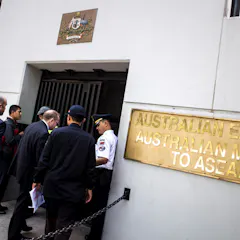
Australians are the ones who suffer when consular support is weakened overseas.
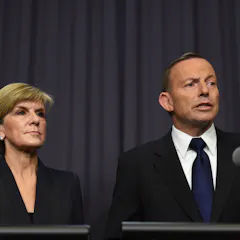
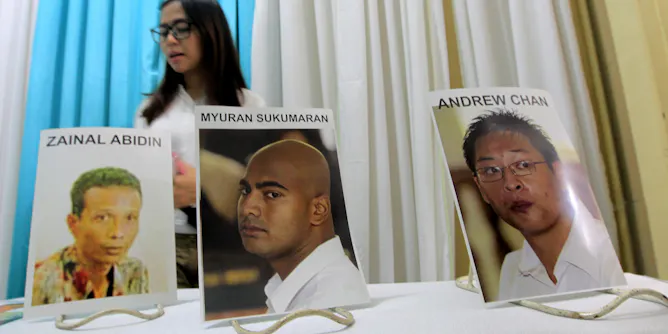
In condemning Indonesia’s execution of Andrew Chan and Myuran Sukumaran, Australia has relied on the same human rights obligations that it rejects when applied to asylum seekers.
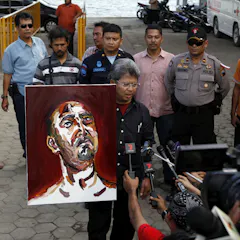
Indonesia’s most distinguished practising human rights lawyer, Mulya Lubis, is central to continuing efforts in Indonesia to abolish the death penalty.
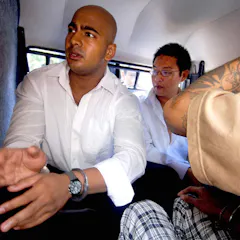
Australia’s politicians were unable to make the most persuasive argument for clemency for Andrew Chan and Myuran Sukumaran because Australia is also a combatant in the misguided war on drugs.
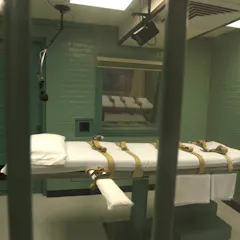
The search for clean and painless executions may have failed, raising questions about the constitutionality of capital punishment.

At 48%, the proportion who agree that “for some crimes, the death penalty is the most appropriate sentence” is the lowest ever recorded.
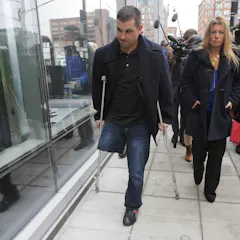
The case seemed to end on the first day of the trial when the lawyer for the accused declared Dzhokhar Tsarnaev did plant one of the bombs. So what is really at stake here?
Top contributors
-

William Nelson Cromwell Professor of Jurisprudence and Political Science, Amherst College
-
Director of the University of Oxford Death Penalty Research Unit, Centre for Criminology, Faculty of Law, University of Oxford
-
Professor in Human Rights and International Law, University of Newcastle
-
Professor, Director of the Institute for Crime and Justice Policy Research, Birkbeck, University of London, Birkbeck, University of London
-
Co-Founder and Co-Executive Director, Death Penalty Project and Visiting Professor of Practice, University of Oxford
-
Senior Lecturer, School of Law and Politics, Cardiff University
-
Term Assistant Professor, Department of Criminology Law and Society, George Mason University
-
Associate Professor of History, Emory University
-
Professor of Religious Studies, College of the Holy Cross
-
Associate Professor in Political Science and International Relations, The University of Western Australia
-
Professor of Law, University of Florida
-
Lecturer in Human Rights, University of Essex
-
Visiting Professor, War and Security Studies/International Genetics, King's College London
-
Associate Professor of Criminology and Human Rights, Swansea University
-
Postdoctoral Research Fellow, Laboratory for Innovation in Galleries, Libraries, Archives and Museums (iGLAM), UNSW