

The constitutional prohibition of cruel and unusual punishment has shaped legal discourse around failed executions, but courts have not stopped states from attempting to execute the same person again.
Articles on Death Row
Displaying all articles
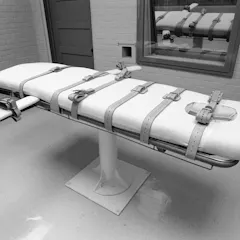
The constitutional prohibition of ‘cruel and unusual punishment’ has shaped legal discourse around failed executions, but courts have not stopped states from attempting to execute the same man again.

Why do rap lyrics continue to be used to demonize people inside and outside the courtroom, in ways that no other art form has to contend with?
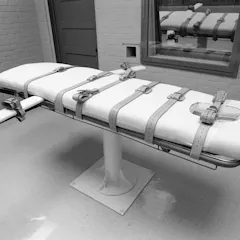
The Supreme Court has ruled that executing the innocent does not violate the Constitution, but some states allow people convicted of crimes to bring actual innocence claims.

A death row inmate in South Carolina chose firing squad over lethal injection and the electric chair.

While some opposition is to be expected, indications are that the general Zimbabwean public will take the government’s lead on abolition.
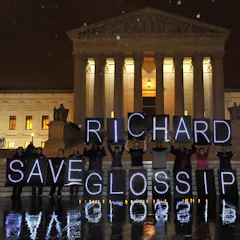
Despite support for clemency from Oklahoma’s top prosecutor, a death row inmate appears set to die on May 18.

Research finds that the threat of being sentenced to death has no bearing on how people contemplate violent crime.

New data mapping death sentences in the Gulf states once again highlights Qatar’s questionable human rights record.

In 1972, justices handed down a decision that attacked discriminatory and capricious death sentences. But it left the door ajar for states to continue the practice.
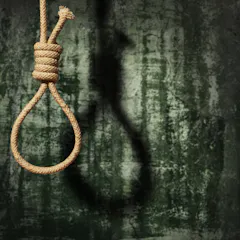
The Malawi court’s decision provides a roadmap for future challenges to the death penalty in other southern African countries.

The Justice Department has approved alternatives to lethal injections for federal executions. But no method of capital punishment has been without gruesome stories of what went wrong.
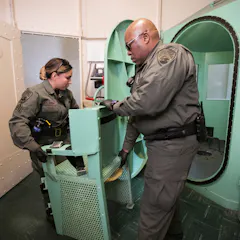
A law professor from the University of California, Hastings considers why a moratorium in California could be influential.
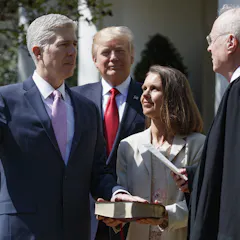
Trump’s promise to appoint conservatives to the Supreme Court could mean the fate of the death penalty rests in the court of public opinion.
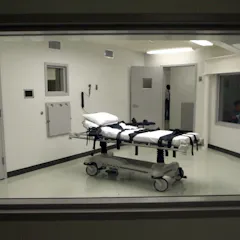
In Oregon and Washington, the costs of seeking and administering the death penalty have increased significantly since the 1980s.
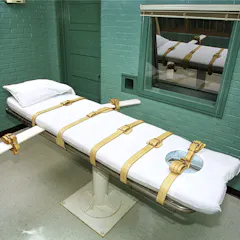
The US Supreme Court is bitterly divided over the death penalty. One reason for that is all the convictions based on coerced confessions

Abolition has become a political football – and many politicians see the advantage of supporting it.
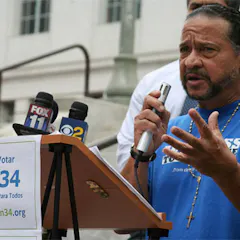
More than 150 people have been released from death rows around the US after having their wrongful convictions overturned. Most continue to face social stigma and unemployment.
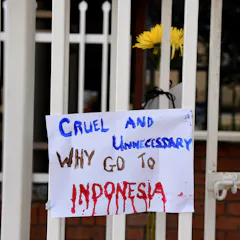
Whatever you think of capital punishment, if your police force helps convict people of capital crimes, you are complicit to some degree.
Top contributors
-

William Nelson Cromwell Professor of Jurisprudence and Political Science, Amherst College
-
Director of the University of Oxford Death Penalty Research Unit, Centre for Criminology, Faculty of Law, University of Oxford
-
Professor of Law, City University of New York
-
Professor and Director, Criminal Justice Reform Clinic, Lewis & Clark
-
Assistant Professor of Criminal Justice, Seattle University
-
Professor of Sociology and Criminology, University of North Carolina Wilmington
-
Senior Lecturer, School of Law and Politics, Cardiff University
-
Associate Professor of History, Emory University
-
David W. Ichel Distinguished Professor of Law, Duke University; Institute for Humane Studies
-
Research Officer, Death Penalty Research Unit, University of Oxford
-
Post-Doctoral Researcher, Death Penalty Research Unit (DPRU), University of Oxford
-
Professor of International Human Rights Law, Centre for Human Rights, and acting SARChI Chair in International Constitutional Law, University of Pretoria
-
Term Assistant Professor, Department of Criminology Law and Society, George Mason University
-
Professor of Criminal Justice and Corrections, University of California College of the Law, San Francisco
-
Associate Professor of Hip-Hop, University of Virginia